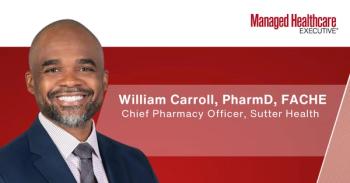
Will Carroll, Pharm.D., of Sutter Health says future pharmacy leaders need business, finance and AI skills, and health systems need real sponsorship.
In this second half of our conversation with Zahra Mahmoudjafari, Pharm.D., MBA, clinical pharmacy manager for hematologic malignancies and cellular therapeutics at the University of Kansas Cancer Center, the discussion turned to lessons from the evolving cell and gene therapy landscape, including sickle cell gene therapies, FDA onboarding timelines, financial sustainability and the new CMS access model. Building on the framework outlined in her January study, Mahmoudjafari shared what health systems should be thinking about now as the field continues to shift.
This portion of the transcript has been edited for length and clarity.
MHE: Sickle cell gene therapies have been slower to gain traction than many expected. Do you have direct experience with these therapies, and are there lessons health systems can learn from what some see as a challenging, real-world rollout?
Zahra: There is no secret that with innovation has come some bumps in the road. The next two to three years will be especially pivotal as more patients become eligible and volumes expand. Many therapies are migrating to the outpatient setting, and there is natural competition among products. In oncology, bispecific antibodies may blur traditional lines and strain existing capacity. Clinical trials are also expanding into non-oncology disease states that have larger patient populations. Health systems should invest now in flexible staffing models and scalable workflows rather than building infrastructure around a single product. Programs should be designed for adaptability. I've always used the statement, “Write everything in pencil, because you're going to have to revisit your plans and understand that this is a space that can move quickly.”
MHE: You mentioned that becoming a qualified treatment center can take six to 18 months and that clinical trial experience can shorten the process. What are the pros and cons of waiting for FDA approval before onboarding?
Zahra: Waiting for FDA approval reduces the early risk of investing in something that may not ultimately be approved. However, waiting can delay institutional learning and slow rollout once approval occurs. From an academic center perspective, I advocate for clinical trial participation because it expands patient access and accelerates readiness by building experience with workflows, staff training and sponsor expectations. Early trial involvement does require investment and tolerance for uncertainty, so it depends on each system’s strategy. In my view, it is a strategic priority, and programs that wait risk falling behind centers that are already operationally fluent when approvals arrive.
MHE: Do CGT programs require a certain volume to be financially sustainable?
Zahra: There is no universal volume threshold. It depends on the system and its capacity. These therapies are expensive, and higher volumes can make fixed costs such as staffing, compliance and quality oversight more manageable. Economies of scale do matter, but sustainability depends more on payer mix, site of care and operational efficiency. Smaller programs can succeed if they are disciplined, selective and understand their regional demand. Breaking a large project into smaller, manageable pieces makes long-term sustainability more achievable.
MHE: Can you explain the CMS CGT access model and how it should factor into planning and operations?
Zahra: We are only a couple of months into the model implemented by the Centers for Medicare and Medicaid Services. It is designed to improve predictability for high-cost therapies. It requires health systems to rethink billing cadence and documentation and emphasizes tighter coordination between clinical teams, finance and pharmacy with real-time tracking of eligibility and outcomes. Programs should treat the access model as an operational framework rather than static guidance. It may also influence commercial plans. Not all states have enrolled, which adds complexity for centers treating patients across state lines. It is an important step toward improving access, but the long-term implications are still unfolding.
MHE: If you were advising a leadership team launching a CGT program, what would be your top three pieces of advice?
Zahra: First, design infrastructure before chasing volume. Success is built on workflows, not projections. Second, engage pharmacy and finance early and continuously because they are central to safety and sustainability. Third, plan for growth but build for flexibility. The landscape has evolved significantly since the first CAR T approvals, and it will continue to change. Business plans should be written in pencil, with thoughtful forecasting and as much standardization as possible while remaining ready to pivot.