10 research abstracts presented at the CHEST meeting are split on whether hospital admission during the weekend is assoicated with worse outcomes than admission on weekdays.
C. Brooke Adams, Pharm.D., BCOP, of Orlando Health discusses bispecific antibody therapies for multiple myeloma.
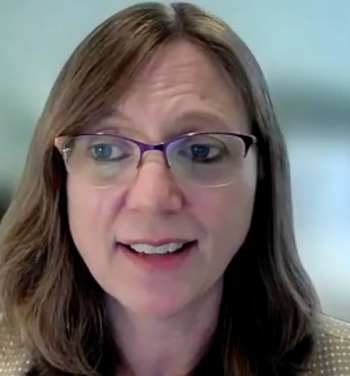
In this Managed Healthcare Executive “K-Cast” video series, C. Brooke Adams, Pharm.D., BCOP, discussed bispecific antibody therapies for multiple myeloma, their use in earlier lines of therapy, and the managed care implications of the growing use of bispecific antibodies. Adams is a clinical pharmacy specialist in blood and marrow transplantation and cellular therapy at Orlando Health in Florida and a clinical assistant professor at the University of Florida College of Pharmacy in Gainesville.
Adams began by giving a short overview of multiple myeloma epidemiology and treatment. The disease accounts for 1.8% of all cancers but is the second most common blood cancer, with more than 187,000 new cases diagnosed globally each year. In the United States, approximately 36,000 cases are diagnosed annually, with roughly 11,000 deaths. The disease is more than twice as common in African American patients and slightly more prevalent in men, with a median age of diagnosis of approximately 69 years. Adams observed that the death rate from multiple myeloma is declining, a trend she attributed directly to advances in therapy.
The treatment paradigm has shifted dramatically while she has been practicing, Adams said. First-line therapy has progressed from doublet to triplet to quadruplet therapies. As Adams described it, "More is better when it comes to multiple myeloma." In the second-line setting, clinicians are now weighing chimeric antigen receptor T-cell (CAR-T) therapy, standard triplet regimens and — since the March 2026 FDA approval of teclistamab in combination with daratumumab — bispecific antibodies. The antibody-drug conjugate belantamab mafodotin has returned to the market, targeting B-cell maturation antigen (BCMA) in the third-line setting. In later lines, bispecific T-cell engagers have largely supplanted second autologous transplants and older chemotherapy regimens.
Adams was direct about how she views bispecific antibodies relative to the chemotherapy regimens they are replacing. The older approaches — VD-PACE and similar regimens — caused cytopenias, hair loss, mucositis, diarrhea and elevated risk of secondary malignancies, including acute leukemia and myelodysplastic syndrome. Bispecific antibodies have a meaningfully different profile.
“I'm always going to say that these bispecific antibodies are one of the sexiest drugs on the market,” Adams said. “They are highly efficacious. They give our patients 50% to 70% in an overall response rate, and these are durable responses.” She emphasized that responses include complete and stringent complete responses, with minimal residual disease (MRD) negativity achievable at the 10-5 or even 10-6 level — responses that were not achievable in heavily pretreated patients before this class emerged.
Four bispecific T-cell engagers are currently FDA approved for relapsed/refractory multiple myeloma following at least four prior lines of therapy: teclistamab (BCMA directed, approved October 2022), talquetamab (GPRC5D-directed, approved August 2023), elranatamab (BCMA directed, approved August 2023), and linvoseltamab (BCMA directed, approved July 2025). Adams noted that although their overall efficacy is similar — response rates of 60% to 70% across trials — they differ substantially in dosing, administration, premedication, step-up schedule and toxicity profiles.
Some of the key differences Adams highlighted included the flat dosing of elranatamab and linvoseltamab compared with the dosing of teclistamab and talquetamab, which is based on patients’ weight. Linvoseltamab is the only bispecific administered intravenously; the other three are administered subcutaneously. With the subcutaneous agents, the onset of the cytokine release syndrome (CRS) side effect occurs approximately two days after dosing, whereas with linvoseltamab's intravenous administration, that window is approximately 11 hours.
Dosing frequency also varies: Talquetamab can move to every-other-week dosing immediately after step-up, linvoseltamab reaches monthly dosing at six months, and elranatamab reaches monthly dosing at 12 months, while teclistamab never transitions to monthly dosing per its label, although Adams noted that real-world dosing often diverges from the package insert due to infections or myelosuppression.
Linvoseltamab requires “premedication” with 40-milligram (mg) doses of dexamethasone, whereas the other three FDA-approved bispecifics require a premedication dose of 16 to 20 mg of the corticosteroid.
Adams outlined several practical factors that drive formulary decisions. Teclistamab, as first in class, has the highest utilization and now holds two FDA approvals, making it difficult to exclude from a formulary. For institutions seeking to minimize administrative burden, she noted that teclistamab and talquetamab share a risk evaluation and mitigation strategy (REMS) program, adding that any other bispecific brings a separate REMS process, a designated authorized representative requirement and an additional audit.
Payer dynamics are also shifting. Adams says she sees a future when payers will start preferring one bispecific over another given their comparable efficacy, especially among the three BCMA-targeted therapies. Programs managing step-up dosing with an eye toward transferring patients back to community oncology practices for maintenance should consider whether the community site can continue the same drug, a factor that may narrow formulary choice, she noted. Cost may also vary depending on whether step-up dosing is administered in the inpatient or outpatient setting.
Adams was candid about the limitations of current sequencing frameworks. “Right now, in the multiple myeloma community, we have no idea how to sequence anything anymore,” she said. "Therapies are coming out left and right faster than we can keep up with. And it's faster than the NCCN [National Comprehensive Cancer Network] can keep up with as well.” She described keeping current in this space as "a full-time job" and noted that NCCN guidelines, which update approximately twice a year, provide a menu of options by line of therapy and refractoriness but leave sequencing decisions largely to the treating clinician. The recent approval of teclistamab and daratumumab as second-line treatment added further complexity to an already difficult sequencing landscape, she noted.
Adams described the upstream migration of bispecifics as a predictable and ongoing pattern. "No highly efficacious treatment ever stays late line," she said, drawing a parallel to daratumumab and CAR-T cell therapy. Several trials are actively evaluating bispecifics in the first- and second-line settings.
The MajesTEC-3 trial led to the second-line approval of teclistamab plus daratumumab. Adams also mentioned the results of the IMMUNOPLANT study presented at 2025 American Society of Hematology Annual Meeting and Exposition that assessed linvoseltamab consolidation for four cycles post autologous stem cell transplant in patients with MRD-positive status, with all 19 patients achieving MRD negativity. Although it was a small study, Adams said, “This opens the opportunity to a fixed-duration maintenance after transplant.” She also mentioned the MagnetisMM-6 study, evaluating elranatamab with daratumumab and lenalidomide in the first line. “I love the idea of doing just a triplet therapy,” that omits the proteasome inhibitor medications [e.g., bortezomib], which Adams said are associated with peripheral neuropathy.
Adams also discussed the LINKER-MM4 trial that is testing linvoseltamab as first-line monotherapy across three dosing cohorts (50, 100 and 200 mg), with early efficacy data showing response rates of 95% and universal MRD negativity among evaluable patients.
“My biggest takeaway from this trial is using it in earlier lines. You get MRD-negative [status] faster and you get higher response rates, probably because you have healthier T cells and more robust T cells,” she said.
Adams identified several patient profiles where earlier access to bispecific therapy may offer meaningful benefit. Patients with extramedullary disease, who historically have poor prognoses and limited durable responses, showed response rates of nearly 80% in the RedirecTT-1 trial, which combined teclistamab and talquetamab after two prior lines of therapy. Adams described this as "something that was unheard of with extramedullary disease."
She also highlighted patients who have negative side effects from the corticosteroids that are part of many multiple myeloma treatment regimens. Bispecific T-cell engagers are steroid sparing after step-up dosing, a distinct advantage for patients with steroid-related hypertension, hyperglycemia or dermatologic complications, she noted. Similarly, patients who have developed peripheral neuropathy from proteasome inhibitors may benefit from bispecific regimens. Adams also noted the absence of data linking bispecifics to secondary malignancies.
In framing the comparative advantages of bispecifics, Adams focused on treatment burden and depth of response. Patients on monthly maintenance dosing may come to the clinic once a month rather than twice weekly, a meaningful quality-of-life difference in a disease that is not yet curable. "It gets our patients back to the lives that they want to live with high efficacy and low adverse event profiles," she said.
The adverse event profile, while different, is manageable once the step-up phase is complete. CRS and immune cell-associated neurotoxicity syndrome (ICANS) occur early in treatment and are well understood and managed. The ongoing concerns — infections and myelosuppression — are familiar to oncology teams. Adams also pointed to treatment that achieves MRD negativity as a gateway to fixed-duration therapy: "If we get MRD-negative [status] faster, this opens the door to maybe a fixed-duration therapy for our patients and more drug holidays."
Adams acknowledged the difficulty of quantifying the value of these therapies while also recognizing the necessity of doing so. "Patients who would never have gotten into remission are getting into remission. Patients who would have never seen the birth of their grandchild are now seeing the birth of their grandchild. And so it's really hard to put a cost on that," she said.
What are needed, she argued, are real-world data that bridge trial populations and the broader, more heterogeneous patients being treated in practice. Some real-world data already suggest modestly reduced efficacy compared with trial results, though the agents remain effective. Additional gaps include long-term outcomes for patients with high-risk features, such as those with true extramedullary disease or high-risk cytogenetics, and head-to-head comparisons with CAR-T cell therapy, particularly now that teclistamab/daratumumab and ciltacabtagene autoleucel, a CAR-T therapy, compete in the second-line setting. Comprehensive cost analyses must also account for hospitalization rates, infection-related utilization and intravenous immunoglobulin requirements, she said.
Adams identified infrastructure as the central operational challenge, specifically the ability to manage CRS and ICANS after hours. She distinguished three types of health systems: fully integrated centers with attached inpatient facilities, partially integrated systems, and standalone cancer clinics, which represent roughly 70% of cancer treatment settings. For the last group, the step-up dosing period presents significant logistical difficulty. "The thought of having to get a call at 2 a.m. for a patient who is hypotensive or confused and they live two hours away from the closest emergency room can be really challenging," she said.
Institutions must decide whether to perform step-up dosing internally, refer to a site that can, or employ strategies such as prophylactic tocilizumab while navigating payer coverage for the added drug cost. Once the step-up to full dosing is complete, Adams said management reverts to familiar territory: "It's infections, it's myelosuppression — very easy to manage."
Adams framed toxicity management as fundamentally an education challenge. Drawing on the historical parallel of infusion reactions with rituximab, now administered without hesitation, she predicted that familiarity with bispecific toxicities will follow a similar trajectory. “Don't recreate the wheel,” she advised clinicians looking to launch these therapies. “So many of us have already developed cytokine release syndrome and neurotoxicity pathways, guidelines, and educational resources. So ask us.”
A consistent gap she identified is the emergency room. Because CRS can present like sepsis, emergency room clinicians who are not familiar with bispecifics may treat empirically with antibiotics while missing the immunosuppressive component. Adams described building electronic health record banners that trigger alerts when a patient taking bispecifics presents, linking directly to grading and treatment order sets for CRS and ICANS. She also described a standard discharge practice. “We send all of our patients home with a prescription for dexamethasone. And so if a patient does have a fever at home or has any confusion, they go ahead and take that dose of dexamethasone and then they call their on-call provider for further instructions,” Adams said. She also noted that early intervention prevents progression to severe events.
Adams closed with three core messages. First, bispecifics for multiple myeloma are effective and here to stay, offering durable deep responses — complete responses, stringent complete responses and MRD negativity — with a tolerability profile that supports monthly dosing and improved quality of life. Second, the field is moving toward first-line use, with multiple trials underway, and she expressed hope that this class will one day eliminate the need for autologous stem cell transplants with high-dose melphalan conditioning. Third, the logistical challenges are real but surmountable. “We can do this. We are all in this together as a team,” she said, encouraging institutions that have not yet operationalized these agents to reach out to centers that have. “You are not alone in this. We are all in this together, and our patients deserve these therapies.”