


[Work requirements are] an artificial way to kick people off the rolls without making the hard decisions of saying, “We are reducing the eligibility or raising the income levels,” and those kinds of things. It's a backdoor way to kick people off of Medicaid. When it comes down the pike, we will deal with it. But it's not something that I think makes a whole lot of sense, either administratively, politically or morally.
Feature|Articles|March 10, 2026
- MHE March 2025
- Volume 35
- Issue 3
Our 2026 conversation with Eric C. Hunter, MBA, president and CEO of CareOregon, part 2
Author(s)Peter Wehrwein, Managing Editor
Listen
0:00 / 0:00
Key Takeaways
- Medicaid unwinding reduced core enrollment, but Oregon’s staggered renewals, bridge coverage, and tribal coordination growth kept CareOregon at ~600,000 members, covering about one-eighth of Oregonians.
- Fiscal stress reflects rates lagging medical trend; behavioral health utilization far exceeded assumptions (30% vs 3.5%–4%), contributing to consecutive multi–$100M losses and projected 2026 deficits.
Advertisement
Eric C. Hunter, MBA, has been president and CEO of CareOregon, the largest Medicaid managed care plan in Oregon, since 2016, and became a member of the Managed Healthcare Executive (MHE) editorial advisory board in 2020. We have checked in with him periodically during his time on the board.
This the second part of our interview. You can find the first part of the Q&A
Peter Wehrwein, managing editor of MHE, conducted this interview.
The transcript was edited for clarity and length.
Where do things stand with enrollment now with CareOregon? The unwinding — the redetermination requirement — seems like history. Did that end up reducing enrollment? And what other factors are affecting enrollment? I was thinking particularly perhaps one consequence of the cutback on the Affordable Care Act (ACA) enhanced subsidies might be some increase in Medicaid enrollment.
One advantage of being in Oregon is that we pride ourselves on the number and percentage of our citizens who have health insurance. We typically stay between 96% and 97% of the population being insured, and we're still at 96% to 97%. But we had to be creative to do that. The redetermination efforts have reduced overall enrollment in the core Medicaid program, but the effect was diminished because we made extraordinary efforts at the state and at the local levels to keep people enrolled. The state staggered the work they did so that the folks that were most difficult and harder to get reenrolled we did last. We had a year to work with them and get them up to speed, so we kept more people enrolled than a lot of states did.
Oregon also created a bridge program, which is in between the core Medicaid program and the ACA exchange, so that folks [who are] up to 200% of FPL [federal poverty limit] can actually be put into the Medicaid program and managed by the coordinated care organizations, and they use the silver loading cost at the state level to pay for that. So while we lost Medicaid members, we brought some of them back in that way.
The Healthier Oregon program, which is under fire, is our program that provides care for folks regardless of citizenship status. CareOregon has about 30,000 of 130,000 people statewide in that program.
Then there's a tribal care coordination program that we manage now, along with a [Native American] managed care entity that brought over 20,000 lives to CareOregon.
Overall, I think the [Medicaid] enrollment has come down about 100,000 in Oregon. But because of other programs and work we've done to expand our scope, we're actually the same size, if not bigger, than we were before. We touch about 600,000 Oregonians right now. About 1 in 8 people in the state are covered by CareOregon.
Immigrants who don't have legal documentation — you said you have 30,000-odd in your enrollment. I know there has been litigation about sharing health information about those people with federal immigration officials. I don't think you're directly involved, but the state is. How do you see this playing out? What sort of pressures have there been on you to share that information?
At CareOregon, we've not been directly asked for data. The state has, obviously, whether it's Medicaid data or voter rolls. Oregon has resisted all that and is currently in litigation on all of those things. So far that hasn't been shared, as far as I know. We will continue to serve that population as long as they're in our membership. The state assigns them to us, and we'll care for them.
I think in the long term, the greater challenge of that population getting care in this program in Oregon is going to be less about the federal government and more about budget pressures, frankly, because to serve that population, the federal government — at least for now — matches costs used for emergency services for folks regardless of immigration status, so those 130,000 people have about $300 million in federal funds providing their care, but the other $700-plus million of that care is straight state money. The state is looking at budget holes of about $450 million in the first biennium for us, just because of H.R. 1 [the One Big Beautiful Bill Act] in addition to the pressures we already had before that, and we have to find ways to maximize federal match.
There's a lot of conversation about how we manage those funds so that they can be most widely used for more of the population. So that's going to be the greatest challenge for that population. It is less about politics and more about just the almighty dollar and how we can allocate funds to keep the entire program solvent.
We have referenced some of the budget issues. I think it's really a serious problem in Oregon. The Oregonian reported that the Oregon Health Authority said the problem was created by higher rates the agency agreed to pay care coordination organizations, some of which you partner with. So are you talking to the state about rates, and might there be rate cuts? It sounds like there's a lot of budget pressure on you at the moment.
There is quite a bit. We took a bit of exception to that story. It is true that the Oregon Health Authority provided average rate increases across the coordinated care organizations by just over 10% for 2026; that's on the heels of about 3.4% the year before that and 3.4% the year before that. The problem is that, yes, we got paid more than we had in the past, but our costs have gone up 10%, 12%, and 15% over those same years, so while it looks like an incredible increase, even with the rates in 2026 that we're getting, CareOregon is still projected to lose money in 2026 after two years of multi-$100 million losses, because rates were not keeping up with utilization and demand, a lot of it primarily because of those behavioral health investments. They anticipated in the rate setting that behavioral health utilization would go up 3.5%, 4%. It went up 30%. In the coordinated care organizations’ minds, they were trying to make up for that a bit, as well as paying for moving forward.
The challenge now is, how do we moderate increases moving forward? The hospitals are under pressure and want more money. Providers want more money. Costs of everything are going up, and the state is saying, “Hey, we'll give you 3.4% more than last year every year,” without regard to what's happening in the community and with our providers. So that's where the tension really is. Yes, they're paying us more. They're still not paying us enough.
We appreciate the efforts they're making to try to find that solution. I'm currently part of a Medicaid advisory group that the governor [Tina Kotek] has put together to try to figure out how we manage that. You know, how we deal with the reduced revenue coming from H.R. 1, the reductions in the provider tax, the cuts in eligibility, those kinds of things. There aren't a lot of levers we can pull because we really want to keep everyone covered as much as possible.
We don't want to get into long-term supports and services, that kind of work, the state hospital, those kinds of things. There is a lot of Medicaid money that's not part of the conversation. We'll get into benefits, payment rates to the coordinated care organizations and the providers — that's where a lot of the rub is going to come. We owe her our thoughts by June, and she will talk to the Legislature from there.
Sounds hairy to me.
It is. In some states that I've worked in in the past, it would not be such an issue, because in those states, when they get less money, they provide fewer services. They're OK. That is not Oregon. That is not the Oregon way. We truly do want to do as much as we can for as many people as possible, and the challenge of balancing that with the fiscal realities has a lot of our legislative friends really in a quandary. We're trying to find solutions, because there's not a lot of new revenue to bring in anymore. The provider tax gets capped and reduced. That's where a lot of the support came from.
The challenge will be about how we define the services that bring the most value to human beings. Does that mean we rethink the profit motive in some of the industry? Does that mean we reconsider certificates of need for different systems? Will we stop making it difficult for providers to deal with partners that have private equity involved? Those kinds of things are more difficult in Oregon. We might have to loosen up some of those guardrails to give the system the ability to respond.
Work requirements — a lot of ink was spilled about them last year. As I understand it, they won't be implemented until 2027, but I think some rules will be issued this year. Most people I know who are involved in Medicaid objected strongly to work requirements. But if they include training and education, might they be a good thing for some people?
What's interesting in that conversation is that CareOregon as an entity and me, personally, think that only people who qualify for Medicaid should be on Medicaid — that folks who can rightfully take care of themselves should do so.
I think the problem with Medicaid work requirements, as they have been defined and rolled out in a couple of states — Georgia, Arkansas — is that they are not about helping people. It is truly a lever in which people are discouraged from enrolling or dropped off of the rolls based on the administrative burden placed in front of them. And it's not even just the administrative burden on the beneficiaries. It's on the managed care organizations and the states. The state of Oregon has already been talking about what it would take to implement that, and they're talking about hiring four or five hundred FTEs and spending literally hundreds of millions of dollars in computer system upgrades to be able to process all that work and track all that.
For the managed care organizations, we obviously want to help people stay enrolled. I know my friends at CareSource in Georgia had to create entire programs and hire staff whose only job was engaging with people to help them get the paperwork done. That’s what it’s all about. If it were truly about helping people, we could still do that work. The state would invest in helping us do that and encourage us to get people into training and education in school and move into the workforce. But instead, it's more of a punitive measure.
The same with the every-six-month redetermination they're talking about for folks in the expansion population. That's not about making sure the right people are on the rolls. I'd liken it to being required to file your taxes twice a year. It is the hassle factor. People who don't have healthcare needs, really acute needs, won't bother. They just won't bother. And they'll drop off the rolls. Their needs will go up, and when they come back on when they're really sick, it'll be more expensive for the system, and I think we've seen the evidence of that empirically.
It's an artificial way to kick people off the rolls without making the hard decisions of saying, “We are reducing the eligibility or raising the income levels,” and those kinds of things. It's a backdoor way to kick people off of Medicaid.
When it comes down the pike, we will deal with it. But it's not something that I think makes a whole lot of sense, either administratively, politically or morally.
Given Oregon's commitment to health insurance coverage, might the work-education-training requirement in your state be something that could be smoothed out administratively so it won't be simply a Trojan horse to reduce enrollment?
Based on what we went through with redetermination and sort of the efforts we made to keep people enrolled, I think we will make extraordinary efforts in Oregon to manage folks that way, to get them into the right programs. The question comes back to how do we pay for that when we're having trouble paying for inpatient behavioral health, and we don't have enough for Narcan and SUD treatments? Can we really afford to take hundreds of millions of dollars to build computer systems and to do training and have community health workers and peer coordinators in the street to manage people getting into education and tracking their paperwork? It can be done. I think we will definitely try to do that in Oregon, but it will be cost prohibitive.
There's been a lot of discussion about pharmacy benefit managers [PBMs] and rebates, and I've never talked to you about your PBM at CareOregon, but I have talked to some people at Medicaid managed care programs, and I think perhaps it's an unrecognized part of the PBM story that some of that PBM rebate money has gone to help support Medicaid managed care programs.
I think that, on the whole, the entire way that we manage pharmacy in the United States is that it's a black box that we're basically told, “Trust us, you're getting a good deal.” We do benefit from rebates for now.
[Changes are being discussed in Oregon.] Does the state have a single PBM and [collect] the rebates at the state level and cut deals at the state level as opposed to at the plan level? What would that mean to our ability to manage care? Getting real-time data is really important to our clinical programs. But more importantly for us, what would it mean to those hospitals and FQHCs [federally qualified health centers] in particular that get a huge amount of revenue from the 340B [Drug Pricing Program] program? Those are our concerns.
I think that our PBM has been very good for us because I've got top-notch pharmacy leaders who work with them on really creative, innovative pharmacy programs. They've worked with us to put pharmacy drop boxes in rural communities that don't have pharmacies, almost like Amazon drop boxes — those kinds of things. And they provide some additional funds for us to do sort of opportunity funds and other projects.
But, by and large, it is still a black box, even for us. I'm all for greater transparency, understanding what the pricing is. If they can voluntarily drop prices on some of the things that they've agreed to, then how much were they making before they did that? I mean, so those are the kind of questions that need to be answered. Are things like Mark Cuban Cost Plus Drug Company pharmacy the future? Multistate collaboratives on pharmacy — there's a lot of conversation about that. California has got a lot of buying power, but in Oregon, we are terribly independent, so the idea of ceding our decision-making to California is not terribly appealing, but it could be cost-effective.
We've got good relations with our PBM now, but we still really work to hold them accountable to saying, “Look, this is not simply about managing a benefit and then telling us how you're doing.” It truly is incorporated into the day-to-day clinical programs. As long as that can be maintained, we get decent prices … but the increases on, particularly, biosimilars and GLP-1s [glucagon-like peptide 1s], just the volume of some of the new drugs coming online, it is prohibitive. So how did we manage and be prepared for that? Every time we manage something, something new will come out.
Who is your PBM?
Optum Rx.
That discussion in Oregon about PBM negotiation happening at the state level, is that an active discussion? You'd lose some control over that PBM relationship. Is it part of the discussion about Medicaid funding? Is it seen as a way of capturing revenue and dealing with the financial crisis?
We're sort of setting the stage, saying, “What are all the possibilities and options?” And we'll have to come back to, does that make sense? What are the pros and cons of that? But it has been surfaced as an idea. There have been studies done by state agencies and think tanks. California, a few years ago, did a pharmacy carve-out. New York, just a year ago, did a pharmacy carve-out from their Medicaid managed care program. I know a lot of people in those states; we're getting information firsthand from them. What did that mean for their ability to provide care? What did that mean to their networks? Were the savings anticipated realized? And if they were realized, what happened to them? Did they go to [help] with the losses at the FQHCs and in the network, or did they just go into the general fund? Those are the kinds of things we'll have to dig into.
I don't know how serious it will be, but I think of the levers we have to pull, that will be one of the big ones.
So it's in play, it sounds like, as the state deals with its Medicaid funding problems.
It will be one consideration.
You had a data breach recently, and I know that there's not much you can really reveal at this point, but what can you say about that data breach? It was in the news, and you've had to deal with it, obviously.
I don't really want to say anything about that particular one that's been in the news most recently. I think that overall, though, like many others, we have seen just the extraordinary efforts people are going through to get into these systems.
Our IT team tells me that there are literally hundreds of attempts a day to get into our systems from all over the world, and they get more and more creative. They are using vendors and third parties to try to workaround systems. They're not trying to get into our systems directly, but [into those of] the partners we have.
Another advantage for us in narrowing our network, for lack of a better term, is that it's more difficult to get into our systems. Our IT team tells me that there are literally hundreds of attempts a day to get into our systems from all over the world, and they get more and more creative. They are using vendors and third parties to try to work around systems. They're not trying to get into our systems directly, but [into those of] the partners we have. UnitedHealthcare’s big breach wasn't directly through their system; it was through a side system. Those are the kind of things that worry us the most. We’re spending a lot of effort making sure that not only are our protocols locked down, but also [those of] all of our many tentacled providers and partners, because there's more and more of a need to manage the care of having to have a partner doing X or a partner doing Y.
We don't think we've been targeted more than others. We don't think we've been impacted more than others. But I think that the scale that we have now, the numbers of providers and members, and the revenue make us a more enticing target than maybe some of the others might be, at least in Oregon.
So data breaches, layoffs, budget pressure — it is stressful times for Medicaid managed care organizations. I was thinking about when you started this job, we were talking about social determinants of health. Healthcare and Medicaid were on the balls of their feet and moving into new areas and trying to get to the underlying issues — playing offense. Now it seems perhaps you're just playing defense a lot, and I am wondering whether that's stressful.
It most definitely is. One of the greatest challenges for a company like CareOregon is that it is truly mission-based. We're not an underwriting company. I don't have a hospital to feed. I don't have a big brother to give us resources. We are a not-for-profit that is claiming to be a community benefit organization, and that's what we thrive on. Our mission is to inspire and partner to create quality and equity in individual and community health. That's why we exist. So doing those proactive grand engagements, bringing people into the system, working on nutrition programs and working on abilities to impact housing and education and the influence that healthcare can have on those and vice versa is what motivates and really invigorates our team, our mission and our culture. The last couple of years have put a lot of stressors on that. Our providers had issues during COVID; they were waylaid because no one was coming in. We were able to move $40 million into providers to keep them afloat so they didn't go out of business, until things came back to normal. I can't do that anymore. We bought the Red Lion Inn and created housing on the coast. I can't do that anymore. Those are the kind of things that make being, quote, unquote, an insurance company palatable. It's the differentiator. I think that's the greatest amount of stress for me, personally, and for us.
I left working for big for-profits and love what I do with my board and my team and my community, and being able to say, look, we need to make a difference. We need to be a different breed of cat, even in tough times. That means we might have to be more frugal than some of the others. Breakeven is not good enough for me, because then we can't invest out front.
That's really the challenge for us, balancing the realities of the financial world, of being an insurance company at the toughest time to be one, while at the same time wanting to do more and engage people differently. It has been tough. Our team, they stay motivated. My board is supportive. We find ways to recognize the good works. We find ways to stay in our communities. This is our last year of sponsoring the Portland Rose Festival Starlight Parade, bringing community back to downtown Portland. Those kinds of things are important to us. We'll find a way, because that is what motivates us and keeps us engaged and in the fight.
Keeping the light of altruism flickering, I guess.
Articles in this issue
over 1 year ago
How Insurers Responded to Disastersover 1 year ago
The Biosimilars Report Cardover 1 year ago
For Pfizer, Some Challengers in ATTR-CM Treatmentover 1 year ago
FHIR Idea Burns Bright. Implementation FlickersAdvertisement
Related to this article

National Alliance names Jenny Goins interim CEO after former leader’s arrest; details emerge on charges, firing timeline, and impact on healthcare policy circles.

Only 19% use AI predictive models in cancer care despite strong belief in impact; 2026 Oncology Care Index highlights reimbursement, training, funding barriers.
Hispanic HIV incidence rose 16.8% in antisanctuary counties after the 2018 public charge announcement, relative to baseline counties, a new study found.
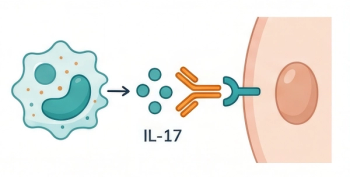
A review of randomized clinical trials, nonrandomized trials and case reports suggests that the inflammatory bowel disease risk from treatment with IL-17 inhibitors is low.

From a 95% remission rate in Japan to $81.6 billion in U.S. savings since 2015 — a data-driven look at where biosimilars stand today, and where the gaps remain.

AI pathology tool measures lung cancer treatment response after neoadjuvant chemoimmunotherapy with 91% accuracy, speeding NSCLC care while needing review for complete response.

A review of 57 studies found music eases pain through positive emotion, control and moving in time with the beat, according to recent research out of Drexel University.

UC San Diego researchers found that early-onset metabolic dysfunction-associated steatotic liver disease cirrhosis was linked to higher genetic risk and Type 2 diabetes prevalence.
Advertisement
Advertisement
Trending on Managed Healthcare Executive
1
National Alliance names interim head after arrest of its president
2
The IBD risk among patients with hidrandentitis suppurtiva treated with IL-17 inhibitors: Low but not nothing
3
Community oncologists are turning to AI, but not all of them use predictive models
4
Biosimilars are reshaping pricing and drug development — the numbers behind it
5