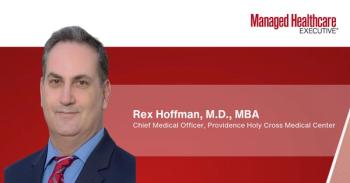
Rex Hoffman, M.D., MBA, says physician shortages and burnout are the most underestimated pressures on health system.
Two presentations found that the loss of Good Days copay assistance forced retina patients onto bevacizumab, worsening anatomic outcomes and visual acuity despite more frequent dosing. Researchers said this highlights the importance of copay assistance in maintaining disease stability.
Switching from a branded anti-VEGF to bevacizumab after loss of copay assistance resulted in a significant worsening of patients’ eye disease and required an increase in treatment frequency, according to two analyses presented at the American Society of Retina Specialists Annual Scientific Meeting, held July 15 through July 18, 2026, in Montreal.
For more than 20 years, nonprofit organization
Bevacizumab is available as Avastin — along with five U.S.-approved biosimilars — to treat colorectal, lung, kidney, cervical and ovarian cancers, as well as glioblastoma. It is used off-label to treat retinal diseases; when used for the eye, bevacizumab must be obtained from compounding pharmacies, which repackage small quantities into syringes for intravitreal injection.
“Switching to bevacizumab was associated with anatomic worsening and shorter injection intervals. Shorter preswitch intervals and early detection of fluid may help identify patients at risk of poor outcomes. These findings underscore the importance of maintaining access to the full spectrum of treatment options for our patients,” Danny Mammo, M.D., of Cleveland Clinic’s Cole Eye Institute, said during his presentation.
Researchers from Cleveland Clinic wanted to evaluate the short-term clinical consequences of switching patients after the loss of the Good Days copay assistance program. This analysis focused on patients with wet AMD, diabetic macular edema and retinal vein occlusion who were switched from a branded anti-VEGF to bevacizumab.
In this retrospective cohort study of 89 eyes (69 patients), the primary outcome was central subfield thickness (CST), which is a key measurement of retinal thickness, at baseline and then after three injections. Secondary measures were best corrected visual acuity, injection intervals and fluid status. A poor outcome was a loss of at least 15 Early Treatment of Diabetic Retinopathy Study (ETDRS) letters or an increase in CST. ETDRS is a standard visual acuity eye chart for measuring vision in both clinical research and eye clinics.
Researchers found that switching resulted in increases in CST, and the median injection interval was shortened from 8.6 weeks to 7.5 weeks. But despite more frequent dosing, 15.7% of eyes had a poor outcome, and 16.9% of patients were switched back to a branded therapy.
A separate analysis of the loss of copay assistance from Good Days had similar findings. Researchers conducted a retrospective chart review of patients with wet AMD who were treated at Retina Group of Washington and received insurance coverage through Medicare and Medicare Advantage plans. They compared patients who were enrolled in Good Days in 2024 and treated with an anti-VEGF with the treatment they received after loss of copay assistance. Patients were assessed for treatment patterns, injection frequency, visual acuity and complications.
In this analysis, researchers assessed 355 eyes (240 patients). Following the loss of copay assistance, the number of eyes switching from a branded anti-VEGF to the off-label bevacizumab increased from three in 2024 to 28 in 2025. The number of eyes that received samples increased from 10 in 2024 to 13 in 2025. Nine eyes had a shortened injection interval after switching, but the mean number of injections decreased in 2025. Visual acuity analysis showed worsening in the first visit of 2025 with partial recovery by the last visit of the year.
“Good Days defunding was associated with significantly worse visual outcomes among Medicare and Medicare Advantage patients with neovascular AMD,” Alexander Melamud, M.D., of the Retina Group of Washington, said during his presentation. “The Good Day's underfunding was associated with statistically significant worsening in mean visual acuity. There was a notable change in treatment patterns over the course of the study. We believe that copay assistance programs play a critical role in maintaining patient access to on-label anti-VEGF therapy.”
During the question-and-answer session, Melamud said that older patients selecting Medicare Advantage might now understand the access challenges they may face. He also questioned why 340B institutions were not doing more to help patients with copay and coinsurance. “Some things need to be changed to give better access to these medications for our patients,” he said.
The 340B program allows qualifying hospitals and other providers, such as federally qualified health centers, to purchase medications at discounted rates from drug manufacturers and use the difference between the discounted price and the reimbursement from commercial insurers and other payers to fund patient care services. Since its implementation in 1992, the 340B program has grown to two-thirds of all nonprofit hospitals in the U.S.