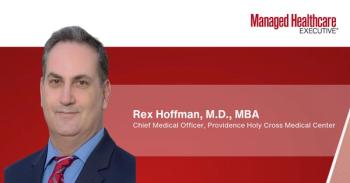
Rex Hoffman, M.D., MBA, says physician shortages and burnout are the most underestimated pressures on health system.
Vabysmo reduced injection burden in both untreated and previously treated patients without impacting vision or retinal thickness in a two-year real-world analysis.
In a real-world study of patients with diabetic macular edema, Vabysmo (faricimab) led to visual improvement in those who had not been treated for their disease and stability in those who had been, according to data presented at the annual meeting of the American Society of Retina Specialists (ASRS) being held July 16 through July 18, 2026, in Montreal.
“We saw reduced injection burden and extended treatment intervals of about six weeks from baseline to month 24,” Murtaza Adam, M.D., vitreoretinal surgeon and chair of clinical research at Colorado Retina Associates, said during the presentation.
Adam presented results from the U.S. FARETINA-DME expanded two-year cohort in the Intelligent Research in Sight (IRIS) registry. The
Developed by Genentech, Vabysmo is approved to treat wet age-related macular degeneration, diabetic macular edema, and macular edema following retinal vein occlusion. Vabysmo is the first bispecific antibody that targets Ang2 and VEGF-A simultaneously to reduce vascular leakage and inflammation. Since its approval, more than 11 million doses have been distributed to more than 100 countries.
Diabetic macular edema is a serious eye condition that affects people with diabetes. DME results from the damaged blood vessels leaking fluid and causing swelling, which blurs vision and can lead to severe vision loss and even blindness when left untreated.
Researchers wanted to assess the real-world experience of Vabysmo in patients with diabetic macular edema. In the FARETINA-DME study, researchers included patients who received their first injection of Vabysmo between February 2022 and September 2023 and had at least 12 months of data and at least 24 months of follow-up.
Patients had at least one Vabysmo treatment and 12 months of data prior to the beginning of this analysis. In total, 8,527 patients were included in the analysis, and 60% were previously treated. About half of the patients entered the analysis with 20/40 or better visual acuity.
At baseline compared with 24 months after initiating Vabysmo, central subfield thickness (CST) improved in all cohorts, including treatment-naive eyes, prior anti-VEGR-treated eyes, and eyes that were treated with aflibercept for four to six weeks, Adam said. The CST is a key measurement of retinal thickness. For previously treated eyes, mean central subfield thickness (CST) was 301 microns compared with 367.6 microns at baseline. The CST is a key measurement of retinal thickness. For previously treated eyes, mean central subfield thickness (CST) was 301 microns compared with 367.6 microns at baseline. The CST is a key measurement of retinal thickness.
He said that injection burden decreased over time. About four injections in that first six months were performed in all cohorts, which was reduced significantly by month 24. In year two, the number of injections for these patients was 2.1.
Safety data remained consistent with previously reported findings, Adam said, with low rates of fluid and inflammation observed, in line with results seen in earlier clinical trials. The most common adverse events found in clinical trials were cataract and blood on the white of the eye (conjunctival hemorrhage).