

Opinion|Videos|September 27, 2024
Coverage Considerations for ART Protocols
Author(s)Jeffrey Dunn, PharmD, MBA
The key opinion leader discusses how criteria for assisted reproductive technology (ART) coverage are established, including stepwise approaches and considerations for mixed protocols, while emphasizing the importance of collaboration between providers and payers to ensure patient access to various ARTs.
Advertisement
Episodes in this series


Video content above is prompted by the following:
- What are your criteria for ensuring coverage of different assisted reproductive technologies (ARTs)? How have you successfully worked with providers to ensure access?
- Do you have a preferred stepwise approach to ensuring coverage of the different ARTs?
- What is your approach to coverage on mixed ART protocols? How can providers work with payers to ensure that patients have access to mixed ART protocols?
Advertisement
Related to this article

As the pharmacist pipeline tightens, leaders from UC Davis Health, UCSF Health, and Sutter Health say financial sustainability now depends as much on capacity as on cost.

GLP-1 use in adults 65 and older with MASLD was linked to a 45% lower risk of death, and a 28% lower risk of hepatic decompensation, a new Houston Methodist Research Institute study shows.

New data from Sutter Health suggest the real gap in GLP-1 access is physician awareness, not insurance coverage — and fixing it closed outcome disparities across every racial and ethnic group.

Research findings presented at the CHEST meeting show that false positives may make patients more adherent to screening. Qualitative research shows that patients want more explanation and results communicated verbally.

David Chen, PharmD, explains how physician-led formulary decisions — not rebates — power Kaiser Permanente’s biosimilar strategy, and why he thinks other health systems could do the same.

10 research abstracts presented at the CHEST meeting are split on whether hospital admission during the weekend is assoicated with worse outcomes than admission on weekdays.

Research findings scheduled to be presented at the CHEST meeting show broad positive cardiopulmonary effects from GLP-1s and an association with a reduced risk of acute respiratory failure.
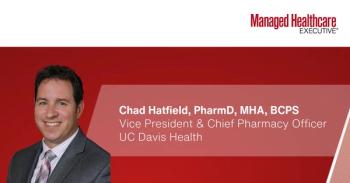
Chad Hatfield, Pharm.D., of UC Davis Health, says 340B savings fund free clinics and mental health care that could shrink as the program’s future shifts.
Advertisement
Advertisement
Trending on Managed Healthcare Executive
1
Kaiser’s formulary chief makes his case for a ‘total value’ model on biologics | HSES 2026
2
Long-acting lenacapavir plus cabotegravir kept all 46 patients with HIV virally suppressed in recent trial
3
More pluses for GLP-1s for obstructive sleep apnea | CHEST 2026
4
Chad Hatfield, Pharm.D., on the 340B uncertainty facing health systems| HSES 2026
5