



As the Federal Trade Commission weighs a ban, hospitals and some physician organizations are on opposite sides of the issue.
As the Federal Trade Commission weighs a ban, hospitals and some physician organizations are on opposite sides of the issue.

The track record on outsourcing clinical services is mixed.

This clinical trial is a part of the NIH's Researching COVID to Enhance Recovery (RECOVER) Initiative, aimed at understanding, treating and ultimately preventing the symptoms experienced by individuals following SARS-CoV-2 infection.

The FDA has approved Talvey, a new therapy for treating multiple myeloma patients. The agency has also issued a complete response letter for avasopasem for severe oral mucositis and set a PDUFA date for a monthly MS drug.


However, patients who cannot get insurance coverage will be able to access AspyreRx at a significant self-pay discount.

A discussion with Jeffrey Casberg, M.S., who joined the Managed Healthcare Executive editorial advisory board in July 2023. Casberg is senior vice president of clinical pharmacy at IPD Analytics and has played a leadership role in its drug management strategy business. A pharmacist by training, Casberg has had a long career in managed care.

Briana Contreras, an editor of Managed Healthcare Executive, had the pleasure of catching up with MHE Editorial Advisory Board Member, Ateev Mehrotra, MD, MPH, who is a professor of healthcare policy at Harvard Medical School and an Associate Professor of Medicine and Hospitalist at Beth Israel Deaconess Medical Center.

A post hoc analysis of two phase 3 trials identified that as many as 95% of patients with chronic rhinosinusitis with nasal polyps (CRSwNP) had type 2 inflammatory signatures depending on the definition of inflammation used.

Charging more than $2 million for a single treatment was once unthinkable, but no more.

Recent years have brought a host of new orphan medications for rare disorders, and more are coming. But the U.S. hasn’t yet settled on a way to handle their often astronomical prices — and neither has any other country.

More than half of participants completed the eight-week course, the authors said.
FDA Approves new indications for two cancer drugs: Lonsurf combination for metastatic colorectal cancer and Jemperli as frontline treatment for advanced endometrial cancer. The agency has also rejected the BLA for therapy to treat rare skin cancer.

To support a value-based care model, healthcare organizations should focus on creating meaningful engagement throughout the patient's journey. This includes contacting patients at the right time through the right channel with relevant messages.

A recent report shared the market's expansion is mainly driven by the growing prevalence of chronic diseases, which has increased the demand for remote health monitoring and efficient healthcare solutions.

The answer is no. Research findings reported in JAMA Network Open show no association between hepatitis B status and poor birth outcomes among those who get pregnant with freeze-thaw embryo transfer whereas among natural births, hepatitis B infection in mothers is linked to miscarriage and preterm birth.

Two studies show that high heart failure rates in the Black population are a legacy of discriminatory mortgage policies.

Welcome back to another episode of "Tuning In to the C-Suite," where Briana Contreras, an editor of Managed Healthcare Executive, had the pleasure of chatting with Cindy Gaines, chief clinical transformation officer at Lumeon.

In a study conducted from January to September 2022, 268 United States counties within 22 states participated in the U.S. Centers for Disease Control and Prevention’s National Wastewater Surveillance System (NWSS).

The newly formed Peterson Health Technology Institute was launched with $50 million to analyze clinical benefits and economic impact of new health technologies.

The manufacturer has reported seven causes of retinal vasculitis associated with Syfovre. Results of an open-label, extension study presented at the American Society of Retina Specialists meeting today show favorable results among those who crossed over from sham to active treatment.
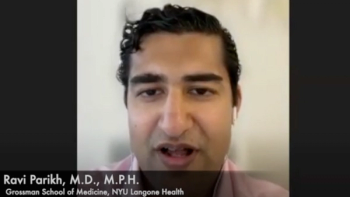
The approval of an ophthalmic bevacizumab biosimilar might mean the end of low-cost, repackaged Avastin as an anti-VEGF treatment for retinal diseases, with the unintended consequence of adding $457 million to Medicare B spending.
In an interview with MHE, Parikh, a retina specialist in New York and director of healthcare delivery research for the Department of Ophthalmology at NYU Grossman School of Medicine, described the current situation of biosimilars in retinal medicine and the attitudes of retinal specialists about using the lower-cost alternatives.

In an interview with MHE, Paul Hahn, M.D., Ph.D., vitreoretinal surgeon at NJRetina, talked about the latest geographic atrophy treatments, pegcetacoplan and avacincaptad pegol, from a coverage and healthcare resource utilization standpoint, as both will potentially be available for the chronic disease that previously had no treatments.
Paul Hahn, M.D., Ph.D., vitreoretinal surgeon at NJRetina, chatted with MHE about the latest geographic atrophy treatments and shared key takeaways found from clinical trials examining them. Hahn presented on macular degeneration today at the American Society of Retina Specialists annual meeting in Seattle.

About 20% of patients in the trial of a high-dose, longer-interval regimen of Eylea (aflibercept )switched to shorter intervals, according to data presented today at the American Society of Retinal Specialists annual scientific meeting, which is being held in Seattle. Researchers didn't find any clues as to why in their baseline characteristics.

Research shows a $12,575 savings over two years and no difference in outcome, which result in an incremental cost-effectiveness ratio (ICER) of $873,000.

A post-hoc analysis didn’t reveal any differences in outcomes by race, macular thickness or baseline visual acuity.
In an interview with Managed Healthcare Executive prior to the meeting, Keyvan Koushan, M.D., a retina specialist at the Toronto Retina Institute and a lecturer in the Department of Ophthalmology and Vision Sciences at the University of Toronto, briefly described the design of the PULSAR trial and the positive results that have been reported so far.