
A monthly pill would add to the growing number of choices for HIV preexposure prophylaxis, which is now seen as the best hope for curbing the number of new infections.
A monthly pill would add to the growing number of choices for HIV preexposure prophylaxis, which is now seen as the best hope for curbing the number of new infections.
Mulugeta Gebregziabher, Ph.D., spoke with Managed Healthcare Executive ahead of his presentation at IAS 2025 in Kigali, Rwanda, about the risks posed by U.S. cuts to global HIV prevention funding.

Integrating people-centered HIV care with primary health care is essential to improving access, equity and health outcomes, but doing so successfully requires coordinated policies, digital transformation, community engagement, and sustained funding, according to experts at IAS 2025.

At the IAS 2025 conference in Kigali, Rwanda, Banky Olatosi, M.P.H., M.S., Ph.D., of the University of South Carolina, shed light on how systemic racism and social determinants of health influence HIV diagnoses and care across U.S. regions.

While successes have been seen because of HIV self-testing, funding cuts to USAID and PEPFAR will make continued research difficult, according to Anna Bershteyn, Ph.D., associate professor in the Department of Population Health, NYU Grossman School of Medicine.
A separate analysis of the real-world trial found that those who switched from daily antiretroviral treatment to Cabenuva had fewer concerns about treatment.


A larger role for China, perhaps, and the fraught issue of integrating HIV services into services for other diseases.
According to experts at the IAS 2025 meeting in Kigali, Rwanda, AI revolutionizes HIV vaccine development by enhancing design, data analysis and clinical trials, especially in low-income regions, creating a faster progress.

Despite the recent approval of lenacapavir as a twice yearly PrEP, there is still a need for choice in HIV prevention, argue speakers at a session at the International AIDS Society meeting.
The FDA approval of lenacapavir as a form of preexposure prophylaxis (PrEP) is a major step for HIV prevention, but its impact depends on access, patient-centered care and affordability.

Experts, such as Lloyd Mulenga, M.Sc., M.B., Ch.B., Ph.D., discuss long-acting injectable HIV PrEP's potential in Zambia, emphasizing community involvement and sustainable rollout amid funding challenges.

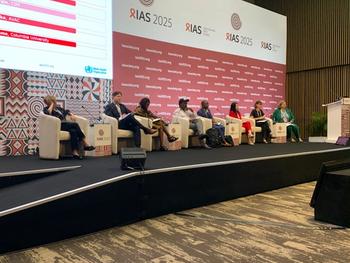
The use of preexposure prophylaxis lags far behind a 2025 target of 21.2 million people.
Alarice Marsh, M.P.H., a deputy director in the National Department of Health of South Africa and program lead of HIV testing services, spoke with MHE editors about her thoughts on the new recommendations for HIV and sexually transmitted diseases that were issued by the World Health Organization (WHO) today.

Integrating HIV and sexual health care is essential for improving outcomes, but global stigma, funding cuts—especially the defunding of USAID—and structural barriers like limited access and political resistance continue to hinder progress, experts emphasized at IAS 2025.

Global health leaders and advocates challenged attendees of IAS to support the work of the partnerships that are creating patient-focused innovations for HIV prevention and treatment.

Increasing the use of Apretude among Black women requires not only expanding awareness of the long-acting PrEP regimen in various clinics but also providing more flexible scheduling and partnering with specialty pharmacies.
There is currently a movement to “de-medicalize" PrEP by pushing for more availability at more casual settings than government clinics, according to Anna Bershteyn, Ph.D., associate professor in the Department of Population Health, NYU Grossman School of Medicine.



A World Health official says there wasn’t enough evidence at this point to support a recommendation.
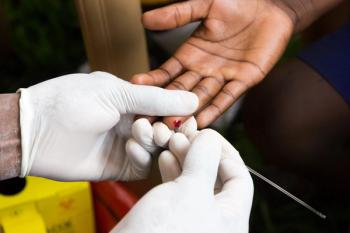
The most common HIV antibody blood test is called an “A-0” test, which is available for approximately 70 cents in many low- and middle-income countries, according to Anna Bershteyn, Ph.D., associate professor in the Department of Population Health, NYU Grossman School of Medicine.
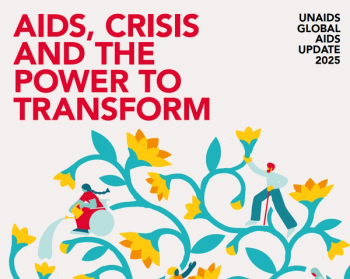
But 25 low- and middle-income countries have responded with plans for increased allocation of HIV funds, says the UNAIDS executive director. "...countries, governments and civil society are not lying down and waiting to die..."
“Millions of lives and decades of progress hang in the balance,” says the president of the International AIDS Society (IAS) during a premeeting press conference.

Results presented at the 25th AIDS Conference showed that switching to Biktarvy resulted in approximately twice as much weight gain, on average, than switching to Dovato.
Here’s what you missed this week on Managed Healthcare Executive.

Today, the clade 2b outbreak has reached alarming proportions, with over 94,000 confirmed cases reported across 117 countries, including significant numbers in the U.S. and Brazil, and up to 103 deaths. The virus has been found to affect younger men who have sex with men, who are linked to high rates of HIV co-infection.
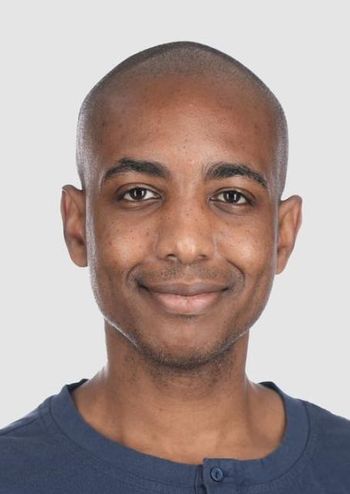
Juan Michael Porter II, a prominent healthcare journalist and HIV advocate, spoke to MHE about keeping HIV/AIDS a priority and the dynamics of funding programs and pharmaceutical pricing