
The findings add to the evidence that targeted therapies can improve outcomes in early-stage, oncogene-driven lung cancers, say the study's authors.
The findings add to the evidence that targeted therapies can improve outcomes in early-stage, oncogene-driven lung cancers, say the study's authors.

Lung cancer has seen major advances in targeted therapies and immunotherapy but fewer than half of older adults with metastatic non-small cell lung cancer ever receive systemic treatment.

A newly developed prognostic model may help clinicians better estimate survival in patients with non-small cell lung cancer and brain metastases treated with immune checkpoint inhibitors.

Insurance status was strongly associated with lung screening, with those having military-related coverage more likely to get screene than others.
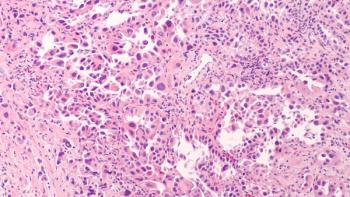
Findings may help with the selection problem of which ALK inhibitor to use, as the number of treatments in that category for non-small cell lung cancer has increased.

Researchers found that the cost of recommended sunscreen use can range from approximately $40 to more than $1,400 per year, depending on sunscreen prices and clothing choices.

A phase 1b trial found that injecting ipilimumab directly into melanoma tumors alongside intravenous nivolumab reduced severe treatment-related adverse events while maintaining encouraging antitumor activity.

Treatment advances for HER-2 mutant non-small cell lung cancer (NSCLC) have lagged behind those for other oncogene-driven NSCLC. Positive results for Hernexeos (zongertinib) may change that.

A large international study found that certain gut bacteria were associated with recurrence-free survival in high-risk melanoma patients receiving adjuvant immunotherapy, suggesting the gut microbiome could help guide personalized treatment decisions.

How old a person appears may offer insight into how long they live after treatment for early-stage lung cancer.

A single-arm Japanese trial found that pazopanib did not improve progression-free survival but demonstrated encouraging response rates and overall survival in patients previously treated with paclitaxel.

A first-in-human study finds a novel KRAS G12D–targeted protein degrader produces encouraging responses, particularly in previously treated NSCLC.

A new meta-analysis of prospective studies finds artificial intelligence performs similarly to dermatologists in melanoma detection, although more rigorous research is needed before it can be considered as a reliable decision-support tool in routine care.

A large prospective study in China that examined lung cancer risk after a negative baseline screen found that risk persists and can increase over time. Notably, there was no meaningful difference in risk during the first two years after a negative scan, but by year three, the gap became significant and continued to grow.
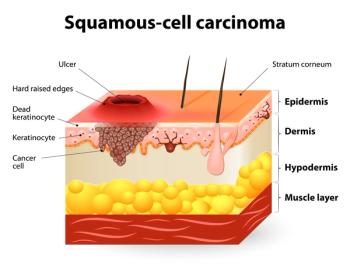
A new preclinical study found that inhibiting the enzyme LSD1 can activate the skin’s immune system and suppress tumor growth, pointing to a potential new topical treatment for skin cancer.
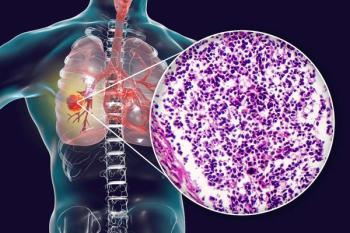
A retrospective study found similar survival outcomes whether immunotherapy was started with the first chemotherapy cycle or delayed to later cycles in patients with extensive-stage small cell lung cancer.

Nearly half of trial participants reported significant fear of melanoma recurrence, especially women, younger patients, and those with higher anxiety or depression.

A nationwide analysis of adults newly diagnosed with non-small cell lung cancer found that Medicaid expansion was associated with earlier-stage diagnosis, more timely initiation of guideline-concordant treatment and improved five-year survival.

In a new study, researchers have identified six clinical and tumor variables that were significantly associated with a recurrence of melanoma.

A study published this week found that Black Medicare beneficiaries with early-stage NSCLC remain significantly less likely than White beneficiaries to receive curative treatment, largely because of lower surgery rates.
A secondary analysis of the phase 3 KEYNOTE-716 trial finds that adjuvant Keytruda improves recurrence-free survival without increasing the risk of new primary melanoma and may reduce non-melanoma skin cancers.

A treatment may improve quality of life through one pathway but worsen it through another, obscuring the treatment's quality of life benefit in the analysis of some clinical trials.
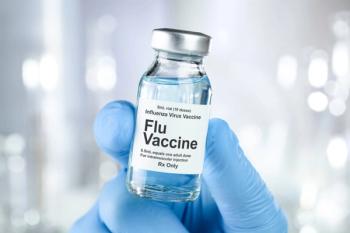
A multicenter Swedish study finds influenza vaccination during immunotherapy is associated with longer survival, particularly in people being treated for melanoma, without increasing immune-related side effects.

A new economic evaluation finds that pairing extended counseling with a brief course of nicotine replacement therapy offers the best value for health systems integrating smoking cessation into lung cancer screening.

A large database analysis finds that survival differences between men and women with metastatic melanoma disappear when patients receive immunotherapy, with the greatest benefit seen in adults older than 45 years.

A meta-analysis of more than 20 phase 3 trials found no clear survival differences by sex or age in metastatic NSCLC but reported better outcomes for Asian patients and continued underrepresentation of Black patients.

Estimates show melanoma diagnoses continuing to climb in the United States, even as newer therapies continue to reduce deaths from advanced disease.
A survey finds that many dermatology patients struggle to understand skin cancer jargon, raising concerns about communication gaps during clinical visits.

The ADRIATIC trial showed that adding Imfinzi (durvalumab) improved both progression-free and overall survival of patients with limited-stage small cell lung cancer (LS-SCLC). However, the treatment increased costs by about $138,000 compared with usual care, highlighting concerns about affordability and financial impact.

Counties with more cultivated land and herbicide use had significantly higher melanoma rates, even after accounting for ultraviolet radiation and socioeconomic factors, a new geospatial study found.

Published: March 10th 2026 | Updated: March 10th 2026
October 20th 2023