
As artificial intelligence agents learn to improve autonomously, the humans who must use and regulate such tools find themselves behind the curve.
As artificial intelligence agents learn to improve autonomously, the humans who must use and regulate such tools find themselves behind the curve.

Large language models are sure-footed at supplying answers, but what happens in medical contexts when that certainty can be a liability?

The investigational drug for late-stage MASH will now get more robust, proactive guidance from U.S. and European regulators.

In mouse models, semaglutide benefited the liver even in the absence of weight loss. The benefit appears to come via a particular type of liver cell.

The use of unsanctioned or unapproved artificial intelligence by healthcare workers created a significant liability risk, experts say.

The former chief health officer for Oracle sees artificial intelligence as the way to incorporate the many nonclinical factors that affect health into healthcare.

The state of Utah, which has a policy of encouraging AI, is allowing Doctronic, an artificial intelligence startup, to provide AI-powered automated prescription renewals. Critics express concern about "autonomous medical practice."

Carbohydrate counting involves blood glucose checks before and after meals, calculating carbohydrate consumption, and then adjusting insulin accordingly.

It’s easy to find potential use cases for artificial intelligence in pharmacy, but there are also reasons to take a cautious approach.

As many as 40% of adults with Type 1 diabetes are misdiagnosed as having Type 2 diabetes. Sanjay B. Dixit, M.D., medical director of Quest Diagnostics, discusses the problem.

The findings from this study contrast with studies of adolescents, which suggested metformin helped lower insulin resistance.
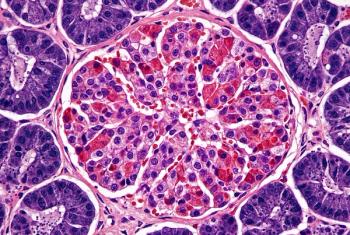
The new approach prevented diabetes onset in a mouse model and also reversed longstanding diabetes.

University of Pennsylvania researchers say their findings could potentially lead to the development of a blood test to monitor people at high risk of developing Type 1 diabetes.

A new report says complications such as severe encephalitis and Ramsay Hunt Syndrome are among the reasons people with shingles have extended hospital stays.

A new study suggests epigenetic changes at Type 1 diabetes susceptibility genes may explain the risk profile of children born of parents with the disease.

The immunosuppressive drugs used in severe COVID-19 cases might leave patients vulnerable to shingles.

Can artificial intelligence reliably spot cancer risk earlier and more reliably than the human-based version?

Diabetes self-management is associated with a significant burden and mental health impacts, but automated, ‘tubeless’ systems may be able to decrease that burden.

Type 1 diabetes, celiac disease, and Hashimoto thyroiditis are all strongly associated with HLA class II genes, authors of an observational study that found links among the diseases.

Patients with Type 1 diabetes are often excluded from diabetes and weight loss trials.

Socioeconomic factors are a key risk factor for Type 2 diabetes, but a new analysis says the same is not true when it comes to Type 1 diabetes.

At first, it was tentative. But now almost all parts of the U.S. healthcare system are racing to adopt some form of artificial intelligence. Some leaders caution about using it too widely, too fast.

Previous research has shown the recombinant zoster vaccine is more effective than its live-attenuated predecessor, but new adverse event data show it also stands up well in terms of safety.

Vaccination reduced the risk of heart attack and stroke as well as the risk of herpes zoster ophthalmicus,

Patients had a lower risk of dementia if they were vaccinated against shingles or respiratory syncytial virus, but not if they only had a flu vaccine.

The company said it was optimistic that the issues identified by the Food and Drug Administration could be resolved with new data.

Healthcare organizations are finding that their data foundations are not as solid as they expected.

In an opinion article, investigators argue that gene therapies may not achieve their full potential if the innate inflammation in Duchenne muscular dystrophy is not effectively managed.

Absent a federal committee’s recommendation, Duchenne muscular dystrophy advocates are trying to get states to adopt screening programs.

November 8th 2022

November 4th 2022