



The start of the COVID-19 pandemic was marked by a regulatory rush to enable digital health delivery. Now the industry wants those changes made permanent.
The start of the COVID-19 pandemic was marked by a regulatory rush to enable digital health delivery. Now the industry wants those changes made permanent.

The development comes after a study showed users had four fewer days per month with migraine symptoms.

By clustering patients based on self-reported data, investigators said they may be able to predict which patients are most likely to respond to a digital therapy.

The goal of the application programming interface (API) is to ensure accurate data collection without burdening patients or biasing the data.

The app’s backers believe the app could be a meaningful advancement in maternal care by making it easier to identify possible anemia in pregnant women.
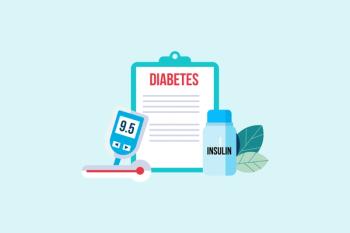
A new study showed a smartphone app is associated with improvements in HbA1c levels and other measurements indicative of well-managed diabetes. The authors note, though, that benefit may come from greater physician involvement with patients and other factors related to the app.

Several firms are trying to bring the clinical laboratory to patients’ doorsteps, but the task comes with plenty of challenges.

Digital therapies for migraine have been studied extensively in recent years, and the number of products on the market is likely to expand.

The program’s ability to construct human-like writing could make it a meaningful way to detect speech-related symptoms of early Alzheimer’s, say researchers.

A small (23 patients) pilot study showed improvements symptoms and quality of life.

Artificial intelligence can locate tibial spiking in x-ray images, which many believe to be an early sign of knee osteoarthritis.

Researchers investigated whether it might be possible to use AI and machine learning to develop a model that could use data from everyday activity (rather than workouts) to accurately predict VO2max.
Preventive care, health insurance literacy and a digital health shakeout are in the crystal ball.

But less than one-third of patients are highly adherent to continuous positive airway pressure therapy, researchers found.

The company has made digital health a major focus of its research pipeline in multiple sclerosis.

The Access to Prescription Digital Therapeutics Act has bipartisan support.

Members who receive healthcare through Point32Health Inc.’s programs will now be able to access a device called Nerivio.

As SCAN Health Plan worked to boost medication adherence among members, it made a startling discovery.

“For the past 20 to 25 years, the data has fairly consistently shown that, overall, of people who have been prescribed long-term medications, about half of those patients are not going to take them as prescribed,” says Todd Ruppar, Ph.D., a professor in the College of Nursing at Rush University in Chicago.

… is a problem. Less than one-third of patients are highly adherent to continuous positive airway pressure therapy, the study found.

The metaverse could transform healthcare if industry leaders can find a way to wrap their minds around it.

The partnership between the North Dakota healthcare system and Orexo, a Swedish digital therapeutics company, may be an example of how digital therapeutics can be especially beneficial for healthcare systems serving rural areas.
The new device collects some information automatically but also relies on patient reports of measures like well-being.

Serge Marchand, Ph.D., of Lucine told his employer that doing scientifically rigorous trials of digital therapeutics was “going to take a little longer, and it's going to be costly.”
The confusing, data-intensive world of getting help with medical bills has become a fertile territory for software developers.

Akili says the underlying technology of its AKL-TO1 product (marketed in the U.S. as EndeavorRx) is “disease agnostic” and may be used as a treatment for a variety of conditions.

The arrangement represents both a solution to an unmet medical need and a new market opportunity for the digital therapeutics firm.

Decreased hormone levels appear to increase the risk of key symptoms of obstructive sleep apnea (OSA).

The virtual format is catching on but has important limitations which make it unsuitable in certain situations.

Women traveling out of state for a medication abortion may wind up using telehealth.