Hispanic HIV incidence rose 16.8% in antisanctuary counties after the 2018 public charge announcement, relative to baseline counties, a new study found.
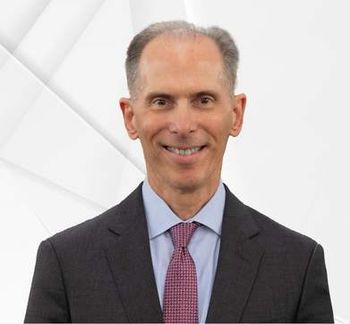
Gleason considered going into the family mortuary business. In his decades at Prime Therapeutics, he has become one of the most respected people in the pharmacy benefit management industry. Next year, as the president of the Academy of Managed Care Pharmacy, he wants to combat misinformation about vaccines.
Patrick Gleason, Pharm.D., is on a mission to combat misinformation about vaccines. When he takes over as president of the Academy of Managed Care Pharmacy (AMCP) in April 2027, he plans to emphasize not only the affordability and access of medications but also misinformation about vaccinations and their value.
“If you look at all therapies in healthcare, vaccinations are the most cost-effective therapy in preventing death and hospitalizations and the very horrible experiences, such as polio, that can occur if we didn't have vaccinations,” he says in an interview. “I want to help set the record straight with vaccinations and ensure people continue to be able to be vaccinated at near-zero cost.”
Managed Healthcare Executive (MHE) and the Pharmacy Benefit Management Institute (PBMI) selected Gleason for this year’s PBMI Innovators Award, which recognizes six professionals in the industry who are leading innovation in pharmacy benefits.
A native Minnesotan, Gleason, 57, spoke to MHE from his family’s lake house in northern Minnesota about his role as assistant vice president for health outcomes at Prime Therapeutics, a pharmacy benefit manager (PBM) for 19 Blue Cross Blue Shield plans that is headquartered in the suburban Twin Cities.
His work at Prime is diverse, spanning formulary development, benefit design and the analysis of real-world claims data. He has worked in the managed care pharmacy field for more than 20 years and leads Prime’s clinical health outcomes assessment team.
Through integrated medical and pharmacy claims real-world data analysis, he and his team assess clinical program opportunities and postimplementation outcomes. By combining medical and pharmacy benefit data, Gleason and his team can paint a picture of how medications are used in the real world. The insights then inform utilization management programs, such as prior authorization and step therapy.
“I also lead a team that develops and implements Medicare Stars production reporting, patient-level predictive modeling to improve drug therapy outcomes and cost-effectiveness, and negotiates pharmaceutical manufacturer value-based purchasing agreements,” he says.
Gleason says he is most proud of his work managing the use of the wildly popular glucagon-like peptide 1 (GLP-1) drugs. He and his team are monitoring clinical outcomes and cost trends for a group of patients taking the drugs, which include Zepbound (tirzepatide) and Wegovy (semaglutide), to treat obesity. Prime has contracted with Virta Health, a company that provides nutrition advice and other support services to patients with weight-loss goals, to offer a program the company is calling Keep Well.
“We’re finding that if individuals are enrolled in the care case management program for their obesity, there’s a 20-point more likelihood of them staying on therapy at the end of the year, and they are losing weight at the levels of the randomized controlled trials,” he says. “The counseling and the comprehensive care for their management of their GLP-1 and diet and exercise are delivering on the real value of weight loss therapy.”
Another of Gleason’s contributions to Prime is the development of High Touch Rx, a program launched in 2022 that provides surveillance of drug regimens for more than 13 million members. High Touch Rx pharmacists initiate conversations with prescribers to suggest therapy adjustments after a patient has already started a medication. For instance, a pharmacist might call a doctor to point out that a patient is being prescribed two drugs with overlapping mechanisms of action, such as Januvia (sitagliptin), a dipeptidyl peptidase-4 inhibitor that increases GLP-1 levels, and Ozempic, the version of semaglutide that is prescribed for type 2 diabetes. Since its inception, the program has delivered more than $200 million in drug therapy savings by moving patients to lower-cost alternatives.
Gleason is planning to apply his real-world evidence and skills during his AMCP presidency. The organization, he said, has always focused on real-world evidence with a current emphasis on the delivery of services and education to help pharmacy benefit leaders understand how medications are used.
He wants to bring that same focus on science to vaccines when he takes his position at AMCP, focusing on addressing misinformation. “As a country, we’ve had misinformation about vaccinations and their value,” he says.
Gleason says healthcare professionals can’t be silent when “some at very high levels in our country are propagating misinformation about vaccinations. We can be the voice of evidence. We can't be silent when individuals and groups co-opt the system and try to prevent the use of therapies that we know work and are cost-effective.”
Under the leadership of HHS Secretary Robert F. Kennedy Jr., the Centers for Disease Control and Prevention (CDC) has moved away from a focus on vaccines. Kennedy has remade the CDC’s Advisory Committee on Immunization Practices to focus on risk. Kennedy has also overseen changes to recommendations for childhood vaccines and reignited the long-debunked debate about vaccines causing autism.
Gleason, who grew up in Minneapolis, says his parents were an early influence on his life. His father was a mortician, and his mother was the “CEO of our family,” he says. “Both were hardworking, compassionate, dedicated, reliable, supportive and always encouraging.”
He considered taking over the family business, Gleason Mortuary, but his academic interests pulled him toward the sciences. Initially drawn to chemical engineering at the University of Minnesota, he eventually found himself pursuing chemistry. A conversation with a friend’s father, who was a pharmacist, steered him toward pharmacy school. He earned his Bachelor of Science degree in pharmacy and his pharmacy doctorate from the University of Minnesota. He completed an ambulatory care pharmacy practice residency at the University of Pittsburgh Medical Center, and he had a fellowship in outcomes research at the University of Pittsburgh School of Pharmacy and Graduate School of Public Health.
Before joining Prime, Gleason was an assistant professor of pharmacy at the University of Pittsburgh and then later at the University of Minnesota, where he established a medication therapy management (MTM) practice in the internal medicine clinic. “It was a unique program at the time, as we saw referral patients from staff physicians and taught medical residents, pharmacy residents, and students how to perform MTM,” he says.
Education is still an important part of Gleason’s career. For the past 25 years, he has been on faculty at the University of Minnesota’s College of Pharmacy. He is currently an adjunct professor, teaching, mentoring and advising Ph.D. and pharmacy students.
Gleason says leaving academia was a turning point in his career. He joined Prime shortly after the company was formed and has now been with the company for more than 20 years. He is an author of more than 200 peer-reviewed, scientific posters presented at national health care conferences. He has had research published in more than 50 peer-reviewed publications in medical and health policy journals, including the AMCP’s Journal of Managed Care & Specialty Pharmacy, Value in Health, The American Journal of Managed Care, Medical Care, Health Affairs and JAMA.
Gleason and his team are reviewing the latest real-world data on autoimmune disease expenditures, which represent 15% of all pharmacy benefit spending. Prime is launching care case management programs that will optimize outcomes for autoimmune diseases, such as multiple sclerosis, and inflammatory diseases, such as rheumatoid arthritis, inflammatory bowel disease and psoriasis.
Technology, including artificial intelligence (AI), is playing an increasingly large role at Prime, which grew beyond its Blues plan roots when it acquired Magellan Rx in 2022. The Prime uses the Judi platform, which was developed by Judi Health | Capital Rx. The system unifies pharmacy benefit management operations, including implementation, claim adjudication, data integration, prior authorization, patient communication, client reporting, invoicing and reimbursement.
And, like nearly every organization in U.S. healthcare, Prime is puzzling through how to incorporate AI into day-to-day work. But, Gleason says, he is also focused on making sure that the health of his team is a focus during the process. “I make it a priority to support my team and enable a path toward development, upskilling and more,” he says.
Areas where Prime is assessing how AI can be used include automating the reporting of pharmacy quality metrics and helping members navigate their benefits. But Gleason says it’s important for “a human to be in the loop." You can’t have AI function without having some oversight of a human to help us understand and enhance our real-world evidence analytics.”
AI can be used, he says, for analytics and studies to assess and understand drug therapy regimens. It can also be used in the development of a rules engine, he says, taking pharmacy quality metric specifications and turning that into code to generate the output for reporting. “It can help us understand a given quality metric and performance so we can identify how we can improve individuals’ utilization of medications to improve their performance on those given metrics,” Gleason says. “AI can help customers navigate their pharmacy benefit to inform them of their choices and options.”
Ultimately, he said, as new therapies emerge, his team will work to understand their efficacy and benefit to patients but also work to leverage their clinical resources and expertise to answer questions about how drugs are used in the real world and the long-term impacts of therapy. PBMs, Gleason says, are a critical source of data and research that can lead to improvements in healthcare access, outcomes and bringing down costs
Going forward, Gleason believes that the clinical support they provide patients will be key to managing costs and care. He says PBMs will differentiate themselves based on the clinical programs they provide and how they help members navigate their healthcare.
“Those PBMs that can create and deliver optimal clinical care programs, as well as generate real-world evidence, will be able to make the best decisions for the cost-effective use of therapies,” he says.
about 1 month ago
PBMI Innovator, Joseph Savastaabout 1 month ago
PBMI Innovator Arpit Patel, Pharm.D.about 1 month ago
PBMI Innovator Robyn Crosson, J.D.about 1 month ago
PBMI Innovator Ashley Holzworth-Nash, Pharm.D.about 1 month ago
PBMI Innovator Raechele (Rae) McMahan, MBAabout 1 month ago
PBMI Innovator Patrick Gleason, Pharm.D.about 2 months ago
Ashley Holzworth-Nash, Pharm.D., Evernorthabout 2 months ago
Arpit Patel, Pharm.D., MedImpactabout 2 months ago
Raechele (Rae) McMahan, MBA, Prescryptive Healthabout 2 months ago
Robyn Crosson, J.D., Navitus Health Solutions