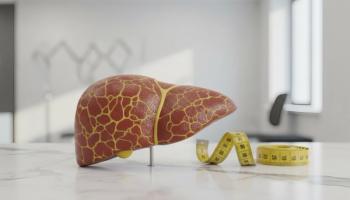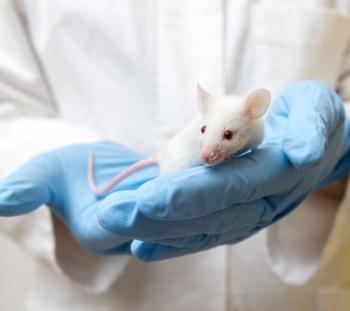
Metabolic dysfunction-associated steatotic liver disease (MASLD) may differ biologically from obesity-linked MASH, a mouse study suggests, with salt driving liver inflammation without obesity.
The FDA has approved two drugs for treatment of the condition, Rezdiffra (resmetirom) and Wegovy (semaglutide), the weight loss drug.
Metabolic dysfunction-associated steatohepatitis (MASH), a disease associated with obesity, is becoming a commonly diagnosed condition that has an increasing number of treatments. The American Liver Foundation estimates that between 1.5% to 6.5% of U.S. adults have MASH. A study published in JAMA Network Open in early 2025 projected that the number of cases in the U.S. could increase from 14.9 million in 2020 to 23.2 million in 2050.
Earlier this year, lead author
In June 2023, the American Association for the Study of Liver Diseases and comparable groups in Europe and Latin America changed the name from nonalcoholic steatohepatitis (NASH) to MASH. The groups also changed nonalcoholic fatty liver disease (NAFLD) to MASLD. NASH and NAFLD were coined in the 1980s to distinguish fatty liver disease that had causes other than drinking.
Approximately a third of the adult population worldwide has MASLD, the presence of steatosis (the accumulation of fat) in the liver in people with metabolic conditions. MASH is a more serious subtype of MASLD that involves direct damage to liver cells and accumulation of hepatic fibrosis (scar tissue in the liver).
Eating patterns that are high in high-fructose corn syrup, saturated fat, red and processed meat and carbohydrates have been associated with a higher prevalence of MASLD and MASH. Following a Mediterranean diet (plant-based foods, olive oil, fish and poultry) has MASLD-MASH benefits. The so-called
Tincopa and her colleagues note that weight and body mass index are an inexact way to assess for MASLD and MASH because they do not distinguish between visceral and subcutaneous fat or how much of the weight is from muscle. Still, weight loss among people with obesity or overweight does track with a reduction of hepatic steatosis. They cite research showing that a 3% to 5% reduction in weight is associated with a reduction in hepatic steatosis, a 7% reduction with a reduction in inflammation, and a 10% reduction with a decrease in fibrosis.
There is no one test for MASH. Clinicians test for liver enzymes and order imaging studies of the liver, some of which are specific to the liver because they can detect inflammation and fibrosis. Liver biopsies are an option, although noninvasive tests (NIT) are increasingly preferred. Tincopa and her colleagues say that identifying “at-risk MASH” — cases that are more advanced and are associated with a greater risk of liver failure or death — without liver biopsy data “can be challenging.” They review the complicated data from a number of trials of a number of imaging technologies that use a variety of cut points. Several composite scores have been developed that combine imaging results with results from blood tests. The FAST score, for example, results from FibroScan imaging, which measures liver stiffness, with blood tests for an enzyme, aspartate aminotransferase (AST), that can be indicative of liver damage. The MAST score combines a measurement of fat in the liver, MRI–proton density fat fraction (PDFF), with magnetic resonance elastography (MRE), which measures liver stiffness, with a test for AST. MEFIB is a third score that uses an MRE measurement of liver stiffness with FIB-4, a standard composite score for liver health that is calculated using the patient’s age and, via blood sample, AST and alanine aminotransferase (ALT), another enzyme that can be indicative of liver damage, and a platelet count. Experts debate which score is better and more practical. A retrospective study published in the Journal of Hepatology in 2022 that compared FAST, MAST and MEFIB concluded that MEFIB was better at detecting significant at-risk MASH. Some guidelines suggest using FIB-4 first before moving on to the imaging tests.
When the FDA approved Rezdiffra (resmetirom) on March 14, 2024, as a treatment for people with MASH (the announcement says NASH) with moderate to advanced liver fibrosis (stages F2 to F3), it was the first drug specifically approved for MASH. As Tincopa and her colleagues explain, hepatic lipid metabolism involves activation of thyroid hormone receptor (TR) beta, and people with MASH have reduced levels of hepatic TR activity. Rezdiffra is a TR-beta agonist and helps make up for that reduced activity. The pivotal trial, called MAESTRO-NASH, enrolled nearly all adults with biopsy-proven MASH with fibrosis but without cirrhosis. According to results reported in the New England Journal of Medicine, MASH resolution with no worsening of fibrosis was achieved in 25.9% of the patients in the 80-milligram Rezdiffra group and 29.9% of those in the 100 mg group as compared with 9.7% of those in the placebo group. The results were similar when it came to an improvement in fibrosis.
Madrigal Pharmaceuticals launched Rezdiffra at a whole acquisition cost (WAC) price of $47,400 for a year of therapy. The FDA approved the drug on an accelerated basis, so the company is conducting confirmatory trials. Madrigal has reported strong sales of Rezdiffra. In February 2026, the company reported that 2025 sales hit $958.4 million, which is just shy of the $1 billion in sales that is the unofficial threshold for blockbuster status.
For more than a year, Rezdiffra had the territory of FDA-approved treatments of MASH to itself. That changed on Aug. 15, 2025, when the FDA added MASH as an indication for the 2.4-mg injected dose of semaglutide, sold under the now-famous brand name of Wegovy. According to the FDA announcement of the approval, an interim analysis at week 72 of a phase 3 trial (called ESSENCE) showed 63% of study participants receiving Wegovy had MASH resolution and no worsening of fibrosis compared with 34% of participants receiving placebo, and 37% of participants on Wegovy had improvement in fibrosis and no worsening of MASH, compared with 22% of participants in the placebo group. The FDA announcement said the trial will continue for a total of 240 weeks to determine whether inflammation and scarring improvements seen after 72 weeks translate into decreases in death, liver transplant and other liver-related events. In January 2026, IQVIA described the approval of Wegovy for MASH as approval for MASH marks as “a watershed moment, as it is the second ever MASH-specific therapy to be approved and the first GLP-1 [glucagon-like peptide 1] receptor antagonist, giving it momentum to significantly disrupt the MASH treatment market.” The WAC price of a year’s supply of Wegovy as a 2.4-mg injection is $16,188.24. But Novo Nordisk is selling it on the direct-to-consumer market at a price of $349 a month, which works out to $4,188 for the year.
The number of people with MASH, noninvasive testing and the early success of Rezdiffra (and presumably Wegovy) are stoking interest in MASH drugs. Tincopa and her colleagues discuss nine different therapies in development in the emerging therapies section of their Annual Reviews paper, plus gene therapy. Boehringer Ingelheim is developing survodutide, which is a dual GLP-1 and glucagon receptor agonist. Researchers reported positive results from s phase 2 trial of survodutide for MASH in the New England Journal of Medicine in June 2024. The drug is being assessed in phase 3 trials as treatment for obesity and MASH. Meanwhile, Eli Lilly is testing its blockbuster drug, tirzepatide, as treatment for MASH. Tirzepatide, which also has dual action on GLP-1 and gastric inhibitory polypeptide receptors, is already on the market as Mounjaro for Type 2 diabetes and as Zepbound for weight loss. We will provide a full review of the drugs in development for MASH at a future date.