
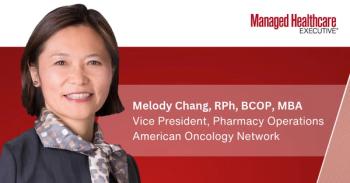
Melody Chang, R.Ph., says payers cover bispecific and CAR-T drugs but not the monitoring that lets community practices deliver them safely at lower cost.
Melody Chang, R.Ph., says payers cover bispecific and CAR-T drugs but not the monitoring that lets community practices deliver them safely at lower cost.

Continuous glucose monitoring cut mean A1C from 8.8% to 7.2% over 26 weeks in adults with type 2 diabetes not on insulin, 0.9 points more than routine care in the CONNECT trial.
American Oncology Network’s Melody Chang, R.Ph., says 18% of its first 70 outpatient bispecific patients had CRS, all low grade with no hospitalizations.

A screening program in eight countries found early-stage type 1 diabetes in about 1 in 350 children with no family history of the disease.

UC Davis Health’s Tiffany Phung, Pharm.D., and Tim Cutler, Pharm.D., say staff-driven ideas protect research independence in industry partnerships.
UC Davis Health’s Tiffany Phung, Pharm.D., and Tim Cutler, Pharm.D., say research justifies services and opens doors to limited distribution drugs.
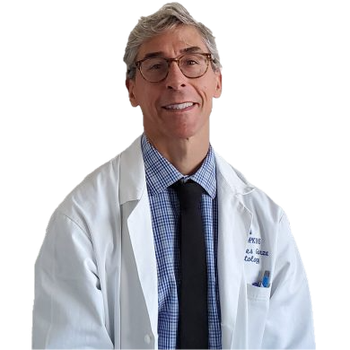
Garza, an expert on hidradenitis suppurativa at Johns Hopkins, says increasing incidence of the disease on the Japanese island of Okinawa offer some "tantalizing clues" about reasons for the rising incidence.

Apothecary Pharma is recalling 22 vials of compounded tirzepatide and one NAD+ vial nationwide, citing a lack of assurance of sterility.

Pooja Roy, M.D., of Houston Methodist Hospital, discusses how Precedex (dexmedetomidine), an ICU sedative, sometimes triggers noninfectious fever, sparking costly sepsis workups, and the need for a test could help clinicians identify the drug as a cause of fever in ICUs.
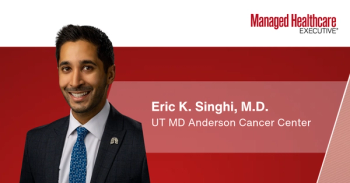
Pope Leo early-stage adenocarcinoma is a reminder that lung nodules often cause no symptoms and that people who never smoked can get lung cancer.
Young-onset lung cancer often strikes nonsmokers, and current screening based on smoking is not likely to find it, says Singhi, an assistant professor at UT MD Anderson Cancer Center in Houston. New risk-based screening, liquid biopsies, and breath tests aim earlier detection.
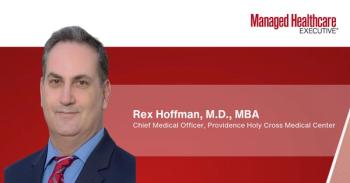
Rex Hoffman, M.D., MBA, says physician shortages and burnout are the most underestimated pressures on health system.
Rex Hoffman, M.D., MBA, of Providence Holy Cross walks through a CMO’s day in a hospital that often runs 85% to 100% full, from safety huddles to discharges.
On average, caregivers want to see their children with ADHD fall asleep 30 minutes faster, but the best sleep treatments average approximately 20 minutes, a new survey study found.

Research findings presented at CHEST meeting show COPD hospital readmission drops with discharge checklists and navigation. Other research suggests targeting readmission prevention efforts on patents discharged to post-acute facilities.

As the pharmacist pipeline tightens, leaders from UC Davis Health, UCSF Health, and Sutter Health say financial sustainability now depends as much on capacity as on cost.

GLP-1 use in adults 65 and older with MASLD was linked to a 45% lower risk of death, and a 28% lower risk of hepatic decompensation, a new Houston Methodist Research Institute study shows.

New data from Sutter Health suggest the real gap in GLP-1 access is physician awareness, not insurance coverage — and fixing it closed outcome disparities across every racial and ethnic group.

Research findings presented at the CHEST meeting show that false positives may make patients more adherent to screening. Qualitative research shows that patients want more explanation and results communicated verbally.
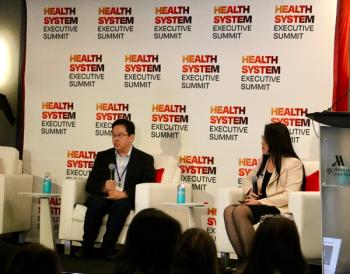
David Chen, PharmD, explains how physician-led formulary decisions — not rebates — power Kaiser Permanente’s biosimilar strategy, and why he thinks other health systems could do the same.

10 research abstracts presented at the CHEST meeting are split on whether hospital admission during the weekend is assoicated with worse outcomes than admission on weekdays.
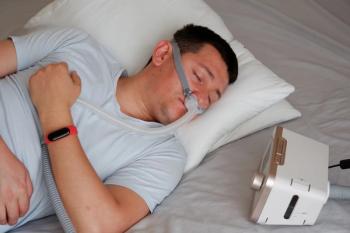
Research findings scheduled to be presented at the CHEST meeting show broad positive cardiopulmonary effects from GLP-1s and an association with a reduced risk of acute respiratory failure.
Chad Hatfield, Pharm.D., of UC Davis Health, says 340B savings fund free clinics and mental health care that could shrink as the program’s future shifts.

Fewer than 1 in 5 eligible adults get lung cancer screening. Experts told MHE over email that health plans can help by easing cost, coverage and approval barriers.

Healthcare spending for employer-insured Americans rose by nearly 19%between 2019 and 2023, driven by higher prices, surging drug costs, and spending on hospital care, says the president and CEO of the Health Care Cost Institute.

All 46 people with HIV who started long-acting lenacapavir and cabotegravir at a University of California, San Francisco, clinic reached or kept viral suppression over a median of 100 weeks.
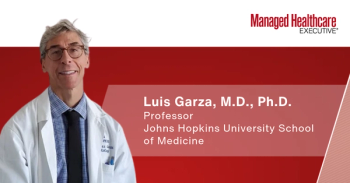
Luis Garza, M.D., Ph.D., a Johns Hopkins professor, says hidradenitis suppurativa is neither an infection nor a classic autoimmune disease but an auto-inflammatory condition.

Vision impairment affected 17.6% of 1,484 adult burn survivors in a study presented at AAO 2026, with age the strongest predictor of difficulty seeing.

During the Health System Executive Summit, Candy Tsourounis, PharmD, and Elise Wozniak, PharmD got candid about the barriers and financial risk surrounding this innovative therapy.
Hidradenitis suppurativa is becoming more common, and a Johns Hopkins expert suspects an unidentified chemical in processed foods may be one reason.