



















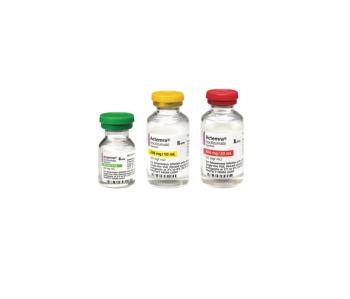
The authorization is based on four studies that evaluated Actemra in more than 5,500 hospitalized patients.
The authorization is based on four studies that evaluated Actemra in more than 5,500 hospitalized patients.
The longstanding medicine for adults is now approved to treat children 3 months to less than 12 years old with venous thromboembolism.

The therapy would be used to help prevent and treat blood clots in pediatric patients.

Novartis’ investigational targeted radioligand therapy extends survival in patients with advanced metastatic prostate cancer.
The Alzheimer's Association praises the approval but not the price tag. A Harvard Medical School professor who resigned from an FDA advisory committee says the OK "was probably the worst approval decision in recent U.S. history" in his resignation letter.

Today's approval goes against the advice of an outside advisory committee.

Semaglutide injection is a weekly injection for chronic weight management in adults.

About 2% to 3% of patients with nonsmall cell lung cancer have EGFR exon 20 insertion mutations targeted by newly approved Rybrevant.
OptumRx had identified pegcetacoplan as one of the top 5 drugs in the pipeline this year.
The AstraZeneca drug is the first SGLT2 inhibitor approved for chronic kidney disease regardless of whether the patient has diabetes.

Zients, who served as director of the National Economic Council under Barack Obama, would come to the post with a background in business and technology, rather than a traditional healthcare portfolio.

If Pfizer's vaccine gets an emergency use authorization, it could reach sites designated by states within a day.

Results show an electorate deeply divided by age, gender, and partisanship.

William Shrank, MD, MPHS, Humana’s chief medical and corporate affairs officer, said value-based care underscores the need to take a more holistic view of health.

Scientists react negatively to FDA's handling of the Emergency Use Authorization for convalescent plasma in COVID-19.

How real-world evidence will help FDA develop a vaccine.

FDA outlines what it will take to get a COVID-19 vaccine approved, while NIH offers its research strategy.

In a long-awaited move, HHS proposes to overhaul the federal anti-kickback statute and Stark Law for today’s value-based environment.

They were formed to provide greater access to healthcare and lower costs, but they may be doing more harm than good.

From new models to AI, the things that get health execs excited about the future of healthcare.

Two challenges providers may face under the proposed rule.

How the president’s Advancing American Kidney Health’ Initiative will impact policy.

Due, at least in part, to the substantial increase in the number of sales of New York not-for-profit skilled nursing facilities to for-profit operators since 2015, the Charities Bureau of the New York State Attorney General is subjecting such transactions to increased scrutiny, including objecting to certain of such sales, increasing the time and cost associated with such transactions.
These are the important policies to watch out for in 2019.

In the three decades since its passage, Stark Law has become one of the most significant sources of regulatory burden on physicians and, ultimately, for Medicare beneficiaries.