



Melissa Andel, principal of CommonHealth Solutions, discusses Medicare Part D in the future — more particularly in the next year — and why these changes are being made during this year's AMCP Nexus conference.

Briana Contreras is an editor at Managed Healthcare Executive, where she covers the clinical, business and policy developments that matter to payers and health plan leaders, with an additional focus in multiple clinical spaces. Her reporting spans from new cancer therapies and clinical trial data to drug affordability and biosimilars, pharmacy benefit management (PBM) and health plan operations, giving healthcare executives clear context on how new evidence can affect coverage and care decisions.
Experience:
Before joining MHE in 2019, Briana was a reporter at The Morning Journal in Lorain, Ohio, west of Cleveland, where she covered local government, community news and the issues affecting residents across Lorain and Erie counties. She reported on city council, downtown redevelopment, library and school projects, local business, nonprofits and breaking news in Elyria, Lorain and nearby communities.
Education:
Briana graduated from Cleveland State University with a B.A. in Journalism and Promotional Communication.
Melissa Andel, principal of CommonHealth Solutions, discusses Medicare Part D in the future — more particularly in the next year — and why these changes are being made during this year's AMCP Nexus conference.
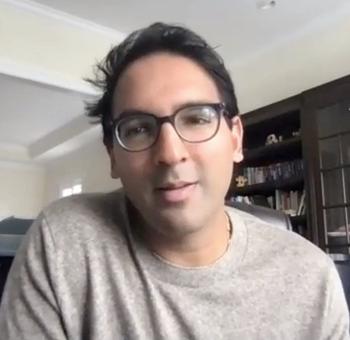
Shantanu Nundy, M.D., MBA, chief medical officer at Accolade, is one of the emerging health leaders featured in the October 2021 issue of Managed Healthcare Executive. In this video he talks about the career achievement that has given him the greatest satisfaction and who has had the greatest influence in his life, which are his parents, sister and aunt and uncle.

Joan Barrett of Axene Health Partners and Nicole Bulochnik of Optum discuss value-based care models and actuaries' involvement during this year's AMCP Nexus conference.
Christina Barrington, VP of pharmacy programs at Priority Health, spoke at AMCP Nexus 2021 about the value of managed care, real-world evidence and more.

Melissa Hanna, J.D., MBA, co-founder and CEO of Mahmee in Los Angeles, is one of the emerging health leaders featured in the October 2021 issue of Managed Healthcare Executive. In this video she talks about the career achievement that has given her the greatest satisfaction and who has had the greatest influence on her life, which is her mother.
Rachel Goldberg, B.S.N, RN, director of behavioral health client partnerships and product innovation at Horizon Blue Cross Blue Shield of New Jersey, is one of the emerging health leaders featured in the October 2021 issue of Managed Healthcare Executive. In this video she talks about the career achievement that has given her the greatest satisfaction and who has had the greatest influence on her life.

Ann Mary Ferrie of Visiting Nurse Service of New York is one of the emerging health leaders featured in the October 2021 issue of Managed Healthcare Executive. In this video she talks about the career achievement that has given her the greatest satisfaction and who has had the greatest influence on her life, which is her mother.

Harold Carter of Express Scripts is one of the emerging health leaders featured in the October 2021 issue of Managed Healthcare Executive. In this video he talks about the career achievement that has given him the greatest satisfaction and who has had the greatest influence on his life, which is his grandfather he is named after.

In this week’s episode, Managed Healthcare Executive Associate Editor Briana Contreras had the pleasure of meeting CEO of Quanterix and founder of Powering Precision Health, Kevin Hrusovsky. Quanterix is a blood-based biomarker analysis company. In this discussion, the two discussed Powering Precision Health and some tools like the Disruptive Innovation 5-step model that brings his vision closer of detecting and improving the health of patients sooner.

Matthew Bennett is senior vice president of Evernorth Care Delivery, a health services company and subsidiary of Cigna. Bennett is one of the emerging health leaders featured in the October 2021 issue of Managed Healthcare Executive. In this video he talks about the career achievement that has given him the greatest satisfaction, dissects his recent promotion and who has had the greatest influence on his life.

The FDA released information on booster shots for the Moderna and Johnson & Johnson COVID-19 vaccines before their public meeting that begins Thursday.

In this video series, Agboola addresses two questions asked in the annual Emerging Health Leaders series: Which career accomplishment has given you the greatest satisfaction? and who has had the greatest influence on your life?

Cigna has expanded its Medicare Advantage plans for the third consecutive year in as Medicare Advantage premiums lower per month in 2022.
This week, MHE editors Briana Contreras and Peter Wehrwein chat with MHE Editorial Advisory Board Member Cindy Hundorfean for the latest episode of the Meet the Board podcast series. Hundorfean, who is CEO of Allegheny Health Network, told MHE a few things about her time with the Cleveland Clinic, where Allegheny Health Network stands in the competitive Pittsburgh healthcare market and what the organization is doing to improve the health of the population.

In a study conducted by JAMA, results were recently released sharing children with active asthma had reduced symptom days, but not significantly, in the use of a school-wide integrated pest management program or a high-efficiency particulate air filter purifier in recorded 2-week time periods.
In this week's episode of Tuning In to the C-Suite podcast, Briana Contreras of MHE chatted with Daniel Drake, president and CEO of Trinity Health PACE, or Programs of All-Inclusive Care for the Elderly. Dan and Briana discussed the specifics of how PACE has grown in recent years, the outlook for these programs in the future and how PACE is benefitting older patients’ wellbeing and their healthcare costs.

A recent City of Hope study claims a therapy that combines a drug that disrupts DNA repair with chemotherapy cisplatin and gemcitabine does not prolong progression-free survival for patients with urothelial cancer.

Committee's two votes are only recommendations but a narrower booster emergency use authorization now seems likely.

Senior Vice President of OptumRx, Savitha Vivian, shares with MHE when expected upcoming biosimilars are coming to market and the challenges she's seeing with biosimilar acceptance.
Briana Contreras of MHE met Stephanie Mercado, CEO and Executive Director of NAHQ (National Association for Healthcare Quality) for this week's episode of Tuning In to the C-Suite. The two discussed NAHQ’s mission to improve healthcare quality and what improvements, as well as shortcomings have been made. She also shared what steps need to be taken in healthcare as a whole to continue improving the quality of care.
In this week’s episode of Tuning In to the C-Suite podcast, MHE Associate Editor Briana Contreras interviewed VillageMD’s Senior Medical Director of Village Medical at Home, Dr. Tom Cornwell. Dr. Cornwell discussed the main benefits of primary care at home, which includes the benefit of cost savings for patients, maintaining control of hospital readmissions and others. Dr. Cornwell also noted what has changed in the industry of at-home care and if there has been interest from payers like insurance companies and medicare in the service.

In this final part of a three-part video series, Briana Contreras, associate editor of MHE, spoke with Dr. Maria Hernandez, founder and CEO of Impact4Health. Maria shared not only how healthcare inequities remain to be an issue and what needs to be addressed, but also the progress that has been made over time through awareness, conversations and laws, especially due to the heightened awareness of inequities caused from the COVID-19 pandemic and the tragic deaths of George Floyd, Breonna Taylor and many more - which have now occurred over a year ago.

In this final part of a three-part video series, Managed Healthcare Executive® Managing Editor Peter Wehrwein recently interviewed Kulleni Gebreyes, M.D., director of Deloitte's new Health Equity Institute about her career, healthcare disparities and equity issues and the work of the institute.
In this second of a three-part video series, Managed Healthcare Executive® Managing Editor Peter Wehrwein recently interviewed Kulleni Gebreyes, M.D., director of Deloitte's new Health Equity Institute about her career, healthcare disparities and equity issues and the work of the institute.
In this first of a three-part video series, Managed Healthcare Executive® Managing Editor Peter Wehrwein recently interviewed Kulleni Gebreyes, M.D., director of Deloitte's new Health Equity Institute about her career, healthcare disparities and equity issues and the work of the institute.
In this second part of a three-part video series, Briana Contreras, associate editor of MHE, spoke with Dr. Maria Hernandez, founder and CEO of Impact4Health. Maria shared not only how healthcare inequities remain to be an issue and what needs to be addressed, but also the progress that has been made over time through awareness, conversations and laws, especially due to the heightened awareness of inequities caused from the COVID-19 pandemic and the tragic deaths of George Floyd, Breonna Taylor and many more - which have now occurred over a year ago.
In this first part of a three-part video series, Briana Contreras, associate editor of MHE, spoke with Dr. Maria Hernandez, founder and CEO of Impact4Health. Maria shared not only how healthcare inequities remain to be an issue and what needs to be addressed, but also the progress that has been made over time through awareness, conversations and laws, especially due to the heightened awareness of inequities caused from the COVID-19 pandemic and the tragic deaths of George Floyd, Breonna Taylor and many more - which have now occurred over a year ago.

Survey highlights level of compliance preparedness and increasing skepticism towards new regulations.
Briana Contreras, associate editor of MHE, spoke with Dr. Maria Hernandez, founder and CEO of Impact4Health. Maria shared not only how healthcare inequities remain to be an issue and what needs to be addressed, but also the progress that has been made over time through awareness, conversations and laws, especially due to the heightened awareness of inequities caused from the COVID-19 pandemic and the tragic deaths of George Floyd, Breonna Taylor and many more - which have now occurred over a year ago.

In this second part of a two-part video series, Briana Contreras, associate editor of MHE caught up with MHE Editorial Advisory Board member David Calabrese, who is market president of Health Plans/PBMs at OptumRx. Calabrese shared his thoughts on the approval of the Alzheimer’s drug Aduhelm, as well as the Biden Administration's interest in putting more generics and biosimilars in the market.