Articles by Briana Contreras

Sherry Rais, M.Sc., CEO and co-founder, Enthea, is one of 12 winners in this year's Emerging Leaders in Healthcare feature. In an interview with MHE, she recommends "Nickel and Dimed: On (Not) Getting By in America" by Barbara Ehrenreich to not only those in healthcare, but all readers as the book illustrates the ways in which inequality affects people’s access to healthcare.
Jason Prestinario of Particle Health is one of 12 winners in this year's Emerging Leaders in Healthcare feature. In an interview with MHE, Prestinario said sports betting is an interest of his as much of it is built from his background of high school and club college sports, being a fan of competition and even pursuing his career as a data scientist.

Researchers of a study investigated the association between health-related physical fitness and liver function indicators in hopes of finding potential preventative measures and personalized exercise prescriptions for those living with liver complications.

In a JAMA Network Open study published Sept. 11, researchers wanted to take a deeper look into PrEP regimens’ impact on cardiometabolic health, as it is understudied. To do so they examined the risk of incident hypertension and statin use among adult health plan members starting PrEP with tenofovir alafenamide fumarate (TAF) compared adults taking tenofovir disoproxil fumarate (TDF).

Nora Lozano-Evjen of Equality Health, is one of 12 winners in this year's Emerging Leaders in Healthcare feature. In an interview with MHE, Lozano-Evjen shared that after she moved to the United States from Mexico City, she became involved as a prevention specialist for two U.S. school districts, which introduced her to health and social disparities impacting underserved communities — especially those of color. The exposure to these realities pushed her toward the community health worker model she believes in today.
Managed Healthcare Executive's Managing Editor Peter Wehrwein, and Editor Briana Contreras, had a discussion in July with Mostafa Kamal, president and CEO of Prime Therapeutics, an organization in which Kamal acquired this position that same month.

Sanjula Jain, Ph.D., chief research officer at Trilliant Health, is one of 12 winners in this year's Emerging Leaders in Healthcare feature. In an interview with MHE, Jain shared that although she has an affinity for data-driven interpretations, she enjoys going down the rabbit hole of reading horoscope predictions and the personality descriptions of zodiac signs.

Kevonne Holloway, MBA, managing director, Global Content Partners, Elsevier, is one of 12 winners in this year's Emerging Leaders in Healthcare feature. In an interview with MHE, Holloway recommended "�The Light We Carry," a book by Michelle Obama, as a must-read as it describes how everyone has a light inside of them that illuminates the way for others.

Vaccine manufacturers have publicly announced that the boosters would be ready this fall, and the FDA anticipates they will be available “in the near future.”

Russell Graney, Founder and CEO of Aidin, is one of 12 winners in this year's Emerging Leaders in Healthcare feature. In an interview with MHE, Graney talked about appreciating advice he received from healthcare veterans during the start-up of Aidin, but sifting through the right input for his business.

Kyna Fong, Ph.D., CEO and co-founder, Elation Health, is one of 12 winners in this year's Emerging Leaders in Healthcare feature. In an interview with MHE, Fong shared a guilty pleasure of her's is Na Ya Dessert Cafe in San Francisco's Hayes Valley. In addition to a guilty pleasure, Fong also talked about a career turning point she experienced, and what book she recommends to healthcare professionals.

Mike Steelman, vice president, Managed Markets, Dexcom presented on the pathways to implement non-prescription digital therapeutics at the 2023 PBMI Annual National Conference in Orlando. In this interview with Managed Healthcare Executive, Steelman suggests that creating "certainty in an uncertain world" in the digital therapeutic space could potentially open up doors for further use of these tools.

Mike Baldzicki, chief commercial officer, Premier Pharmacy Services, shared some takeaways from his presentation on the rare-ultra orphan disease market and its therapies at the 2023 PBMI Annual National Conference in Orlando.

At the 2023 PBMI Annual National Conference in Orlando, Ellen Feeney, director of Clinical Pharmacy Strategies at Highmark discusses how these new programs payers are using to control medication costs work, and shares how costs of the GLP-1s should be managed.
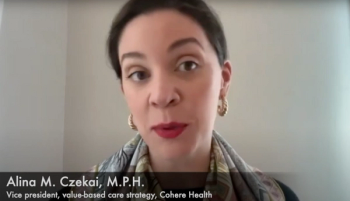
Alina M. Czekai, M.P.H., vice president, value-based care strategy, Cohere Health, is one of 12 winners in this year's Emerging Leaders in Healthcare feature. In this video interview, Czekai shares a turning point that changed her career trajectory, recommends a good read for healthcare professionals, and even spills her guilty pleasure: some time with the "Real Housewives" and a glass of red wine.

The first-ever machine learning-based model was developed to provide preoperative predictions of weight trajectories up to 5 years after surgery, simultaneously for three of the most common types of bariatric surgery.

Though the CDC reported BA.2.86 was detected in only five different countries as of last week, new reports claim more cases of the variant have been detected in the U.S. and other countries within the last few days.

Researchers of a recent study compared the clinical presentation and treatment outcomes of people with HIV and HIV-negative persons with monkeypox who were treated with tecovirimat, as it was previously unclear if treatment outcomes differed between those with and without HIV.

Cindy Gaines, MSN, RN, chief clinical transformation officer at Lumeon, shared how automation creates more efficiency in different facets of the workplace when it comes to balancing less staff with an increase of patients.
Cindy Gaines, MSN, RN, chief clinical transformation officer at Lumeon, addresses the current status of electronic health records in the healthcare industry and how automation is filling in its gaps through technology.

This clinical trial is a part of the NIH's Researching COVID to Enhance Recovery (RECOVER) Initiative, aimed at understanding, treating and ultimately preventing the symptoms experienced by individuals following SARS-CoV-2 infection.

Briana Contreras, an editor of Managed Healthcare Executive, had the pleasure of catching up with MHE Editorial Advisory Board Member, Ateev Mehrotra, MD, MPH, who is a professor of healthcare policy at Harvard Medical School and an Associate Professor of Medicine and Hospitalist at Beth Israel Deaconess Medical Center.

Cognitive deficits were similar to the effects of being hospitalized during illness or an age-related decline of 10 years in age.

A study recently published in the BMJ on mortality rates in over 20,000 people successfully treated for HCV has revealed that despite successful treatment, these individuals continue to face substantial mortality rates, mainly driven by liver and drug-related causes.

A recent report shared the market's expansion is mainly driven by the growing prevalence of chronic diseases, which has increased the demand for remote health monitoring and efficient healthcare solutions.

Welcome back to another episode of "Tuning In to the C-Suite," where Briana Contreras, an editor of Managed Healthcare Executive, had the pleasure of chatting with Cindy Gaines, chief clinical transformation officer at Lumeon.

In a study conducted from January to September 2022, 268 United States counties within 22 states participated in the U.S. Centers for Disease Control and Prevention’s National Wastewater Surveillance System (NWSS).

In an interview with MHE, Paul Hahn, M.D., Ph.D., vitreoretinal surgeon at NJRetina, talked about the latest geographic atrophy treatments, pegcetacoplan and avacincaptad pegol, from a coverage and healthcare resource utilization standpoint, as both will potentially be available for the chronic disease that previously had no treatments.
Paul Hahn, M.D., Ph.D., vitreoretinal surgeon at NJRetina, chatted with MHE about the latest geographic atrophy treatments and shared key takeaways found from clinical trials examining them. Hahn presented on macular degeneration today at the American Society of Retina Specialists annual meeting in Seattle.

The Value in Health Care Act of 2023, a bipartisan legislation that would make several important reforms to ensure alternative payment models (APMs) continue to produce high quality care for the Medicare program and its beneficiaries, was introduced in a letter signed by seventeen of the nation’s leading stakeholders in healthcare.


