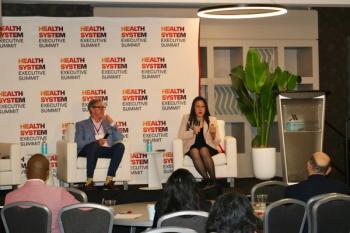
Rex Hoffman, M.D., MBA, says physician shortages and burnout are the most underestimated pressures on health system.
A recent study found that TikTok videos about breast cancer screening created by physicians are more accurate and reliable than those made by nonphysicians or private clinics, highlighting both the platform’s growing role in health education and persistent quality gaps.
TikTok videos about mammograms created by medical professionals were more accurate than videos created by nonphysicians, according to recent research
TikTok has approximately
A team of researchers led by Imran Bitar from Oakland University in Rochester, MN, used the DISCERN tool to evaluate TikTok videos and compared the quality and reliability of information created by physicians, nonphysicians and private clinics.
“This study highlights TikTok's growing role in breast cancer awareness and screening information, while also revealing significant gaps in content quality and accuracy,” Bitar and his team write in the study.
The DISCERN tool consists of 15 questions used to measure the quality of information, graded on a scale of 1-5, plus an overall quality rating.
The study began in March 2025 when Bitar and his team identified 983 videos on TikTok using the hashtag #BreastCancerScreening. They then pared it down to 123 videos, which met the inclusion criteria of receiving at least 70 likes. Finally, this was reduced to 75 videos. Researchers excluded videos that were not in English, were unrelated to breast cancer screening or were made by the same creator. Of the 75 videos, 31 were created by physicians, 23 were created by nonphysicians and 21 were created by private clinics.
The 75 videos analyzed had a total of 13,216 likes and 1,672 comments, with a mean DISCERN score of 2.83.
Specifically, results showed that physician-created videos earned a 3.12 DISCERN score, which was the highest average. This was followed by private clinic videos, which earned a 3.07 and nonphysician videos, which earned a 2.29.
The tool has been used to study other TikTok videos on
Breast cancer is the second most common cancer diagnosed in women in the United States, behind skin cancer. Breast cancer accounts for approximately
However, in 2022, only 59.1% of women ages 40–49 years old and 76.5% of those aged 50–74 years old reported they had a mammogram within the last two years, according to a CDC
“Both physician and non-physician creators must balance entertainment with educational value, ensuring that content is not only engaging but also medically accurate and reliable,” Bitar and his team write.