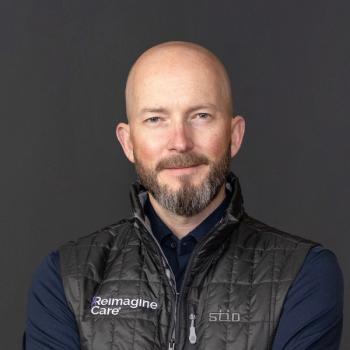
Dan Nardi shares how Reimagine Care uses AI triage and connected devices to scale outpatient cancer support, enabling faster, personalized symptom monitoring.
Teledermatology revolutionized skin care in 2025, enhanced access and efficiency through virtual tools and AI while addressing safety and trust concerns.
Teledermatology grew quickly in 2025 as more dermatologists, tech companies and patients used virtual tools to make skin care more efficient and accessible. Across conferences, research and surveys, one thing was clear: virtual care and artificial intelligence are changing how dermatology operates and raise new questions about safety, fairness and trust.
Much of the news around this space in 2025 focused on how virtual visits help both patients and doctors. For example, at the 2025 American Academy of Dermatology Meeting in March, Elizabeth K. Jones, M.D., FAAD, an associate professor at Thomas Jefferson University Hospital, spoke with Managed Healthcare Executive about
“I think the most obvious answer is the individual patient cost savings,” Jones said. “This is both the direct costs of care but also the indirect costs. You're reducing their travel time, their travel expenses and their time away from work.”
Jones also mentioned a study by the University of Pennsylvania that looked at store-and-forward teledermatology, which was used for triage. This form of teledermatology cut in-person visits by 27% and reduced emergency department visits by 3% in an underserved community in Philadelphia.
She added that some visits—including genital issues, full-body skin exams and lesions that might be cancerous that need office evaluation and sometimes a biopsy—still need to be in person.
Jones shared that
“For a lot of practices, the hybrid model combines the live interactive video with the patient’s ability to submit photos or the physician’s ability to review photos,” she said, adding that early survey data from the AAD showed many dermatologists thought hybrid models were the most accurate.
Research this year also showed virtual tools can help with chronic skin conditions.
According to Dermatology Times (DT),
Researchers said these tools could help with both virtual care and research, though access to technology and younger study participants were noted as limits.
AI also continued to play a bigger role in dermatology. In a November interview with Managed Healthcare Executive, Veronica Rotemberg, M.D., a dermatologist and AI researcher at Memorial Sloan Kettering Cancer Center, described how
“Melanoma can be cured if it's caught at an early stage. (It has) a very high cure rate just with surgery alone. So it's a really important goal for the field of dermatology and for the field of AI to address melanoma detection,” she said, adding that AI must be tested carefully and used in a way that works for all skin types and ages.
Virtual care platforms are also creating more efficiency in this space. In the same interview, Anna Chacon, M.D., a dermatologist who offers care through Miiskin, explained the benefits.
“(Virtual care) is definitely more efficient because people don't have to drive to an office and go there. It's more cost-effective. There's no overhead, and you're able to see just a wider number of patients,” she said, adding that online platforms let dermatologists see patients in every state where they are licensed, helping reach more people.
Patients are also embracing virtual care. According to DT, a national survey commissioned by Miiskin found that
The study revealed that about 74% of patients said seeing a board-certified dermatologist is important. Many patients said long wait times and insurance limits make regular care hard. While 85% preferred in-person visits, more than half said they would choose a virtual visit if it meant getting care sooner.
Teledermatology and AI are also helping with workflow and administrative tasks. Miiskin’s CEO Jon Friis said
This year, teledermatology made major progress. Virtual care improved access, saved time and supported doctors with AI. In addition, patients are asking for faster, clearer and more reliable care. While some visits will always need to be in person, this year showed that virtual care and digital tools are now an essential part of dermatology and will only keep growing in the years to come.