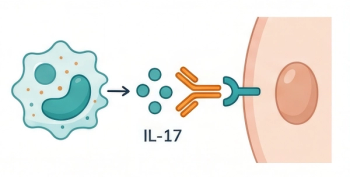
A review of randomized clinical trials, nonrandomized trials and case reports suggests that the inflammatory bowel disease risk from treatment with IL-17 inhibitors is low.
Blood tests reveal early, widespread inflammation in hidradenitis suppurativa, linking biomarkers to disease severity, quality of life, smoking, and potential cardiovascular risk.
Patients with
Hidradenitis suppurativa is a chronic inflammatory skin condition that affects roughly 1% of the Western population, causing painful nodules and abscesses in areas such as the armpits, groin and perianal region. Over time, the disease can lead to tunnel formation and scarring under the skin. Prior research cited in the study has linked hidradenitis suppurativa to a range of comorbidities, including metabolic syndrome, cardiovascular disease, inflammatory bowel disease, inflammatory joint disease, and depression and anxiety.
Researchers at Uppsala University Hospital in Sweden collected blood from 44 adults with hidradenitis suppurativa and 44 age- and sex-matched healthy controls, then measured 92 immune-related proteins using the Olink Target 96 Inflammation panel. The patient cohort, recruited between 2017 and 2019, was 70.5% female with a median age of 41, a median disease duration of 10 years and a median body mass index of 29.2. The group skewed toward moderate to severe disease, with a median International Hidradenitis Suppurativa Severity Score System, or IHS4, score of 8.5, but more than 80% of patients were not on any systemic treatment for the disease at the time of sampling, which the authors said let them capture a baseline inflammatory profile largely unaffected by medication.
Thirty-seven proteins differed significantly between patients and controls, and 33 of those were elevated in the hidradenitis suppurativa group. The largest differences turned up in TGF-alpha, followed by the IL-6 family members oncostatin M and IL-6 itself. A separate cluster of markers, including TGF-alpha, oncostatin M, IL-8/CXCL8, IL-7, TNFSF14 and hepatocyte growth factor, was already elevated in patients with Hurley stage I, the mildest classification of the disease. Two markers associated with cardiovascular disease, oncostatin M and EN-RAGE, were also elevated in Hurley I patients, which the authors said points to a possible increased cardiovascular risk even in mild hidradenitis suppurativa.
IL-6, IL-17A, CCL19, VEGFA and CCL20 rose progressively with increasing Hurley stage, the study found. IL-6 and hepatocyte growth factor also correlated positively with both IHS4 scores and the Dermatology Life Quality Index, a measure of how skin disease affects daily life, suggesting the two proteins track with both clinical severity and patient-reported burden. VEGFA showed a similar correlation with quality-of-life scores.
IL-17A and CCL19 stood out for a different reason: Both correlated with how long a patient had lived with the disease, with the highest levels in patients with longstanding hidradenitis suppurativa. IL-17A is already a target of biologic therapies used to treat the condition.
The researchers also found that current smokers had significantly higher IL-6 levels than patients who had never smoked, and smoking status was tied to worse IHS4 and quality-of-life scores. CCL7/MCP-3 was the only protein significantly correlated with body mass index.
The cardiovascular signal fits a broader pattern documented elsewhere in the literature: a propensity-matched global cohort study of more than 144,000 patients with hidradenitis suppurativa found a significantly higher rate of cardiovascular disorders compared with matched controls, according to a 2024 study in the
The authors noted that the modest cohort size and incomplete data on comorbidities and ethnicity limit how far the findings can be generalized, and they called for validation in larger, well-characterized cohorts.
"This finding, together with an increase in IL-17A levels in longstanding disease, suggests that there can be benefits of early treatment suppressing systemic inflammation," the study's authors wrote in the paper's discussion section.