
Annual healthcare costs jump by almost $25,000 with targeted therapy for atopic dermatitis that avoided costs from reduced hospitalizations and ER visits only partly offset, according to recently reported research findings.
The results come several months after the FDA approved Lisraya for dermatomyositis.
Lisraya (brepocitinib), which the FDA approved as a treatment for dermatomyositis in August 2026, is showing promise as a treatment for another rare skin condition, cutaneous sarcoidosis, according to results reported today in JAMA Dermatology.
Corresponding author Misha Rosenbach, M.D., a professor in the Department of Dermatology at the University of Pennsylvania’s Perelman School of Medicine, and his colleagues reported that patients enrolled in a phase 2 trial who received Lisraya experienced “rapid, significant improvement” in their disease, and, furthermore, the results show a dose-response relationship.
Simultaneous with the publication in JAMA Dermatology, Rosenbach is presenting the results at the ACR Convergence 2026, the annual scientific meeting of the American College of Rheumatology, which is being held in Orlando, Florida, this week.
Although the study included only 31 participants, Rosenbach said in a news release issued by Lisraya’s maker, Priovant Therapeutics, that it was the largest so far of cutaneous sarcoidosis. In the release, Rosenbach says the results from a predetermined interim show that Lisraya produced almost clear skin in almost two-thirds of patients.
“These published findings bring rigorous clinical evidence to a historically neglected disease and patient population and offer a compelling reason to believe that a fundamentally different future with more targeted, effective treatments may be possible for our patient,” Rosenbach is quoted as saying.
Based on the positive results that Rosenbach is reporting and other data suggesting the oral drug is effective and safe, Priovant is funding a phase 3 trial, called BEACON+, that will assess the top dose used in the phase 2 trial. Results from that trial, which has an enrollment goal of 140 participants, are expected to be made public sometime in 2028.
Priovant has priced Lisraya at $34,195 for a 30-day supply of the once-a-day pill, which works out to approximately $41,000 on an annual basis.
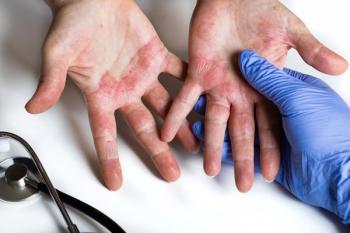
In their JAMA Dermatology study, Rosenbach and his colleagues say that in contrast to most inflammatory skin conditions, cutaneous sarcoidosis that is not controlled can cause permanent skin damage, including scarring and dyspigmentation, and also cause harm below skin level, damaging bone and cartilage.
The FDA hasn’t approved any drugs to treat cutaneous sarcoidosis. Clinicians use a variety of drugs off-label to treat the disease, including antimalarials, tetracycline antibiotics and TNF inhibitors. Topical and systemic glucocorticoids are often combined with other drugs.
According to Rosenbach and his colleagues, research has suggested that dysregulated T helper (Th) 1 and Th17 immune responses are central players in the “granulomatous inflammation” of sarcoidosis. Those responses involve a number of cytokines. Tyrosine kinase 2 (TYK2) and Janus kinase 1 (JAK1) orchestrate those cytokines, and Lisraya selectively inhibits TYK2 and JAK1.
The patients in this phase 2 trial were randomly assigned to either a 45-milligram (mg) dose of Lisraya, a 15-mg dose, or a placebo. Rosenbach and his colleagues ended up with 13 patients in the 45-mg group, 11 in the 15-mg group, and seven in the placebo group. Twenty-three (74%) of the participants were Black individuals. Black patients with cutaneous sarcoidosis are disproportionately affected by the most serious forms of the disease.
The primary end point of the trial was the change in the Cutaneous Sarcoidosis Activity and Morphology Instrument–Activity (CSAMI-A) score. Rosenbach and his colleagues reported that the improvement was visible by week 4, when the average change from baseline surpassed the five-point minimum deemed as making an important clinical difference.
By week 16, the cutoff for this interim analysis, the average CSAMI-A score had fallen by 22.3 points among those taking the higher dose of Lisraya and just slightly less than that in those taking the 15-mg dose compared with a small, 0.7-point difference in those in the placebo group.
Also at week 16, 9 of 13 patients on the 45-mg dose had clear or almost clear skin as measured by a Cutaneous Sarcoidosis Activity–Investigator Global Assessment (CSA-IGA) score of 0 or 1 with at least a 2-category improvement. No placebo patients had skin that was that clear.
Compared with the placebo, the 45-mg dose also produced higher rates of CSAMI-A response, defined as at least a 50% improvement (76.9% vs 0%); a CSAMI-A score below five, which indicates absent or nearly absent disease activity (61.5% vs 0%); and a CSAMI-A reduction of 10 points or more (100% vs 14.3%). The responses to the 15-mg dose fell in between the response to the 45-mg dose and the placebo, an indication of a dose-dependent response.
The phase 3 trial does not include the 15-mg dose and is designed to compare the response to the 45-mg dose to the response to a placebo.
The results reported today also show that Lisraya helped patients with
Side effect rates were similar in the 45-mg, 15-mg and placebo groups. Most were mild. Each group had one patient who stopped the study drug permanently because of a side effect. One patient in the 45-mg group experienced a worsening of preexisting anemia that stopped after they stopped taking the drug.