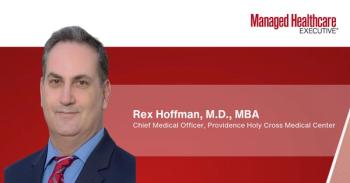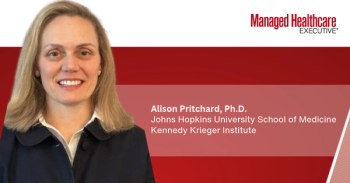
During the Health System Executive Summit, Candy Tsourounis, PharmD, and Elise Wozniak, PharmD got candid about the barriers and financial risk surrounding this innovative therapy.
In a Q&A, Jeffrey Hogan, managing director and co-founder of Judi Group, talks about the importance of identifying hidden costs and contract conflicts of healthcare vendors.
Employers have very little insight into the contracts they have, the appropriateness of the prices that they pay or the quality of the healthcare services their vendors are expected to provide, Jeffrey Hogan, managing director and co-founder of Judi Group, said in an interview. “We’re seeing groups where their shared savings fees are one and a half to almost two times as much as their fixed fees,” he said.
Having access to this information is critical because of the increased fiduciary responsibility placed on employers from the Consolidated Appropriations Act of 2021 (CAA), which has put increased healthcare-related disclosure requirements on employers. The CAA amends the Employee Retirement Income Security Act (ERISA) and the Public Health Service Act (PHSA) and requires employer-sponsored health plans to ensure they have access to certain cost and quality of care information. Additionally, it requires greater transparency around pharmacy benefits and drug costs.
Hogan said that employers have to attest annually that they’ve removed “gag clauses” in their contracts that would keep them from receiving the data that they need to assess cost, quality and outcomes. Judi Group is a recently launched advisory firm that conducts forensic reviews of health plan contracts and provides a detailed audit of compliance across federal and state laws.
The company brings together benefits specialists, ERISA attorneys, actuarial analysts, and technologists to assess risk and protect fiduciary integrity across vendors and solutions.
Judi Group aims to help employers identify hidden cost drivers, contractual conflicts, and compliance gaps in employer health plans through forensic-level reviews. Judi Group was formed by Judi Health, the company behind Capital Rx.
In an interview, Hogan talked about why it’s important to understand contract risks associated with healthcare benefits and how AI tools and forensic analysis can bring these risks to light.
Q: Why do you think a service like Judi Group is needed?
Hogan: I’ve had an interest in pharmacy and PBMs from the beginning of my career, when pharmacy was 4% of the total cost of care. Now, we see that the middle market grew up toward 40% and is the largest driver of catastrophic claims both on the PBM side and the medical pharmacy side.
When the Consolidated Appropriations Act passed in 2021, I realized this was an opportunity for employers to give the attention to the second largest expenditure that they have, which is their health plan. But they have very little insight into the contracts they have, the appropriateness of the prices that they pay or even the care delivery organizations that are apportioned to their unique populations.
The Judi Group team that we’ve put together are people who, from a mission point of view, see the opportunity to transform healthcare with fiduciary duty procurement accountability, much in the same way that pension plans have become. More than 20 years ago, pension plans were completely reformed with the apportionment of fiduciary duty.
Q: Why is a fiduciary requirement needed in healthcare?
Hogan: To be a fiduciary is to act in the best interests of the members of your group, to know what those interests are, and to act in those best interests. From a healthcare point of view, it’s particularly important because much of healthcare obscures what is happening under the cover, so to speak.
We’ve discovered having worked on literally hundreds of groups at this point of every shape, size, dimension, geographic region that most employers —I'm making some generalizations here — don’t even have their contracts. They don’t have their administrative services agreement. They don’t have their PBM agreement. We just went through a very large analysis on a big group, and the last documents that they had were from 2000. Once we get those documents, we’re able to analyze them and see the provisioning and the costs and even the conflicts between the contracts.
From a Judi Group perspective, we’ve put together a group of people and resources and technology that can and does give that employer the opportunity to get the insights into their existing contract arrangements and secure their data. We give them insight into what is most appropriate for their member groups and potentially how to fix those things too. We lastly help clients to create an ongoing fiduciary process and accountability.
Q: Can Judi Group, which is a company of the pharmacy benefit manager Capital Rx, be unconflicted as a service provider?
Hogan: We firewalled this company specifically; we have all of our own governance. Our data analytics is ours. We’re setting our own rules. The model that was set up by Capital Rx, by AJ Loiacono and team at Judy Health, is a very transparent model, and they’ve embraced a model of fiduciary duty. With Judi Group, we are servicing the demand that has come from employers to assess rebates or shared savings and other contracts they may not necessarily trust.
Q: What technology is Judi Group using for this analysis?
Hogan: We’re using a suite of different technology tools, but I can’t name them yet simply because we’re finishing up some due diligence. We are using some AI tools to help us to get very quick insight. It also allows us to take retrospective data and to break it down by provider health system and look at quality data such as, for example, where costs might be three times as high as they should be because of readmission rates and other patterns of behavior.
Q: What are your future plans for Judi Group?
Hogan: This initial process of analyzing contracts and data is going to use up a lot of our bandwidth, particularly in the next year. However, we hope to work on helping clients with the RFP process and the provisions that may be problematic. We want to carve out features for direct contracting and even create a platform for middle-market groups. We want to also look at the 72% of the self-funded marketplace that carries stop loss. We often generally see the stop loss is not the right stop loss for that employer.