Coxibs not always cost-effective for treating chronic arthritis
Cyclooxygenase-2 selective inhibitiors, better known as coxibs, may not be cost-effective for treatment of chronic arthritis pain in patients at average risk for ulcer complications as compared with nonselective nonsteroidal anti-inflammatory drugs (NSAIDs), according to a study recently published in the Annals of Internal Medicine. Using a coxib versus a NSAID cost an incremental $275,809 per year to gain 1 additional quality-adjusted life-year (QALY). For patients with a history of bleeding ulcers, however, the incremental cost per QALY gained decreased to $55,803.
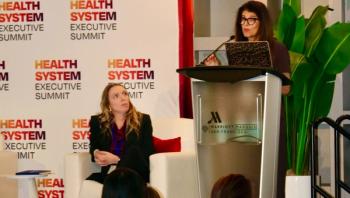
During the Health System Executive Summit, Candy Tsourounis, PharmD, and Elise Wozniak, PharmD got candid about the barriers and financial risk surrounding this innovative therapy.
Foundational Pharmacy Strategies’ Christine Johnston on how rebate structures, pending legislation, and a stalled pipeline are reshaping — and threatening — the biosimilar market heading into 2027.
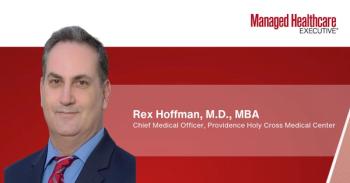
Rex Hoffman, M.D., MBA, of Providence Holy Cross walks through a CMO’s day in a hospital that often runs 85% to 100% full, from safety huddles to discharges.
On average, caregivers want to see their children with ADHD fall asleep 30 minutes faster, but the best sleep treatments average approximately 20 minutes, a new survey study found.
Research findings presented at CHEST meeting show COPD hospital readmission drops with discharge checklists and navigation. Other research suggests targeting readmission prevention efforts on patents discharged to post-acute facilities.
As the pharmacist pipeline tightens, leaders from UC Davis Health, UCSF Health, and Sutter Health say financial sustainability now depends as much on capacity as on cost.
GLP-1 use in adults 65 and older with MASLD was linked to a 45% lower risk of death, and a 28% lower risk of hepatic decompensation, a new Houston Methodist Research Institute study shows.