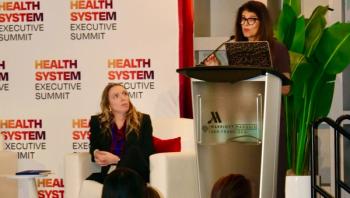
During the Health System Executive Summit, Candy Tsourounis, PharmD, and Elise Wozniak, PharmD got candid about the barriers and financial risk surrounding this innovative therapy.
Sharon Faust, of Navitus Health Solutions, said in an interview that employers, health plans and manufacturers must work together to manage costs and access for patients taking GLP-1 medications.
Nearly seven in 10 Americans who have taken a GLP-1 medication for diabetes or weight loss continue to say the drug’s cost influenced their decision to start or continue treatment, according to a survey by Navitus Health Solutions.
“Americans still have concerns over the cost of the GLP-1 medications specifically,” said Sharon Faust, Pharm.D., chief pharmacy officer at Navitus Health Solutions. “As the use in the population continues to grow, the price is going to continue to be a focus for patients and plan sponsors alike.”
The
The survey found 68% of those who responded said cost influenced their decision to start or continue with a GLP-1 medication. Additionally, 44% said their GLP-1 cost was higher than expected, and 24% said they pay more than $250 per prescription fill, including nearly 8% who pay $500 or more. Among respondents who stopped taking a GLP-1, cost was the reason cited most frequently, surpassing side effects and achieving a desired weight.
Cost and access are still concerns, despite a changing marketplace. Effective Jan. 1, 2027, Novo Nordisk
Additionally, in 2027, a new price will be implemented within Medicare Part D that is a 71% discount off the list price, or $274 for a 30-day supply. The semaglutide products were negotiated through the Inflation Reduction Act’s (IRA) Medicare price negotiation program for Part D.
Wegovy is available now for cash-paying customers through TrumpRx for $149 a month for the 1.5 mg tablet and $199 for the 4 mg tablet for cash-paying patients. An Ozempic pill will be available in the second quarter of 2026, according to Novo Nordisk.
But the cash price offered through TrumpRx is still too expensive, according to the Navitus survey.
Direct-to-consumer options, while a step in the right direction, still leave many patients behind, Faust said in an interview. “At a therapeutic dose, it’s still multiple hundreds of dollars,” she said, noting that those able to pay out of pocket are largely those with significant financial resources.
People with commercial insurance also face barriers, she said. Approximately half of commercial employers currently cover GLP-1 drugs for weight loss. Prior authorization requirements are standard practice, and tier placement — which directly affects patient copays — often varies depending on whether the indication is weight loss or diabetes, with diabetes patients generally receiving more favorable coverage terms.
Beyond cost, other barriers to access include side effects, tolerability concerns, and broader social determinants of health. And patient adherence challenges have implications for employers and health plans that are investing in coverage. “When employers see adherence rates that are not good, that becomes wasted healthcare dollars,” Faust said.
She stressed that clinical support programs — offered through health plans, digital health companies like Noom or Virta, and health systems — are essential for sustaining long-term outcomes and making coverage investments worthwhile.
The demand for GLP-1s will only increase in coming years, Faust said. “This trend will challenge employers, health plans and drug manufacturers to balance access and affordability without compromising clinical support and oversight to patients when medications are covered by insurance.”
The poll findings echo Navitus’ 2024