The purchase comes as the "big 3" drug wholesalers are coming under scrutiny for their market dominance and the possible perils of vertical integration.
In this episode of his “Conversations With Perry and Friends” podcast, Perry Cohen, Pharm.D., a member of the Managed Healthcare Executive editorial advisory board, spoke with Rita Shane, vice president and chief pharmacy officer at Cedars-Sinai Medical Center in Los Angeles.
In this episode of his “Conversations With Perry and Friends” podcast, Perry Cohen, Pharm.D., a member of the Managed Healthcare Executive editorial advisory board, spoke with Rita Shane, vice president and chief pharmacy officer at Cedars-Sinai Medical Center in Los Angeles.
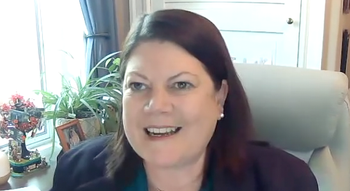
Rita Shane, Pharm.D., remembers when hopes were running high for a much more cohesive, knit-together means of providing healthcare through hospitals and health systems.
“In the ’90s, we really thought we would be managing from cradle to grave. We were looking at population health. Integrated healthcare delivery systems were going to be the way that we were all structured. And yet that didn’t really take off,” said Shane during her wide-ranging discussion with Perry Cohen, Pharm.D., during the latest episode of Cohen’s “Conversations With Perry and Friends” podcast. Shane is vice president and chief pharmacy officer at Cedars-Sinai Medical Center in Los Angeles. Cohen is CEO of The Pharmacy Group and a longtime member of the Managed Healthcare Executive editorial advisory board.
Shane noted that the kind of integrated delivery system that she and others envisioned some 30 years ago has taken hold in pockets of the country, and she cited
Although the largely aspirational integrated delivery system might have been the ideal solution, Shane said hospitals and health systems have had to focus on managing patients’ transitions out of the hospitals to home or other care settings, partly to reduce the chance of readmissions that are expensive and costly to hospitals. She said Cedar-Sinai has a 90-day bundled payment program for patients covered by Medicare that focuses on “not just managing the acute care episode but looking at how they can have what I call a soft landing.” Shane noted the demographic bulge of baby boomers who are entering the years when illness becomes more likely.
“I think as we look at the aging population in the U.S., post-acute care has to be a priority for every health system, and some health systems have [it] integrated within their own organization,” Shane told Cohen.
Shane’s LinkedIn page says she has been working at Cedars-Sinai for 37 years and seven months. “Cedars-Sinai has always thrived on excellence. In fact, it’s not been in search of excellence, which was a book many decades ago. It’s been almost a frenzy,” she said. Shane added, “Being with the best has kept me here, because why would I go anywhere else?”
Shane and Cohen’s conversation touched on everything from the shortage of primary care physicians to value-based care to the regulatory burdens on healthcare. The topic du jour in nearly every aspect of American life is artificial intelligence (AI), and Shane was upbeat about its current use and future promise. She said Cedars-Sinai has a virtual platform that is assisting nurses with documentation “that’s actually fabulous." The hospital is also about to implement an AI system to support prior authorization. She noted, though, that Cedars-Sinai has adopted AI programs only after thoughtful evaluation by clinicians, its IT experts and others.
“With the right guardrails and the right stakeholders, AI is extremely powerful, and machine learning is extremely powerful,” Shane said. “I think it will reduce a lot of work to enable, ideally, clinicians to have information to support effective decision-making, as opposed to trying to mire through, as I mentioned, a very, very, very bloated electronic health record.”
But that bright outlook has a hitch.
“The concern is always, are we going to lose the ability to critically think because we're just going to go with the AI response?” she said to Cohen. “Are people going to actually understand and learn how to treat diseases? It's kind of like asking someone to do math in their head these days. Maybe you and I can do it, but I don't know if generations after us can. I can still add in my head.”