Low birth volume fuels rural healthcare obstetric closures, limiting women’s health access—see which hospitals are most at risk.
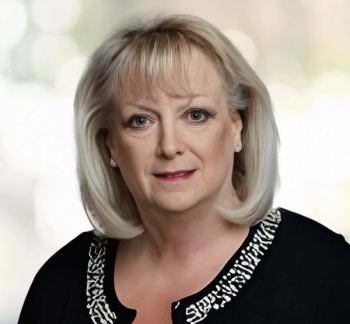
In this interview, Susan Kellogg-Spadt, Ph.D., the director of female sexual medicine at the Center for Pelvic Medicine at Academic Urology of PA, discusses common menopausal sexual issues and how the culture around ageism and taboo is changing.
The menopause transition can be a distressing time for many women, especially when it comes to sexual problems, including pain with sex or a lack of libido, caused by a decrease in estrogen. Ageism, combined with the taboo surrounding sex, can cause women to avoid seeking help. However, as the culture around sex in the United States has changed, particularly within the media, more women are speaking up and talking about their symptoms with their doctors and their peers, according to Susan Kellogg-Spadt, Ph.D., the director of female sexual medicine at the Center for Pelvic Medicine at Academic Urology of PA.
Kellogg-Spadt recently presented a session called ‘Clinical Management of Female Sexual Problems Using Lubricants, Moisturizers, and Devices’ at the 2025 meeting of The Menopause Society, held in October in Orlando.
This interview has been edited for length and clarity.
MHE: What are the most common early menopause issues brought up by women?
Kellogg-Spadt: The number one issue that comes up is hot flushes, feeling like being a stranger in your own body, being in the middle of a meeting and just starting to sweat, and having to take off clothing. It seems like no big deal, but it is because it interrupts sleep, and then when someone is sleep deprived, they don't feel emotionally very regulated, and then it goes round and round.
This goes hand in hand with vaginal dryness, so when sexual play and penetration have never been a problem before, all of a sudden it feels like a problem. It can range from mild irritation to literally feeling like broken glass with penetration, and that isn't just with penetration of a partner. It could be while using tampons if they're still being used or OB/GYN exams. It's also a tremendous problem as we move into the sexual arena. When women are not complaining about the pain, which is number one, number two would be lack of desire. It’s just like, ‘Where did it go? I used to be on board, and I don't hate my partner, so what's happening to me?’ That's very distressing, especially when the partner has his or her regular sexual desire, and then the partner I’m seeing in the office is changing.
MHE: Do you notice any generational differences in willingness to talk about these issues?
Kellogg-Spadt: There's literally been an explosion in menopause conversations online, in print and on podcasts—it's everywhere. Celebrities are talking about their menopause and how hard it's hitting them and what they're doing about it. It's on women's talk shows. It's so visible right now, so this is a perfect time for people to not feel ashamed or embarrassed and join in the conversation.
MHE: How does ageism play into sexual taboos?
Kellogg-Spadt: The belief that women of a certain age aren't sexual, either with themselves or with others—and that's not necessarily true.
If you think of anything you enjoy doing, whether it's eating chocolate cake or going for a walk in the woods, if those activities caused you pain every single time you did them, you would learn to dislike them. So, it's not that women naturally just don't want to be sexual, but that sometimes it's really painful. If we get to that root of the problem, we can start to solve it.
Sometimes, when women have less blood flow into the clitoral and labial area as a result of atherosclerotic disease or not working out, then the quality of their orgasm might go down because they're less sensitive and/or they're less sensitive because of a decrease in estrogen and testosterone during menopause.
MHE: If you could change one thing about how the medical system approaches menopause and sexuality, what would it be?
Kellogg-Spadt: It would be to put it in an arena of normalcy, to say this is a life event. Menopause is a life occurrence, not unlike puberty. We don't necessarily stop puberty, and we don't always love it, but we get through it, and we will be alive at the end of it. I'm not minimizing menopause, but I'm saying it is inevitable. It is not an illness state; it is a natural phase of life for most women, and so we're here in the medical community to ease the distress that that phase causes.