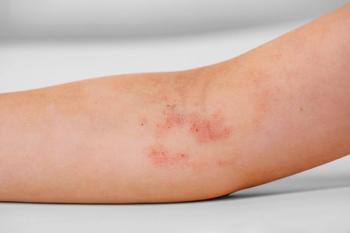
Experts at Fall Clinical Derm 2026 urge early JAK inhibitors over systemic steroids for atopic dermatitis and long-term vitiligo treatment, saying boxed-warning risks are overstated.
By accommodating the Trump administration's most favored nation drug pricing agenda, the pharmaceutical industry has avoided tariffs and seems likely to do so after the Supreme Court ruling last week.
We spoke with several tariff and trade experts over the weekend about the Supreme Court ruling on Friday that struck down the most sweeping of the Trump administration’s tariffs. The main takeaway for the U.S. healthcare sector is that the administration hasn’t imposed tariffs on pharmaceuticals and doesn’t seem likely to in the future, partly because pharmaceutical companies have agreed to invest in domestic manufacturing and to discount prices on products sold in the direct-to-consumer market.
1. The 6-3 Supreme Court decision pertained only to the tariffs that the Trump administration imposed under a 1977 law, the International Emergency Economic Powers Act. The acronym, IEEPA, is pronounced i-ee-pa. Whatever the veracity of other things that President Donald Trump said during a press conference on Friday, he was basically corrected when he said, “The Supreme Court did not overrule tariffs. They merely overruled a particular use of IEEPA tariffs.” IPEEA gives the president broad powers to impose export restrictions and quotas in case of a national emergency, but it doesn’t mention tariffs or raising revenue, and under the U.S. Constitution, taxing powers belong to Congress. Chief Justice John Roberts invoked the “major questions doctrine” in his opinion, a legal theory that government actions with major political or economic consequences need to be based on clear legislative language, not on interpretations of vague or nearly adjacent terms.
2. Pharmaceuticals and the ingredients used to make them were not subject to IPEEA tariffs, so the court decision on Friday did not have a direct effect on the industry.
3. But Trump has invoked a different law, Section 122 of the Trade Act of 1974, to replace IPEEA tariffs. On Friday, he said the new Section 122 tariffs would be 10%. He said on Truth Social that he was going to raise that amount to 15%, but 10% became the official number. That law limits the period during which those tariffs can be in effect to 150 days, so as a practical matter they are just a bridge to more permanent tariffs that he can impose under other laws. But as with IEEPA, pharmaceuticals and pharmaceutical ingredients are exempt from the Section 122 tariffs along with a pretty long list of other goods, including certain minerals, agricultural products (beef, tomatoes, oranges) and cars.
4. In addition to Section 122, post-IEEPA, Trump has two other laws available to him that grant the president the power to impose tariffs: Section 232 of the Trade Expansion Act of 1962 and Section 301, which, like Section 122, is part of the Trade Act of 1974. Manak wrote a
Trump might use to impose tariffs after Friday’s court ruling. As Manak wrote, Section 232 allows the president to manipulate imports with tariffs or quotas for national security purposes. The law requires the Department of Commerce to conduct an investigation to identify the security threat. Section 301 also grants the president the authority to impose tariffs but for trade balance reasons. Section 301 also requires an investigation, but by the Office of the United States Trade Representative, not the Commerce Department. Jamieson Greer, who was at the press conference on Friday along with Commerce Secretary Howard Lutnick, is the current United States Trade Representative and would, therefore, be in charge of 301 investigations. Manak said in an email to Managed Healthcare Executive (MHE) over the weekend that the Supreme Court decision last week seems to give the president “substantive discretion on tariffs” under Section 232 but that lawsuits have been filed that have a good chance of succeeding. In the end, Congress would need to act to curb presidential authority under both Sections 232 and 301.
5. The Trump administration has opened a 232 investigation of the pharmaceutical industry but has,notably not imposed 232 tariffs on the pharmaceuticals or their ingredients. Monica Gorman, D.Phil., a managing director at Crowell Global Advisors, an international policy consulting firm and a senior trade and economic official in the Biden, noted that according to a timeline in the statute, a report about the results of that investigation was due in December, but it has not been made public.
6. The Trump administration has imposed Section 232 tariffs on other goods, namely steel and aluminum. The prevailing narrative is the administration has used the prospect of Section 232 tariffs to get pharmaceutical companies to build manufacturing facilities in the U.S. and to cut prices in direct-to-consumer sales arrangements that are now aggregated on TrumpRx website. “Clearly the tariffs have been used as leverage in the ongoing price negotiations and the most favored nation demands,” Gorman said in an interview yesterday. Direct-to-
consumer price discounts are an element of the administration’s most favored nation drug pricing policies, which have the overarching goal of making prices paid for pharmaceuticals in the U.S. comparable to those paid in other countries with advanced economies. Mariana Socal, M.D., Ph.D., M.P.P., M.Sc., an associate professor at the Johns Hopkins Bloomberg School of Public Health, noted in an interview with MHE last week that the international agreement that governs international intellectual property rights, including patents on pharmaceuticals, prohibits tariffs on pharmaceuticals because of their role in protecting and preserving public health.
7. The possibility of Section 232 tariffs on generic drugs and antibiotics has not been raised by the administration so far, according to Gorman, but she says that is an area she is keeping an eye on. Gorman said Trump has spoken about depending too much on China as a supplier of antibiotics. A strong national security argument could be made about the U.S. leaning too heavily on India as well as China for generic drugs and antibiotics. Pricing is the paramount issue in the branded and innovative drug but not the main trade issue in the generic drug and antibiotics market. “Generic drugs and antibiotics are cheap,” she said. “They are commodity products.” But Gorman cautioned that the necessity of the generic drugs and antibiotics in combination with the reliance on China and India might give the administration pause. “I don’t think anyone wants to disrupt the supply of fundamental medicines that are needed or the health of Americans,” she said.
8. Like Section 232 tariffs, those imposed under Section 301 are more targeted than the now-defunct IEEPA tariffs and the Section 122 that Trump has moved to impose in their stead. Goman said a Section 301 tariff was imposed on syringes made in China during the Biden administration so that the prices of the syringes made in the U.S. would be more competitive.