


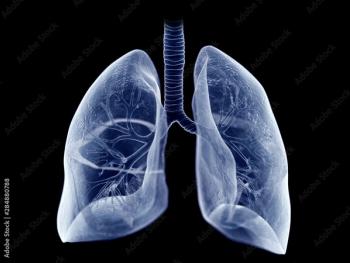
A nomogram based on four pulmonary factors is helpful but not a substitute for clinical judgment, say the authors.
Keith Loria is a contributing writer to Medical Economics.
A nomogram based on four pulmonary factors is helpful but not a substitute for clinical judgment, say the authors.

Pulmonary complications remain a major cause of morbidity and mortality in rheumatoid arthritis-associated interstitial lung disease, despite increasing research interest in the condition.
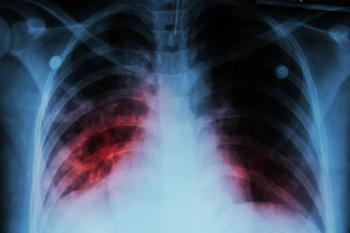
A new study conducted by researchers at the United Therapeutics Corporation in Durham, NC, looked to characterize PH-ILD disease burden by analyzing healthcare resource utilization (HCRU) and cost data.

USC researchers found a link between childhood exposure to nitrogen dioxide well below EPA limits and bronchitis symptoms in adults.

New research published in Nature Scientific Reports revealed that people with MS are more prone to experience a short-term reduction in disability and brain lesion volume after receiving stem cell therapy.


A new study out of Germany, published in Science Translational Medicine in June, looked at peripheral blood mononuclear cells and serum collected from two independent cohorts of patients with MS to identify three endophenotypes of the disease.

Researchers of a JAMA Network study observed that RSV patients seemed to be older than usual and globally sicker than usual requiring advanced respiratory support and intensive care.

From the cohort study, 67 participants developed Multiple Sclerosis after enrollment.

Up until recently, no single study had validated the relationship between lung volume and tissue and static respiratory system compliance at the applied positive end-expiratory pressure.

A new study looked to show how frequent non-coding FOXF1 gene deletions that interfere with important DNA regulatory regions can lead to a rare, lethal, genetic lung disease which causes respiratory failure in many newborns and infants.

While plenty of studies have been done looking at how blood cells function within bone marrow, new research looks deeper at other cells, and resulted in the collaborators creating a Bone Marrow Atlas.

Early efficacy data from a phase 2a safety trial on the subject was presented during an oral session at the American Thoracic Society 2024 International Conference in May.

The recent DUO trial, a global Phase III study, compared the efficacy and safety of duvelisib, an oral PI3K inhibitor, with ofatumumab, an anti-CD20 antibody, in patients with relapsed or refractory chronic lymphocytic leukemia (CLL) or small lymphocytic lymphoma (SLL) who had previously undergone at least one therapy.

A new study published May 2024 in Scientific Reports examined the changes in morphology and antibacterial activity in four honey varieties from Hungary matched against respiratory pathogens.

Christel Nielsen, associate professor at Lund University, gathered a team of researchers to find the relationship between tattoo ink exposure and malignant lymphoma and lymphoma subtype risk.

A new study published April 2024 in the JAMA Network looked to establish a link between burn pits and higher respiratory and cardiovascular disease in veterans, responding to widespread concern from veterans.

Although chronic respiratory diseases remain the third leading cause of mortality, they have received less attention from the global community.

Rapidly progressing interstitial lung disease in anti-melanoma differentiation-associated gene 5 (MDA5) antibody-positive dermatomyositis (DM) is known for its high death rate because it worsens quickly and causes breathing difficulties within three months of initial lung symptoms. However, there isn't much information about the timing between the diagnosis of ILD and MDA5 antibody-positive DM because most research focuses on either the frequency or the death rates rather than the timing of onset.

The Choosing Wisely campaign has helped with overscreening and overtreatment. Some experts say better management of end-of-life care and value-based payment would also help steer oncology away from care with poor cost-benefit ratios.

The evidence for active surveillance is stronger, but advances in imaging have improved the ability to distinguish between indolent and aggressive forms of prostate cancer.




Some orthopedic surgeons have been reluctant to perform total hip arthroplasty on people with HIV/AIDS. Researchers at UT Southwestern Medical Center found no additional risks from HIV per se.

The company-sponsored study compared Sunlenca (lenacapavir) with Rukobia (fostemsavir) and Trograzo (ibalizumab).

When addressing errors, researchers focused on the individual who made the error and retraining. Lead author Fatima Laher says attention should be shifted to root cause analysis and process improvement.

University of North Carolina researchers found stable and replication-competent HIV in the microglia in the brain even in people with HIV who had been taking antiretroviral therapy for a long time.

Researchers and clinicians have been wary of treating people living with HIV with Keytruda, Opdivo and other immune checkpoint inhibitors because removing an inhibitory step in the immune response was seen as risky for people with compromised immune systems.