Jeffrey Casberg, M.S., of IPD Analytics and Luke Greenwalt, MBA, of IQVIA, both members of the Managed Healthcare Executive (MHE) editorial advisory board, will provide a midyear assessment of the pharmacy market and the policy and politics affecting it. Topics to be discussed include the possibility of tariffs, the most-favored nation drug pricing executive order, aspect of the reconciliation bill that could affect the pharmaceutical and pharmacy benefit management industries, pressure on the gross-to-net “bubble,” implementation of the Inflation Reduction Act price negotiations, GLP-1s and notable FDA approvals in the second half of 2025. Note that this a menu and some topics may be added or subtracted depending on time and news up to airtime on June 12. Peter Wehrwein, managing editor of MHE is moderating the discussion.
As the pharmacist pipeline tightens, leaders from UC Davis Health, UCSF Health, and Sutter Health say financial sustainability now depends as much on capacity as on cost.
GLP-1 use in adults 65 and older with MASLD was linked to a 45% lower risk of death, and a 28% lower risk of hepatic decompensation, a new Houston Methodist Research Institute study shows.
New data from Sutter Health suggest the real gap in GLP-1 access is physician awareness, not insurance coverage — and fixing it closed outcome disparities across every racial and ethnic group.
Research findings presented at the CHEST meeting show that false positives may make patients more adherent to screening. Qualitative research shows that patients want more explanation and results communicated verbally.
David Chen, PharmD, explains how physician-led formulary decisions — not rebates — power Kaiser Permanente’s biosimilar strategy, and why he thinks other health systems could do the same.
10 research abstracts presented at the CHEST meeting are split on whether hospital admission during the weekend is assoicated with worse outcomes than admission on weekdays.
Research findings scheduled to be presented at the CHEST meeting show broad positive cardiopulmonary effects from GLP-1s and an association with a reduced risk of acute respiratory failure.
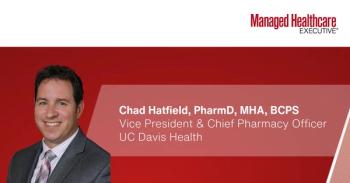
Chad Hatfield, Pharm.D., of UC Davis Health, says 340B savings fund free clinics and mental health care that could shrink as the program’s future shifts.