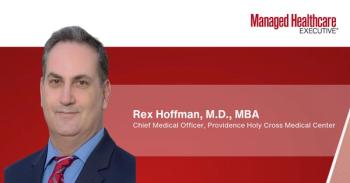
Rex Hoffman, M.D., MBA, says physician shortages and burnout are the most underestimated pressures on health system.
Zahra Mahmoudjafari shares how The University of Kansas Cancer Center builds sustainable cell and gene therapy programs amid new CMS access rules.
Hospitals and cancer centers that are launching cell and gene therapy programs need more than scientific breakthroughs to succeed. Delivering these therapies safely and efficiently requires careful planning, coordinated teams and flexible workflows, according to Zahra Mahmoudjafari, Pharm.D., MBA, a clinical pharmacy manager for hematologic malignancies and cellular therapeutics at The University of Kansas Cancer Center.
In a study by Mahmoudjafari and her co-authors titled, “
Mahmoudjafari discussed in an interview with Managed Healthcare Executive the study insights and how the new CMS CGT access model is changing the way hospitals plan for these therapies.
“Programs need to look at the access model as an operational framework to set up their program for success, as opposed to looking at it as this is just a guidance that is nice to have,” she said.
The program aims to improve predictability for high-cost therapies, but she noted that it requires health systems to rethink billing, documentation and interdepartmental coordination, particularly between clinical teams, pharmacy and finance. She added that not all states have enrolled in the model, which creates additional complexity for centers treating patients across state lines.
Mahmoudjafari stressed that infrastructure and planning should come before patient volume. Health systems can be excited by the science, she added, but success depends on workflows that actually work in practice.
She recommended engaging pharmacy and finance teams early and continuously to ensure safety and sustainability and designing programs that can flex with an evolving pipeline of therapies. With CAR T-cell treatments about a decade old, she pointed out that institutions should remain agile and standardize processes as much as possible while forecasting growth.
The study itself provides detailed guidance across eight domains, including strategy, operations, pharmacy, finance, IT, quality, outreach and access. Mahmoudjafari expressed that health systems need to address each of these areas to avoid safety risks, inefficiencies or delays in patient care. She also highlighted the importance of ongoing monitoring, noting that CGT programs should be ready to adapt to new products, emerging indications, and changing payer policies.
Based on our conversation, it’s clear that success depends on building strong workflows, aligning clinical, pharmacy and financial teams, and planning for growth while staying flexible. Health systems that focus on these operational foundations are more likely to provide patients with safe, timely and reliable access to these complex therapies.