The 2026 American Academy of Ophthalmology Meeting got started today in New Orleans with a mix of celebration and candor about the challenges facing ophthalmology today.
How LLM decision support reshapes dermatology care, helping non-specialists diagnose while navigating trust gaps, ambiguity, and hallucination risks at Fall Clinical Derm.
Clinical decision support tools have existed for about 40 years. Large language models (LLMs) are now bringing new attention to the category, according to Art Papier, M.D., CEO of VisualDx. He also cautions that clinicians shouldn’t assume these tools are always right.
Papier described a shift from a memory-based model of medicine, where doctors were trained to absorb and recall what they read in books and journals. He calls the new model augmented intelligence: clinicians use tools in the exam room to get the right information at the moment they need it.
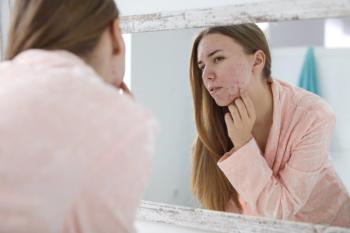
That matters most where specialists are scarce. Papier estimated that dermatologists know what a rash or skin lesion is on sight about 95% of the time. Patients in emergency departments, primary care offices and rural areas often can’t see a dermatologist. Decision support tools can give those clinicians diagnostic help.
Patients’ views of their doctors have also changed, Papier said. Fifty years ago, patients saw their physician as all-knowing. Today many check ChatGPT before a visit and wonder whether their doctor knows more than their search results. The same doubt applies to nurse practitioners and physician assistants.
VisualDx’s tool has been available for more than 20 years. Papier said many clinicians who already know the diagnosis use it to pull up images and show patients what they have. That quick visual can reassure a patient who might otherwise doubt a diagnosis made in seconds. In Papier’s view, trust is one of the most important issues in healthcare right now because of AI.
Clinicians also need to be careful about how much they trust AI themselves. Papier warned against relying on an LLM’s answer just because it cites evidence. Some doctors have told him the footnotes were made up. He said medicine is different from self-driving cars or aviation because the answer often isn’t known yet, and a diagnosis may only become clear after more tests and time.
“So there’s grayness, there’s ambiguity in medicine, but the LLMs, at least today, are very sycophantic, and they tell you how smart you are, and they always act like they know the answer. So that’s a problem for doctors, because we know that there’s not always an answer,” Papier said.