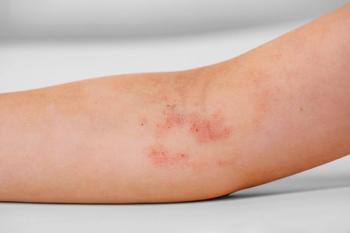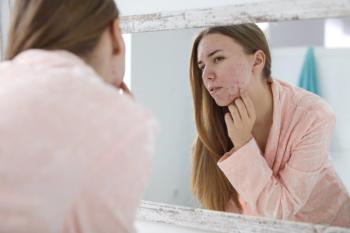
How LLM decision support reshapes dermatology care, helping non-specialists diagnose while navigating trust gaps, ambiguity, and hallucination risks at Fall Clinical Derm.
The 2026 American Academy of Ophthalmology Meeting got started today in New Orleans with a mix of celebration and candor about the challenges facing ophthalmology today.
The American Academy of Ophthalmology (AAO) kicked off their 2026 annual meeting today in New Orleans, with an authentic second-line parade of musicians, dancers and performers inviting conference goers into the Great Hall of the New Orleans Ernst M. Convention Center.
Cat Burkat, M.D., FACS, the nominee for the academy's Secretary for the Annual Meeting, gave the opening remarks of the keynote session, in which academy leaders addressed burnout and advancements in AI and concluded with this year’s 83rd Edward Jackson Memorial Lecture, outlining the future of the uveitis subspeciality.
The session also honored glaucoma specialist George L. Spaeth, M.D., founding president of the American Glaucoma Society, with the Laureate Recognition Award, the academy's highest honor. There was a standing ovation as he accepted the award.
Outgoing president Christopher J. Rapuano, M.D., chief of the cornea service at Wills Eye Hospital, welcomed to the stage the incoming 2027 AAO president Stephanie J. Marioneaux, M.D.
Marioneaux said her initiative will focus on burnout in mid-career ophthalmologists, noting that
“A physician may appear highly accomplished while quietly wondering, 'Can I continue working at this pace? Is this still the career I envisioned? What do I want the next chapter to look like?” Marioneaux said during her address. “I want the academy to ask better questions — not simply, 'Are you burned out?' but 'What is getting in the way of the work that gives your career meaning, and what would help you rediscover it?'"
Stephen McCleod, M.D., AAO CEO, introduced keynote speaker Robert Wachter, M.D., chair of the Department of Medicine at UCSF and author of ‘A Giant Leap: How AI Is Transforming Healthcare and What That Means for Our Future.’
“We are embarking on what I believe is the greatest experiment in the history of medicine, trying to figure out how to get this right,” Wachter said. “In healthcare, in particular, there is room for informed optimism.”
He shared the results of a recent NBC poll that showed respondents were the least worried about the potentially negative consequences of AI in the healthcare industry — 47% reported AI would do “more good than harm,” compared with the arts and entertainment industry (26%), higher education (24%) and national security (23%).
He warned that clinicians reviewing AI output can lose skills and vigilance over time and that patients using chatbots often fail to supply the facts needed for sound advice, citing a
“Now, we've got to study not just how good the AI is and how good the humans are, but how well the two work together.”
In the 83rd Edward Jackson Memorial Lecture, Janet L. Davis, M.D., of the Bascom Palmer Eye Institute at the University of Miami, reported on predicting the future of uveitis care, which is the smallest subspeciality in ophthalmology. Davis shared that only about 450 AAO ophthalmologists report a primary or secondary focus in uveitis, left to care for approximately 300,000 to 900,000 U.S. patients. Uveitis fellowships fill 61% of available slots annually, and some programs do not match a single fellow, compared with 80% for other subspecialties.
“The percentage of AAO ophthalmologists who declare a primary practice focus in uveitis is less than 1 percent,” Davis said. “This increases to 3 percent if doctors who indicate a secondary practice focus in uveitis are counted.”
She called for hybrid retina-uveitis fellowships, broader uveitis education for all ophthalmologists and referral pathways less constrained by third-party payers.
"We are approaching excellence in uveitis and just need to survive to achieve it," Davis said.
After Davis finished, Burkat returned to the stage and dismissed the crowd with a final request:
“Enjoy the meeting, some jazz, good food and laissez les bons temps rouler!” (Let the good times roll).