The purchase comes as the "big 3" drug wholesalers are coming under scrutiny for their market dominance and the possible perils of vertical integration.
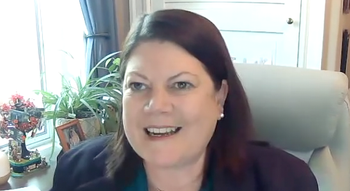
In this interview, Melody Chang, RPh, BCOP, MBA, vice president of pharmacy operation at the American Oncology Network, discusses the network's pharmacy strategy and priorities.
Melody Chang, RPh, BCOP, MBA, is the vice president of pharmacy operations at American Oncology Network (AON), one of the largest community oncology networks in the country.
Ahead of her first
This interview has been edited for length and clarity.
MHE: To begin, would you briefly introduce yourself and provide an overview of your role at the American Oncology Network?
Chang: My name is Melody Chang. It's truly an honor to be here to join so many leaders who are passionate about advancing cancer care. I'm the vice president of pharmacy operation at the American Oncology Network, or AON, in short. AON is one of the nation's largest community oncology networks, consisting of 46 physicians' practices, more than 350 providers and over 140 locations across 21 states. So, at my role at AOS, my responsibility is including leading our national pharmacy strategy in several key areas, and I oversee biosimilar implementations, formulary management evaluations of 5b two products, and the procurement strategies, as well as precision medicine and pharmacy informatics, and those clinical guidelines as well as the quality initiative.
MHE: Could you share some of the key changes and priorities you have been advancing across the American Oncology Network?
Chang: Community oncology is changing faster than ever before. We have seen remarkable advances in immunotherapy, precision medicines, and targeted therapies, as well as those cellular therapies like bispecific and CAR-T therapy. At the same time, the practices are facing increasing workforce shortages, reimbursement pressures, operational complexities and rising drug costs. So, our philosophy at AON is that our role isn't simply to oversee pharmacy operations. Our role is to help remove those operational barriers so our practices can focus on caring for a patient. Since 2024, our biggest strategic initiative has been developing our outpatient bispecific antibody programs. So, when bispecific antibodies first entered the market, many organizations relied heavily on inpatient hospitalizations because of concerns regarding cytokine release syndromes, neurotoxicity, and the intensive monitoring required during the step-up dosing. Rather than ask whether this therapy belongs in the outpatient setting, we asked a different question: What system do we need to safely make outpatient treatment possible? That led to a comprehensive organizational effort. We developed a standardized OPs across our network. We established patient selection criteria that considered not only disease status but also caregiver availability, transportation, proximity to the clinic, and social support. We also standardized toxicity management pathways, nursing education, pharmacy education, physician training, emergency department communications, and the patient education materials, caregiver instructions, and after-hours triage process. And we also work closely with the local hospital to develop observation workflows, escalation pathways, and the communication protocols whenever patients require a higher level of care. So today, many of our patients are safely receiving bispecific therapies in the outpatient setting, allowing them to remain closer to home without compromising safety. Perhaps even more importantly, everything we have learned from implementing bispecific antibodies is now serving as the operational foundations for future cellular therapy programs, including CAR T. That's how we think about innovation—not just introducing new drugs, but building sustainable systems that allow practices to deliver them safely.
MHE: Would you elaborate on how community oncology practitioners balance clinical, operational and financial efficiency in today's fast-changing oncology care landscape?
Chang: That's probably one of the most important questions facing healthcare today. At AON, we believe those three priorities are not competing goals. They reinforce one another. When you make thoughtful, evidence-based decisions, you can improve patient care while also strengthening operational performance and financial sustainability. One example is our biosimilar strategy. Biosimilars have allowed us to significantly reduce drug costs while maintaining the same clinical efficacy and safety. Those savings help practices remain financially healthy and free up resources that can be reinvested into the newer therapies, technologies, staffing, and patient support services. Another important area is our evaluation of the file 5b two products. Every new FDA approval generates excitement, but we don't believe every new product should automatically become standard practice. Our multidisciplinary team carefully reviews the clinical evidence, evaluates operational impact, and assesses the overall value proposition. We ask questions such as Does it improve patients' convenience? Does it reduce infusion chair time? Does it simplify the workflows? Does it improve safety or adherence? Does the clinical benefit justify the additional cost? Those evaluations allow us to make responsible decisions that support both patients and practices. And the third priority has become drug shortage management. Unfortunately, shortages have become part of the everyday oncology practice. Managing shortages requires much more than finding another supplier. We continuously monitor inventory across the network, forecast utilizations, communicate with the manufacturers and the distributors, identify evidence-based therapeutic alternatives, develop clinical guidance for providers, and coordinate implementations across all practices. We also have a multidisciplinary drug shortage committee that meets regularly to ensure every decision is clinically appropriate, operationally feasible, and communicated consistently throughout the organization. Ultimately, pharmacy today is much more than medication management. We're helping practices make informed decisions that improve patient care while ensuring the long-term sustainability of community oncology.
MHE: What are the main challenges to managing bispecific and CAR-T patients, and how has AON managed them so far?
Chang: We have administered more than 4000 bispecific therapies across the network, and then there's about 1000 more coming in the next three months, and we also successfully gave the outpatient CAR T therapy last month. We identify more practices qualified for outpatient CAR T within our system. So far, we're doing pretty, pretty good on the bispecific therapy and the CAR-T.
MHE: Would you mind sharing how your clinical pharmacists are integrated with the frontline oncologists and the care teams in the management of patients who receive these highly complicated treatments?
Chang: One aspect of AON that's somewhat unique is our regional clinical pharmacist model. Unlike the many healthcare systems, where pharmacists are physically embedded within each clinic, our regional clinical pharmacists actually work remotely, and they provide centralized support across multiple practices. Although they work remotely, they are fully integrated into the patient care and function as trusted clinical consultants for our physicians and the nurses staff. They participate in the treatment planning, review the complex cases and provide supportive care recommendations, evaluate drug interactions, optimize the infections, prophylaxis, and assist with the formulary and precision medicine questions. So for the patients, the patient receives bispecific antibodies and, in the future, CAR-T therapy. Our pharmacists provide consultations on CRS and eye care management and supportive medications, infection prevention, and also the laboratory monitoring and evidence-based treatment recommendations beyond direct patient care, and they also develop the clinical guidance, and they educate the providers, and the staff participate in the quality initiative, support precision medicine implementation, and help standardize the care across all 46 practices, because they support practices across the country, they bring a broad perspective, and they can quickly share best practices from one practice to the other. I often describe them as the virtual extension of every oncology care team; whether a provider is in Florida, Arizona, Pennsylvania, or Tennessee, they have immediate access to specialized oncology pharmacy experts. That centralized model allows us to provide consistent, high-quality clinical support, regardless of the geographic location.
MHE: You have a famous “Bracelet Program” for patient safety; would you mind sharing that with our audience?
Chang: We have bracelets created and then send them to the clinic. For every bispecific patient, we offer this bracelet to them, which has a QR code, so if the patient develops side effects or wants to know about their medications, they can simply scan this QR code. It will lead them to a website where we have detailed explanations of the grading of the CRS and the ICAM, as well as prevention and treatment.
MHE: As you look ahead to your first Health System Executive Summit, what is it about this gathering that stood out for you? And what are you hoping to take back from the conversations and connections you expect to have?
Chang: One of the things I appreciate most about this meeting is that it brings together leaders from community oncology, health systems, academic medicine and pharmacy. Everyone comes with their different experiences, but we're all trying to solve many of the same challenges. I'm particularly interested in learning how other organizations are expanding outpatient cellular therapy programs, integrating artificial intelligence into the clinical workflow, advancing precision medicine and addressing workforce challenges. I'm also looking forward to sharing our experience at AON building scalable operational infrastructures for advanced therapies. Community oncology cares for the majority of cancer patients in the United States. As the therapy becomes more sophisticated, collaboration across the organization becomes even more important. No single institution has all the answers. We all learn faster when we share what's working and what hasn't worked and how we can collaborate to improve a patient's care.