Hispanic HIV incidence rose 16.8% in antisanctuary counties after the 2018 public charge announcement, relative to baseline counties, a new study found.
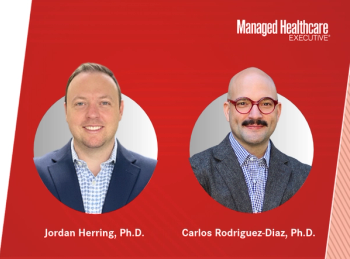
In this interview, Jordan Herring, Ph.D., and Carlos E. Rodriguez-Diaz, Ph.D., MPHE, MCHES, discuss their study, which found a 16.8% increase in HIV incidence rates among Hispanic populations in antisanctuary counties after 2018 immigration policy shifts.
HIV incidence rates among Hispanic populations rose approximately 16.8% in antisanctuary counties relative to baseline counties after 2018 shifts in immigration policy, including proposed changes to the public charge rule, according to a study recently published in The Milbank Quarterly.
The study was conducted by lead and corresponding author
Herring and Rodriguez-Diaz used AIDSVu data from 2010 to 2022 to calculate HIV incidence rates from 2010 to 2022 in U.S. counties, which were organized into three categories by their level of involvement with immigration officials. Those categories were sanctuary, antisanctuary and baseline.
The 16.8% jump in HIV incidence in Hispanic communities was seen after the 2018 announcement of changes to the public charge rule.
Herring and Rodriguez-Diaz recently sat down with Managed Healthcare Executive to discuss their findings.
This interview has been edited for length and clarity.
MHE: What is a public charge policy, and what was the Trump administration’s 2018 announcement of changes to the public charge rule?
Herring: In 2018, the Trump administration decided to include Medicaid in public charge rules for immigration policy. Public charge rules basically give immigration agents authority to deny lawful residency status based on use of public resources such as the Supplemental Nutrition Assistance Program (SNAP), housing assistance and Medicaid. This has not typically included healthcare resources in the past, so it was a large change to including Medicaid specifically.
Rodriguez-Diaz: Part of the relevance of this study is that we are seeing similar policies being enacted or in the pipeline to have a similar impact on migrants and other populations that rely on public services for their well-being, including their health.
MHE: Could you provide an overview of the study goal and its process?
Herring: There have been a lot of well-developed theories about how immigration policy negatively affects health outcomes, HIV specifically. Part of the goal was to study the effects of the public charge rule in 2018, but we also wanted to contribute to the broader conversation about immigrant experiences in the United States and how they interact with healthcare systems by putting some numbers to theoretical conversations. For HIV specifically, it was about trying to understand the problems within the epidemic. HIV is still an epidemic in the United States, and there are a lot of people trying to end it, but there are also a lot of things that happen outside of a clinic that impact access to care.
Rodriguez-Diaz: Simultaneously, around the same time of the study period that we analyzed, the same Trump administration launched an initiative to end the HIV epidemic in the United States. So, while the qualitative and the experiential data were showing that we were seeing an increase in new infections among Latinos, it was while we were implementing an initiative to end the epidemic. Therefore, it was very relevant to see why it was that we were seeing an increase in new cases among Latino Hispanic populations.
MHE: Your analysis looked at county-level HIV incidence before and after the announcement of this rule. What did you find?
Herring: We found about a 16.8% increase in HIV rates among Hispanic populations after the adoption of this rule in counties that we characterize as “anti-sanctuary counties.”
We split counties into three categories. Most people are familiar with the concept of a sanctuary city or a sanctuary county, and these are places that actively work to not work with federal immigration authorities. Even though immigration is done at the federal level, a lot of the time they are dependent on local police departments and local governments, and some localities have pushed back on their working relationship with federal immigration authorities, specifically on the enforcement mechanism, but they've also adopted a range of policies of trying to protect access to certain types of services.
In the middle group we have baseline counties, which are counties that haven't taken an aggressive stance either way.
Anti-sanctuary counties are counties that have taken a more aggressive stance on cooperation with ICE and federal immigration efforts. In the past there have been agreements between local police departments and ICE around data sharing for people that are stopped at traffic stops or in county jails. Those kinds of relationships can be formalized in different ways, but that’s relatively understudied.
MHE: You also write that you found no comparable increase among Black populations. Why is this significant?
Herring: From a method standpoint, we wanted to make sure that what we were capturing was not specific to the counties but specific to the intersection of these anti-sanctuary counties and Hispanic populations or immigrant populations. Our underlying theory here is that if there's a change in immigration policy, then we should expect to see these effects among the population that would be most likely affected within that county. The fact that we don't see a lot of changes within the Black population supports this idea that these effects are driven by immigration policy changes.
Rodriguez-Diaz: From a public health standpoint, it was important to include all the groups that are affected by the HIV epidemic. In the United States, we have a clear racial and ethnic disparity, and we have more Hispanic, Latino and Black communities affected by the HIV epidemic. Therefore, seeing if that impact was specific to a group speaks of the policy impact. In this case, that policy impact was on Hispanic Latinos. Certainly, we know that there are other drivers of the epidemic and HIV incidence, but our findings illustrate the difference in this group.
What should health plans or providers in anti-sanctuary counties be watching for in their own data?
Herring: There's incredible surveillance that has data surveillance that has been built, like an infrastructure around understanding HIV transmission, HIV prevention and outcomes.
They should be in support of data surveillance efforts and HIV data systems that the CDC and other partners have pioneered to understand what's going on in their communities.
At an organizational level or clinic level, it’s important to be aware of these issues and the environment that they provide healthcare in.
Rodriguez-Diaz: I will add that it's going to be very difficult because providers in anti-sanctuary counties may have fewer resources. For example, people with HIV are not able to continue their care. Achieving viral suppression is important not only for the individual but also to prevent the transmission of the virus and to protect our communities.
My invitation would be for non-sanctuary counties to focus on the community and to follow what the community is experiencing and responding to the community rather than only abiding by the law. I'm not asking for people not to abide by the law but to be conscious of the impact of the law and, with the community, develop the resources and strategies that will be responsive to what is happening.
MHE: What’s next for this study?
Herring: There is a lot to do to understand where people get HIV care and how that impacts outcomes. There's currently a lot of work on social determinants of health and how social determinants of health impact HIV care, but there's not enough work studying clinic settings and providers and different types of policies. Those are factors that we're interested in studying in the future.
Rodriguez-Diaz: We are also interested in looking at the impact of HIV prevention services.
We hope that people make policy decisions informed by science. So, here is science that can be used to inform future policy actions. This can help at the local level, county level, state level and certainly in the federal government.
What is one thing you'd like readers to take away from this study?
Herring: The one thing that I would like readers to take away is understanding that access to healthcare is dependent on a lot of things, like immigration policy. These dramatic actions around immigration policy have far-reaching consequences and understanding that impacts people's lives, not just policy.
Rodriguez-Diaz: For me, an important message is that health is in all policies; not only the policies developed with an explicit intention of impacting health are in fact impacting health. For example, policies on transportation and migration are going to have an impact on people's health, and we need to consider that as we formulate the policies and enact the policies that affect our communities.