


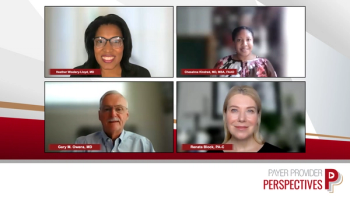
Renata Block, PA-C, analyzes a study on how vitiligo affects different socioeconomic groups disproportionately.
Renata Block, PA-C, analyzes a study on how vitiligo affects different socioeconomic groups disproportionately.
Gary M. Owens, M.D., discusses the economic costs associated with vitiligo and the impact this disease has had on the U.S. health care system in general.

Nora Lozano-Evjen of Equality Health, is one of 12 winners in this year's Emerging Leaders in Healthcare feature. In an interview with MHE, Lozano-Evjen shared that after she moved to the United States from Mexico City, she became involved as a prevention specialist for two U.S. school districts, which introduced her to health and social disparities impacting underserved communities — especially those of color. The exposure to these realities pushed her toward the community health worker model she believes in today.

The role of evidence-based recommendations around biosimilars and unbranded biologics to increase patient care, plus how payers and providers evaluate biosimilars through clinical data across multiple indications.
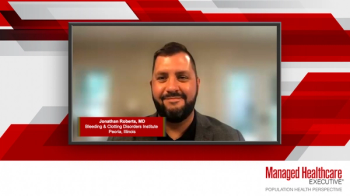
Patients with hemophilia A face challenges with finding a lifestyle-appropriate therapy that considers self-infusion skills, management of breakthrough bleeds, and access to bleeding disorder centers.
Treatment initiation and management of comorbidities pose challenges for both pediatric and older adult patients with hemophilia A.
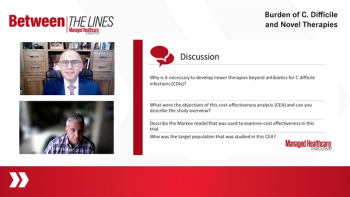
Overview of Markov model, a tool used for calculating potential clinical outcomes and the associated costs, and its use in the REBYOTA study. The standard of care used in the study is also defined.

Russell Graney, Founder and CEO of Aidin, is one of 12 winners in this year's Emerging Leaders in Healthcare feature. In an interview with MHE, Graney talked about appreciating advice he received from healthcare veterans during the start-up of Aidin, but sifting through the right input for his business.

Kyna Fong, Ph.D., CEO and co-founder, Elation Health, is one of 12 winners in this year's Emerging Leaders in Healthcare feature. In an interview with MHE, Fong shared a guilty pleasure of her's is Na Ya Dessert Cafe in San Francisco's Hayes Valley. In addition to a guilty pleasure, Fong also talked about a career turning point she experienced, and what book she recommends to healthcare professionals.
Chesahna Kindred, M.D., MBA, FAAD, and Renata Block, PA-C, review areas of the body that are typically affected, and are more problematic to manage, in patients with vitiligo. Comorbidities that put certain patients at higher risk than others are also discussed.
A panel of experts discuss the diagnosis and pathophysiology of vitiligo.
Mike Steelman, vice president, Managed Markets, Dexcom presented on the pathways to implement non-prescription digital therapeutics at the 2023 PBMI Annual National Conference in Orlando. In this interview with Managed Healthcare Executive, Steelman suggests that creating "certainty in an uncertain world" in the digital therapeutic space could potentially open up doors for further use of these tools.

At the 2023 PBMI Annual National Conference in Orlando, Ellen Feeney, director of Clinical Pharmacy Strategies at Highmark discusses how these new programs payers are using to control medication costs work, and shares how costs of the GLP-1s should be managed.
Ittai Dayan, M.D., M.P.H., co-founder and CEO of Rhino Health, is one of 12 winners in this year's Emerging Leaders in Healthcare feature. In this video interview, Dayan not only shares a good read for healthcare professionals, but also a turning point that changed his career trajectory and even a guilty pleasure of his — which involves finishing a scoop or more of his son's ice cream.
At this year's PBMI Annual National Conference in Orlando Ben Urick, principal health outcomes researcher at Prime Therapeutics, shared methods for medical cost savings through adherence improvement using integrated medical and pharmacy claims data.
A glance at the process and regulations of switching, plus how an interchangeability study is conducted.
Alina M. Czekai, M.P.H., vice president, value-based care strategy, Cohere Health, is one of 12 winners in this year's Emerging Leaders in Healthcare feature. In this video interview, Czekai shares a turning point that changed her career trajectory, recommends a good read for healthcare professionals, and even spills her guilty pleasure: some time with the "Real Housewives" and a glass of red wine.
The challenges associated with treating hemophilia A become increasingly complex with varying disease severity.
Hematologist Jonathan Roberts, MD, discusses the history and challenges of hemophilia A treatment.
Explanation of the cost-effectiveness analysis and additional factors involved when treating C. Difficile with REBYOTA.
Definitions of originator biologics, biosimilars, and unbranded biologics, including their lifespan in the marketplace.
Specialty pharmacies prioritize minimizing drug waste in hemophilia A treatment, aiming for near-complete dosing while adhering to payer limits and addressing potential drug hoarding among patients.
Specialty pharmacies can help patients with hemophilia A maintain hemostasis and ensure patient safety through medication therapy management, utilizing regional care coordinators and direct pharmacist outreach, and by maintaining consistent provider communication.
Risks for sepsis and colectomy during the first twelve months of C. Difficile as well as additional burdens on the healthcare system. Novel therapies are also discussed.
Recognizing the significance of patient comfort, familiarity with treatment, and established support networks is crucial for adherence if treatment switches are needed.
Ensuring that patients with hemophilia A have the necessary injection supplies, appropriately-sized syringes, and access to tracking tools can help to foster treatment adherence.
Counseling for patients with hemophilia A should include medication storage requirements, the importance of maintaining sterile injections, and administration considerations, such as how to use blunt fill needles.
Diverse factors can influence treatment decisions for patients with hemophilia A, such as the evolving landscape of insurance coverage, challenges related to vein access and medication storage, and mode of administration.
In an interview with MHE, Parikh, a retina specialist in New York and director of healthcare delivery research for the Department of Ophthalmology at NYU Grossman School of Medicine, described the current situation of biosimilars in retinal medicine and the attitudes of retinal specialists about using the lower-cost alternatives.