

Opinion|Videos|March 7, 2025
Perspectives and Future Directions in Biosimilar Health Care Delivery
A panelist discusses how managing biosimilars requires close collaboration between payers and health systems to optimize patient care and cost savings, while sharing insights about program implementation challenges across different care settings and emphasizing the importance of robust operational frameworks.
Advertisement
Episodes in this series

Video content above is prompted by the following:
- What would you like your payer colleagues to know about the use of biosimilars in the health system?
- What would you like to share with colleagues who might be starting or growing their biosimilar program?
- Please describe the differences in health care provider–administered vs retail settings with the use of biosimilars.
- What additional thoughts would you like to share on operationalizing biosimilars?
Advertisement
Related to this article

Annual healthcare costs jump by almost $25,000 with targeted therapy for atopic dermatitis that avoided costs from reduced hospitalizations and ER visits only partly offset, according to recently reported research findings.

Findings from an analysis of IQVIA claims data show a prevalence rate that is five times lower than previous reports. Some of the discrepancy could be chalked up to the difference between using claims data instead of self-reporting by survey respondents.

In the MDT-BRIDGE trial, 92% of patients with stage II-III lung cancer reached surgery or chemoradiation after a midtreatment tumor board review.

Epic Research finds over half of children with type 1 diabetes miss autoantibody testing, risking misdiagnosis and limiting early treatment options like Tzield.

Higher MRI-measured liver disease activity was linked to lower quality of life and more anxiety and activity problems in 802 adults with suspected MASLD/MASH in Europe.

Teen boys with obesity and lower baseline fitness were less likely to see MASLD resolve during a lifestyle program, a Belgian study found.
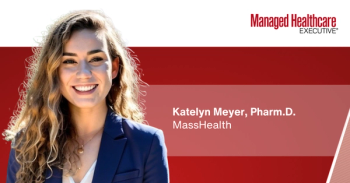
MassHealth's Katelyn Meyer, Pharm.D., says mandatory coverage, young patients and an unpredictable FDA make planning for new specialty drugs a challenge.

A truly transparent PBM arrangement starts with full disclosure of direct and indirect compensation.
Advertisement
Advertisement
Trending on Managed Healthcare Executive
1
The ripple effects of Medicare’s maximum fair price with Hiva Pourarsalan, Pharm.D. | AMCP Nexus 2026
2
Targeted therapies for atopic dermatitis reduce hospitalizations and ER visits, but cost is a different story
3
How common is atopic dermatitis in the US? Not nearly as common as other research has shown, according to this study
4
Team-based reassessment helps most patients with borderline resectable lung cancer reach surgery after immunotherapy
5