Upstream payment accuracy should reduce avoidable noise before it reaches those downstream functions.
"Payviders" are responsible for the cost of avoidable readmissions and emergency room visits, but they lose sight of patients once they go home.
Payviders — healthcare organizations that act as both payer and provider — have something most healthcare organizations don't: responsibility for both delivering care and paying for the outcomes. In theory, that should put them in a better position to manage cost and quality. But there's a significant gap in how that responsibility plays out once a patient leaves the hospital.
As some health systems retreat from the insurance business under mounting financial pressure, those committed to the payvider model face a difficult reality: delivering care and financing it only creates an advantage if they can prevent unnecessary utilization. Every avoidable readmission or ED visit represents both a missed opportunity to improve patient outcomes and a cost the organization ultimately bears. And oftentimes, the conditions that lead to those events develop after the patient has already gone home.
Think about what happens when a patient leaves the hospital. One day, they're surrounded by clinicians who are monitoring their condition, managing medications and responding when something changes. The next, they're home with discharge instructions, a handful of prescriptions and a follow-up appointment that may be weeks away.
Recovering patients and their caregivers are left to navigate recovery largely on their own. New symptoms arise, medication questions go unanswered, and it’s not always clear what warrants medical attention. Some patients miss early warning signs of a developing complication, while others mistake a routine part of recovery for something more serious. Without timely clinical guidance, both scenarios can lead to ED visits or readmissions that might have been avoided with earlier intervention.
The consequences are felt by patients, but the financial burden falls directly on payviders.
CMS is increasingly tying financial performance to what happens beyond the hospital walls. Across several payment and accountability models, hospitals and health systems are being held responsible not just for the care delivered during the hospital stay, but for the cost and quality of the care that follows. Consider:
●
● The
● The
The message is clear: what happens after discharge has direct financial consequences. For payviders, there is an opportunity to use their position on both sides of the healthcare equation to identify problems earlier, intervene before they escalate and reduce unnecessary utilization.
Consider a patient named Sarah, who has just returned home after several days in the hospital. The next morning, she begins experiencing side effects from her medication. She doesn't know whether this is a normal part of recovery, whether she should call her primary care physician or specialist, or whether she needs to go to the emergency room (ER).
A general-purpose artificial intelligence tool might offer some guidance, but it doesn’t necessarily know Sarah’s medical history, medications or discharge plan. Now imagine she has access to personalized guidance informed by clinical record, backed by a medical team responsible for overseeing her recovery. Her concerns can be evaluated in context, a clinician can intervene when needed, and a potentially avoidable ER visit may never happen. If her symptoms signal a serious complication, that same team can recognize the risk and escalate her care before her condition deteriorates.
Payviders already invest significant resources in managing patients after discharge. Care coordinators, case managers, transition nurses and population health teams work to connect patients with follow-up care, address barriers and prevent unnecessary utilization.
But these teams can only reach so many patients, and their involvement is often limited to scheduled outreach. The traditional phone call three days after discharge may confirm that a patient is doing well at that moment, but it cannot account for a new symptom that develops later that evening or a medication question that arises over the weekend. The challenge here is that recovery doesn’t follow a schedule, and existing teams cannot manage post-discharge cae on the scale that CMS now demands.
A model that combines AI-powered patient engagement with dedicated clinical oversight can extend the reach of these teams without adding to their workload. AI can answer routine questions, provide personalized guidance informed by the patient’s medical history and discharge plan, and maintain engagement throughout recovery. When a concern requires clinical judgment, a licensed clinician can step in to assess the situation, treat and escalate care as needed, connecting the patient to a PCP or specialist instead of the ED when appropriate.
This creates a more continuous approach to post-discharge care, giving patients and caregivers access to guidance in real-time, when questions and concerns arise, not just when someone is scheduled to check in. When a concern requires human judgment, a licensed clinician can step in to assess, treat or escalate care as needed, connecting patients with their primary care physician or a specialist when appropriate, rather than defaulting to the ER.
Answering questions early can prevent unnecessary ED visits and catch complications before they lead to a readmission. It also helps patients get to the right care, like a PCP or specialist visit, instead of the ED. The goal isn't less care. It's the right care, sooner.
Payviders have a unique opportunity to turn their dual responsibility for care delivery and cost into a competitive advantage, particularly as CMS expands financial accountability for outcomes beyond discharge.
Realizing that advantage requires more than tracking utilization after it happens. Managing recovery across large patient populations demands a scalable approach that provides visibility into emerging concerns and the ability to intervene before they escalate. AI can make that level of engagement possible, but technology alone won't close the gap. It must be backed by clinicians who can assess, treat and take responsibility for what happens next.
Payviders already own the cost of what happens after discharge. The opportunity now is to take greater ownership of the care that happens before those costs occur.
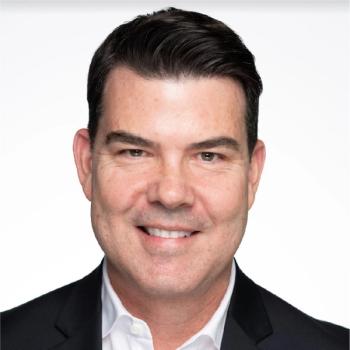
Jon Kuehler is chief commercial officer at Dimer Health.