Spending on prescription drugs grew by 40%, faster than spending on inpatient care, outpatient care and professional services, according to a new report from the Health Care Cost Institute.
A new Health Care Cost Instittue report finds prices, not utilization, drove spending growth in employer coverage from 2019 to 2023, echoing the group's very first report — and the title of Uwe Reinhardt's famous article.
Prices, not the use of health care services, continue to drive spending growth for Americans with employer-sponsored insurance, according to the Health Care Cost Institute’s (HCCI) latest Health Care Cost and Utilization Report, released today. The report covers the five years from 2019 through 2023.
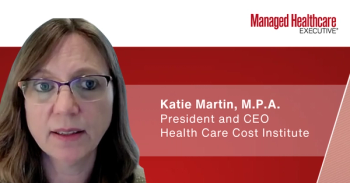
For Katie Martin, M.P.A., president and CEO of HCCI, the finding is a familiar one. As the nonprofit marks its 15th anniversary, Martin said she recently went back to HCCI’s very first cost and utilization report and found the same top line: Prices, not utilization, were pushing costs up. “I think the persistence of it as the conclusion of this report maybe is what is important,” Martin said. “That we just haven’t been able to tackle it in all these years yet.”
The report and HCCI’s data is
HCCI’s data set includes 30 million covered lives of people under age 65 who get insurance through work. According to the report, health care spending per person grew by 18.8% from 2019 to 2023, which translates to $1,068 of additional spending per person. Prices increased by 17.7% during those years, while utilization grew by just 1.8%.
Martin described the pattern as a truism about commercial insurance in particular, where prices for services are negotiated, unlike in Medicare or Medicaid.
Even the COVID-19 pandemic only briefly disrupted the trend. Spending dipped in 2020 because of a drop in utilization, Martin said, but that decrease was concentrated in two to three months at the start of the pandemic, when people could not go to the doctor. Spending quickly rebounded to its prepandemic trajectory, and in 2021, when use bounced back, price still contributed more to spending than utilization did, according to Martin and the HCCI report.
In this interview with Managed Healthcare Executive, Martin also discusses what the findings mean for value-based care. Hospital spending, inpatient and outpatient combined, accounts for 46% of dollars spent, she noted, and declining inpatient use suggests care is moving out of high-price, high-intensity settings. Because the same service costs more in a hospital outpatient department than in a physician’s office, steering patients to lower-cost settings can push prices down. “It’s impossible to fully separate out price and use,” Martin said. But she cautioned that efforts to lower utilization would not bend the cost curve.
Get the latest industry news, event updates and more from Managed Healthcare Executive.
Subscribe