
The FDA cleared Teva’s Igalmi sublingual film for at-home use, the first at-home approved option for agitation tied to schizophrenia or bipolar disorder.
Out-of-pocket costs may affect more than patients’ wallets, raising anticipated pain and discouraging some from scheduling care, according to a new study out of Carnegie Mellon University.
Medical bills can be painful, and not just financially. New research suggests that worry over out-of-pocket costs can lead patients to expect procedures to
In the study
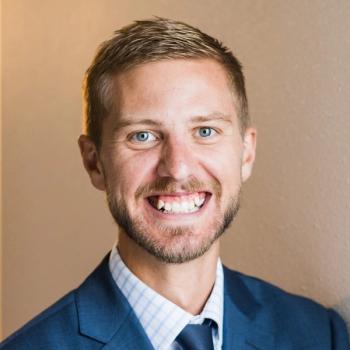
The study was led by Helen Colby, who is an assistant teaching professor of marketing at The Tepper School of Business at Carnegie Mellon University. She recently sat down with Managed Healthcare Executive to talk about the findings and what they might mean for providers.
This conversation has been edited for length and clarity.
MHE: What is the pain of paying theory, and how does it apply to this study?
Colby: The pain of paying theory is the idea that spending money causes psychological pain. For a long time, the thinking was that it caused only psychological pain. Then neuroscience research found that it also activates the areas of the brain involved in physical pain. So there is something very real and visceral about that negative feeling you experience when you have to make a payment.
For this study, we were interested in how knowing the cost of a procedure affects patients. For a long time, you went to the doctor and eventually you got a bill. Now people are having these conversations ahead of time. It’s not a ton, but it’s more often. That’s great in terms of transparency and people being able to plan and get ready for it. But we were interested in the unexpected negative consequences, and that is what we found.
We found that anticipating a higher cost for a procedure makes patients anticipate that the procedure will be more physically painful. We asked them to predict how painful they thought the procedure would be. They predicted it would be more uncomfortable when the procedure was expensive than when it wasn’t.
That has important downstream consequences. The more pain of paying there was, the more financial anxiety people had, and they were also less likely to schedule the procedure. That makes sense because you have this double whammy. If people are worried about money, a more expensive procedure is less appealing to schedule because it’s expensive. It’s also less appealing because it’s perceived as more physically painful.
MHE: Can you provide an overview of the three experiments that you did in the study and what you found?
Colby: The studies were done online with adult participants in the United States.
For the first study, we asked people to imagine they needed to get a blood draw, and we told them their out-of-pocket cost would be either $53 or $0, which is very representative of the experience of people getting healthcare in the United States.
Then we asked them to predict how painful this blood draw would be. People with the $53 out-of-pocket cost predicted it would be more uncomfortable than people who had no out-of-pocket cost.
For the second study, we thought, Most people have had a blood draw, right? Does this extend to things people are less familiar with?”
So we used an endoscopy procedure and a higher price, and we looked at the pain of paying, financial anxiety and scheduling intentions because we were interested to see if this has any real consequences. The answer is yes. A higher price increased the perceived pain of paying, and that spilled over into financial anxiety and scheduling intentions. People were less willing to schedule the procedure.
For the third study, we use a nerve conduction study. Even fewer people are familiar with it than endoscopy, and it is even more expensive. The relationship held true, right, with the pain of paying increasing anticipated pain and decreasing scheduling intentions. The effect was more pronounced for people with ongoing financial anxiety. That is especially important because it probably means that some of the more vulnerable patients are the ones who will be most affected.
MHE: Did this work focus more on psychological, physical or anticipated pain? How did each differ?
Colby: We did not run any studies with real-world pain. It would be interesting to do, but we didn’t go into clinics and have people rate their actual pain.
We were interested in psychological pain, which is a psychological feeling of discomfort, and how that plays into physical pain.
We looked at anticipated physical pain partially because once you’re in the doctor’s office having a negative experience, you’re at least already there. Here, we were interested in people’s predictions of how uncomfortable a procedure would be, because we thought that would significantly affect whether they decided to receive care.
There is tons of literature showing that putting off healthcare leads to bigger problems, including less curable disease, more expenses and more emergency room visits.
MHE: How can healthcare providers and marketers better serve patients knowing this information?
Colby: There is a lot of good intention behind health price transparency and helping patients think through the costs of care before they receive it, and that’s great.
I think people have generally focused on the positives of that. But it’s important to look at those potential negative downstream consequences of things like the health hospital price transparency rule and meetings with patients about costs ahead of time are important because if you’re going to give them information about how expensive something’s going to be, this suggests that you also need to provide some kind of financial counseling or financial reassurance to help reduce this financial anxiety and pain of paying so that they don’t just walk away from the procedure.
This is especially important for preventive care. People aren’t going to skip an appendectomy because of anticipated pain and the pain of paying; we’re more about screening tests, general wellness visits and flu shots. If your flu shot is going to cost $35, that may be aversive because $35 is money you don’t want to spend. It may also be aversive because you think the flu shot is going to hurt more.
On the other side of it, it suggests that one way to get more people in for preventive care is to remind them that it’s free. So much preventive care is free with health insurance. We didn’t study this, but our results would predict that if you remind somebody the flu shot is free, they will actually expect it to be less uncomfortable. So you may get a super-additive effect of, “Oh, it’s not going to be expensive, and it’s not going to hurt that much. I guess I’ll go get a flu shot.”
MHE: What is next for this research?
Colby: One thing we’ve talked about but haven’t started yet is whether this translates into countries that have more nationalized healthcare. Out-of-pocket costs are generally lower, and people may not be as conditioned to worry about them. It would be interesting to see if the emotional spillover happens less there.
We’re also interested in ways that people can intervene in this process. Beyond anticipated pain, once you’re getting the blood draw, do you have a more negative experience if you know it was expensive? And are you less likely to do it next time? You may have these downstream consequences where you think it’s not going to be great and it’s going to hurt, but you do it anyway. Then you do experience more physical pain, and you don’t go back for your flu shot the next year. We would like to field studies on that, but we don’t have anything concrete planned yet.