


Opinion|Videos|December 1, 2025
PHAROS Study Design
Author(s)Julia Rotow, MD , Ibiayi Dagogo-Jack, MD
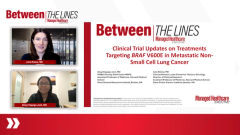
This segment reviews the design and patient characteristics of the PHAROS study, a phase II trial evaluating the BRAF-MEK inhibitor combination encorafenib and binimetinib in patients with BRAF V600E-mutant metastatic NSCLC.
Advertisement
Episodes in this series

This segment reviews the design and patient characteristics of the PHAROS study, a phase II trial evaluating the BRAF-MEK inhibitor combination encorafenib and binimetinib in patients with BRAF V600E-mutant metastatic NSCLC. PHAROS enrolled two cohorts: 59 treatment-naïve patients and 39 patients who had received one prior line of therapy, most commonly chemotherapy, immunotherapy, or a combination. All patients received standard-dose encorafenib and binimetinib, with treatment continued until disease progression. The primary endpoint was objective response rate assessed by independent radiologic review, with additional key outcomes including progression-free survival (PFS), overall survival (OS), and safety, some of which were presented at recent meetings such as ESMO.
Eligibility criteria were typical for targeted therapy trials. Patients were required to have confirmed BRAF V600E mutations and could be either untreated or have received no more than one prior systemic therapy in the advanced setting. Prior BRAF or MEK inhibitor therapy was not allowed. Patients with central nervous system metastases were eligible if asymptomatic, whereas those with symptomatic CNS disease or concurrent actionable oncogenic drivers were excluded.
Baseline characteristics reflected a typical BRAF V600E NSCLC population: median age around 70 years, a majority with a smoking history but a substantial never-smoker subgroup, and relatively low rates of baseline CNS involvement. Prior treatments varied, underscoring ongoing heterogeneity in frontline management for this population.
Advertisement
Related to this article

Topical steroids remain first-line for chronic hand eczema, but long-term use can thin the skin and leave patients with poorly controlled disease.

Laura Ferris urges risk-based melanoma screening and highlights earlier immunotherapy, selective imaging, vaccine limits and new post–PD-1 options.

Patients with HS should get three to four months on a biologic before a switch, says a dermatologist who sees promise in oral JAK inhibitors.
With three FDA-approved biologics for hidradenitis suppurativa, Jennifer Hsiao, M.D., said patient preference and access often decide which comes first.

A structured approach grounded in implementation science and supported by a culture that values continuous improvement can enable organizations to identify barriers, align stakeholders and sustain new practices over time.

New unattended sleep testing codes take effect Jan. 1, 2027 — but a dispute over how CMS values them could shape access to the cheaper alternative to in-lab sleep studies.

A session at AAO 2026 explained how Medicare, Medicare Advantage and commercial coverage policies differ in ophthalmology, and how practices can document and code to stay compliant

Presenters at AAO 2026 examined hospital eye coverage gaps, workforce strain and how ophthalmology can gain influence within health systems.
Advertisement
Advertisement
Trending on Managed Healthcare Executive
1
Ophthalmology coverage hinges on knowing the payer | AAO 2026
2
A conversation about the cycle of ADHD and sleep problems in children, with Alison Pritchard, Ph.D.
3
Experts urge earlier JAK inhibitor use in AD and vitiligo | Fall Clinical Derm 2026
4
2026 PBMI Annual National Conference
5