MHE: How useful are claims data or predictive models for flagging high-risk members? What do they miss?
Banas: The pattern recognition of AI is going to help with identifying these patients. AI is really good at taking large amounts of data and asking the right questions to build models that can predict these things, so it’s an exciting inflection point in health care. But the data being imperfect is part of the reason the models are not always accurate.
You only know what you’ve been trained on. These models are coming out, but they may or may not be applicable to your population. A model that was created in academic medical centers in Boston may be really great for Boston, but if you try to apply it to rural Montana, it’s going to miss, because the patients it was trained on are fundamentally different.
That gap is narrowing, though. The interoperability of data is improving and the models are improving rapidly, week over week. Health plans have access to large amounts of data, too and with recent changes in how data interoperability is mandated to flow, they’re going to have a more complete picture of the patients they cover. I know that can sound a little scary in terms of data privacy, but there are truly population-level benefits to being able to harness data at a larger level.
MHE: Which interventions have actually lowered readmission rates for patients with diabetes in your experience?
Banas: Believe me, we’ve tried a lot of them to prevent readmissions of our chronic care patients. I will give a shout-out to my pharmacy colleagues. Pharmacists are the unsung heroes of a lot of our success with complex admissions and readmissions. Things that have been published to be successful include post-discharge monitoring by a pharmacist, or MTM [medication therapy management] by a pharmacist within 24 hours of a patient’s discharge. Medication lists have become so complex. Let’s say you were on 10 medications plus insulin, you got admitted for a week, you got tuned up and now I send you out having changed eight of those medications and tweaked the insulin. How are you going to keep that straight, or know to throw out the old bottle but keep the new one? Pharmacists are fantastic at this.
The other thing we’re seeing is technology playing a role. Five years ago, telehealth wasn’t even a thing and now we take it for granted. It’s the same idea with wearables, like continuous glucose monitors that can help pick up the signal. Maybe I don’t want all of your blood sugars, but I want to know when your sugars are above a certain threshold or the trend is going in a certain direction and computing power makes that possible.
The last thing, which is very close to me, is patient engagement through technology. If we engage patients with personalized nudges and access to things like copay assistance, education or routine follow-up through something as simple as a cell phone, it works. Pretty much everybody has a cell phone these days and everybody looks at text messages. We’ve been able to tailor solutions around that technology and in some of our examples, we’ve seen a 10% improvement in patient adherence. That doesn’t sound like a lot, but it’s actually huge, because if you look at the literature, most readmissions can be tied back to some form of nonadherence.
MHE: What has to happen in the first seven days after discharge to keep someone out of the hospital?
Banas: In my experience, that first week is crucial and it really does take a multidisciplinary approach. I gave praise to pharmacists earlier. Kudos also to social workers, who help screen for and line up a lot of these resources before discharge and to dietitians. You cannot underestimate the importance of nutrition. Even physical therapy and occupational therapy matter. Every discharge typically involves multiple team members coordinating and that coordination is difficult, so again, technology can be a force multiplier.
Outside the four walls of the hospital, I’ve been part of multidisciplinary teams that make sure we touch the patient within 24 hours and that the patient is able to make it to their follow-up visit or get their follow-up labs. I’d rather know something early and get on top of it, maybe through a telehealth visit, than have it spiral out of control and have you show back up in my ER a week later.
MHE: How do insulin changes during a hospital stay complicate the transition home?
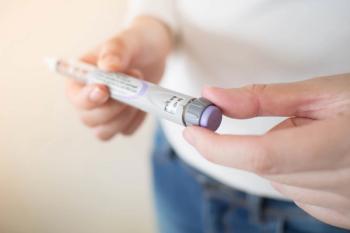
Banas: Insulin’s tricky. Insulin’s dangerous. You may be making titrations to a patient’s insulin throughout their stay, or, even worse, they may be brand-new to insulin and now I have to send them home on something they’ve never had to contemplate before. And there’s not one insulin that suits all. There are short-acting, intermediate-acting and long-acting insulins. Then you have to take into account how many carbohydrates you’re eating or plan to eat, so managing your blood sugars gets very nuanced.
We’ve made strides. The use of continuous glucose monitors is certainly picking up. You see people with the patch and that data is gold. It helps the patient titrate. We’re also seeing more and more insulin pumps, which are smart in the way they can help regulate the patient’s glucose. But not everyone has those resources. Not everybody has access to continuous glucose monitoring or insulin pumps. So it’s this very delicate song and dance of sugar versus insulin, long-acting versus short-acting and the interplay among it all. I can only imagine how overwhelmed a patient is when you’ve changed their insulin regimen and sent them on their way.
MHE: How should responsibility for readmissions be split between hospitals and health plans, especially under value-based contracts?
Banas: We used to affectionately call them bounce-backs. Right now, the model feels very punitive toward the hospital. Your payment is going to get deducted if the patient shows back up in seven to 14 days, or that second stay isn’t covered at all. So there’s a lot of downside for the hospital, often without much upside.
I alluded to teamwork in my earlier answers. First, I think this could be more of a shared risk. Second, we could leverage some of the resources health plans have started to invest in around maintaining patient health in a coordinated way. This is again a nod toward technology. A decade ago, a health plan might not even have known one of its members was admitted until a week later, because that’s how long it took for the bill to post. Now, with improved interoperability and two-way communication, plans can know in real time that a member has been admitted and they can coordinate with the doctor: Don’t send them to this therapist, because that one’s not in network; send them to this one, or this one is preferred. It’s subtle things like that that make a ton of difference in the overall outcomes.
MHE: What does good coordination between a hospital and a plan look like at discharge? Where does it usually break down?
Banas: I’m going to lean on shared responsibility, improved communication and access to resources. You can trace a lot of the breakdowns related to social determinants of health back to a breakdown in communication. How do I stay in touch with patients who don’t have a permanent residence or who move around? Some patients’ cell phones change from week to week because that’s what they can afford that week. In order for me to reach you, I have to have a way to reach you or a place to reach you. If some of those basic needs aren’t being met, you can only imagine how that’s going to end up in terms of coordination.
The other thing is making sure, before the patient leaves, that they understand what we’re sending them out with. We might print up discharge instructions, five pages, double-sided. Does the patient actually understand what just got handed to them? Medical jargon is very easy for the clinical team to slip back into and patients often don’t speak up and say, ‘Whoa, I have no idea what you’re talking about.’ They just sort of smile and take it. So there’s a touch of the human element to this, too: making sure we’re meeting our patients where they need to be met.
MHE: Readmission rates differ by race and income. What are hospitals doing to close those gaps?
Banas: My former hospital stood up a chronic condition management team for patients who were frequently returning to the hospital and the emergency department. We realized we could manage those patients more tightly if we coordinated our efforts and provided high-touch care. By keeping them out of the ER and out of the hospital, it was actually less expensive to provide that care in the outpatient setting and it saved resources like ER visits and inpatient beds for higher-acuity patients in greater need.
There are other things you’ll see hospitals doing. A lot of hospitals do meds to beds, meaning that before you leave, we make sure you actually have all of your medications. We’re not just going to send the script out and hope you go get it. We’re going to bring you the bag and say, ‘Here are your meds. Let me see your old meds, go through them and throw away the ones that no longer apply.’ So again, kudos to pharmacists for that.
Some progressive hospitals have even gotten very creative about helping conquer food deserts or pharmacy deserts, because a lot of these populations don’t have access to good nutrition within walking distance and a lot of retail pharmacies have closed in some of these locations. So you see things like meds to beds or weekly farmers markets and then free education. I’ve seen lots of examples of that: Every Tuesday, come to this place and we’ll talk about diabetes and educate you and anybody in the public who wants to come. Those proactive hospitals are trying to get upstream so they can prevent the downstream readmission.
MHE: What’s the business case for a plan to invest in diabetes-specific transition programs?
Banas: This is a vulnerable population that can rack up costs very quickly. When we started this conversation, I mentioned that diabetes rarely travels alone and the things associated with diabetic complications tend to be very expensive: dialysis for kidney failure, or even a transplant, or a heart attack leading to coronary bypass grafts. We’re talking millions and millions of dollars of interventions. If you focus on primary prevention, you’re going to make that money back tenfold, because you’ve prevented the complications. It sounds very crude to say it’s all math, but there is math to be done here and that math is very much on the side of getting to this early rather than dealing with the fallout later.
MHE: If a plan leader could make one change in the next year to reduce readmissions among members with diabetes, what should it be?
Banas: I’m going to go back to my interoperability comments. I think there’s a little bit of a black box between payers and providers when it comes to data. What data does the payer have that I don’t have and vice versa? Not every patient comes only to my hospital. They’ve been other places, too and interoperability can help complete that picture.
The other thing is opening up that two-way street, with real-time notification of all the stakeholders who are interested in a diabetes admission or readmission. That two-way communication can lead to discovery of resources. As I said earlier, some plans have their own pharmacist-led MTM team, or access to their own physical therapy or nutrition programs, that I might not have any visibility into as the provider. So if you really want to distill it down, we need to talk to each other better. Thank goodness for technology to enable that and for some of the newer mandates that are actually requiring it.
MHE: Is there anything else you’d like to add?
Banas: I just think it’s a really exciting time for medicine. Everyone is pointing to AI as a game changer and it truly is. I’ve actually never seen anything in the health care tech space be adopted so quickly. The fact that we can move this quickly to help our patients with diabetes and all of their comorbidities and unite all of the key stakeholders around these platforms, makes this a really exciting time.