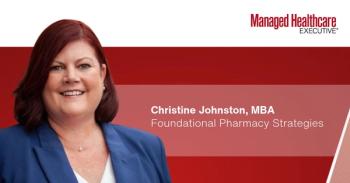
Christine Johnston says biosimilar interchangeability bills, plus 2026 PBM reforms, would force PBMs to justify preferring higher-cost brands.
Christine Johnston warns a thin biosimilar pipeline keeps specialty costs high and slows innovation and urges payers to check their PBM’s top 25 drugs.
Too few
Specialty medications typically account for at least 54% of a plan’s cost, Johnston said, and “we need cost relief in this area.” Groups that have truly leveraged a biosimilar strategy have seen significant cost reductions with no compromise in quality, she said. But biosimilars take a long time to develop and gain FDA approval, and manufacturers also have to factor in patent lawsuits. “We’ve structurally set up too many barriers,” she said, adding that the U.S. market doesn’t encourage competition the way countries such as the United Kingdom, New Zealand and Australia do.
Johnston argued that the lack of competition affects innovation as well as cost. Without generic or biosimilar pressure, manufacturers tend to produce “me-too” drugs that are largely the same as existing therapies but delivered differently, less frequently or in pill form. When competition arrives, she said, manufacturers start looking to solve other problems, including conditions that still lack good treatment options. “When you stifle competitiveness, you stifle research and you stifle innovation,” she said.
Her advice to payers is to look at their latest PBM report. If drugs such as Skyrizi, Rinvoq or Tremfya appear among the top 25 without a Humira or Stelara biosimilar on the list, she said, payers should question their PBM’s formulary strategy and whether its incentives are aligned with the payer’s goal of managing cost, and ask to see the PBM’s formulary policies for that drug class.
Johnston said health plan executives and employers who pay the PBM’s bills have the power to ask how formularies, formulary and nonformulary decisions and prior authorizations are structured. “I really want payers to feel empowered that this is their plan,” she said. “It’s not the PBM’s plan.”
In this video, Johnston discusses why the biosimilar pipeline matters for specialty drug spending and what payers should ask their PBMs.