

Risks and benefits associated with mail-order pharmacies and third-party platforms, according to Amanda Bogle, a healthcare attorney at Sheppard Mullin.
Risks and benefits associated with mail-order pharmacies and third-party platforms, according to Amanda Bogle, a healthcare attorney at Sheppard Mullin.

In a video interview with MHE editors, Nathan Downhour, Pharm.D., vice president of strategic pharmacy solutions at Prime Therapeutics, said a shift is already underway in the pharmacy benefit market in terms of becoming more transparent and sustainable across the industry.

In a video interview with MHE editors, David Blair, founder, chairman, and CEO of LucyRx, expressed his belief that pharmacists are an underused resource in the U.S. healthcare system, especially at a time when access to primary care is becoming more limited. Blair is one of this year's six inaugural winners of Managed Healthcare Executive’s PBMI Innovator Award.
Pharmacies and PBMs face growing regulatory and reporting demands around drug pricing and reimbursement, while misalignment between state rules and payer practices complicates the expanded clinical role of pharmacists.

An expert discusses how vitiligo treatment historically relied on off-label therapies such as topical corticosteroids, calcineurin inhibitors, and phototherapy, but now includes the first FDA-approved agent, topical ruxolitinib 1.5% cream, used alone or in combination with other treatments.

In a video interview with MHE editors, Brian Anderson, MBA, a principal and consulting actuary at Milliman, shared his entry into the pharmacy benefits space was driven by a desire to improve healthcare by making it easier for people to access what they need—especially medications. Anderson is one of this year's six inaugural winners of Managed Healthcare Executive’s PBMI Innovator Award.

An expert discusses how less frequent administration of therapies like nadofaragene (every 90 days) significantly reduces clinical resource burden compared with combination treatments like gemcitabine-docetaxel, which require extensive logistics, chemotherapy-licensed staff and daily clinic visits.
An expert discusses how clinics can successfully implement gene therapy workflows by establishing strong institutional protocols, assigning dedicated clinic coordinators, and using strategies like rectal diazepam premedication to prevent bladder spasms and medication loss during expensive treatments.

New insights emerge from ongoing analyses of GA studies, enhancing AMD treatment strategies and patient management at Bay Area Retina Associates.
Discover new safety insights on Syfovre for geographic atrophy treatment, as Roger A. Goldberg highlights promising long-term data at ASRS 2025.
New findings reveal Syfovre may protect central vision in macular degeneration patients, delaying vision loss and enhancing treatment strategies.
New findings reveal that early treatment with Syfovre significantly improves vision preservation in geographic atrophy patients, according to Robert Goldberg, M.D., MBA, of the Bay Area Retina Associates.

Interest in surgical advancements such as retinal detachment repair is driven by the need for balance within the field and a new generation entering the workforce, according to Gaurav K. Shah, M.D., program chair of ASRS 2025.
A session on a surgery technique to treat macular holes using amniotic membrane transplants will be one of the highlights at the 2025 meeting of the American Society of Retina Specialists, according to Gaurav K. Shah, M.D., program chair of ASRS 2025.
There will be a greater focus on surgical topics at the 2025 meeting of the American Society of Retina Specialists, compared with previous years, which reflects the need for balance within the industry, according to Gaurav K. Shah, M.D., program chair of ASRS 2025.
Surveys of American Society of Retina Specialists members have revealed a preference for physicians’ experiences with new therapies, rather than summaries of clinical trial data, according to Gaurav K. Shah, M.D., program chair of ASRS 2025.

An expert discusses the evolving role of BCMA-targeted therapies in relapsed/refractory multiple myeloma (R/R MM), comparing the efficacy, safety, and logistical considerations of CAR T-cell therapies, bispecific antibodies, and antibody-drug conjugates, and emphasizing the importance of individualized treatment selection and ongoing refinement of therapeutic sequencing.
An expert discusses how bispecific antibodies are reshaping the treatment landscape for relapsed/refractory multiple myeloma (R/R MM) by offering off-the-shelf, effective alternatives to CAR T-cell therapy, while emphasizing the need for institutional planning, patient monitoring, and coordinated care to manage continuous therapy, adverse effects, and resource demands.

An expert discusses how frontline management of transplant-ineligible multiple myeloma has progressed from melphalan-based regimens to modern anti-CD38–based combinations, now including emerging quadruplet strategies. He highlights data showing improved responses and progression-free survival (PFS) even in frail populations, while emphasizing the need to balance efficacy with treatment burden, especially for older adults with comorbidities.
An expert discusses how integrating newer NMIBC therapies faces operational barriers including administration logistics, staff training and formulary restrictions, while solutions require better comparative data, institutional protocols and industry partnerships to overcome unwarranted practice variation.
An expert discusses how real-world evidence is driving gene therapy adoption in BCG-unresponsive disease primarily through demonstrated durability and excellent tolerability, with 30% to 40% of patients achieving long-term disease-free survival despite the need for better comparative data to guide treatment selection.
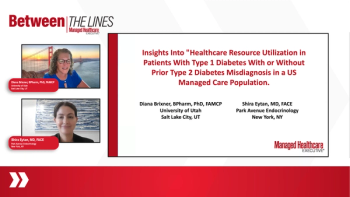
Panelists discuss how autoantibody testing has high diagnostic accuracy with nearly 100% conversion to hyperglycemia when two or more antibodies are present, though timing of testing is crucial and retesting may be necessary since antibody levels can fluctuate over time.

Audere is closing gaps in HIV care and education with the help of Aimee, their artificial intelligence companion designed to reach women and young girls in South Africa, according to Sarah Morris, CPO of Audere.

A national preexposure prophylaxis (PrEP) program would streamline access and improve HIV outcomes but unfortunately never came to pass because of a lack of funding, according to Jeremiah Johnson, executive director, PrEP4All.
Although the FDA approval of lenacapavir as a twice-yearly form of preexposure prophylaxis (PrEP) is “momentous,” cost and access curb excitement, according to Jeremiah Johnson, executive director of PrEP4All.
The high cost of pharmaceutical products coupled with a lack of federally funded HIV programs create barriers for preexposure prophylaxis (PrEP) access according to Jeremiah Johnson, executive director, PrEP4All.
A panelist discusses how the FDA approval and NCCN endorsement of retifanlimab plus carboplatin/paclitaxel represents a milestone that should focus attention on adding PD-1 inhibitors to advanced squamous cell anal carcinoma treatment while highlighting future therapeutic opportunities including combination immunotherapies (PD-L1 with CTLA-4 inhibitors), bispecific antibodies targeting EGFR, cellular therapies targeting human papillomavirus-associated antigens E6/E7, and antibody-drug conjugates, emphasizing the critical need to disseminate this recent level-one evidence to providers and remove insurance barriers to ensure patient access to these important treatments.

An expert discusses how patients with vitiligo are often initially misdiagnosed by primary care providers as having fungal infections before being referred to dermatologists, with care coordination typically involving endocrinologists for thyroid management and psychologists for mental health support.

Long-acting injectable PrEP may improve access, protection and adherence, especially for young people and pregnant women, according to Hasina Subedar, a senior technical advisor at South Africa’s National Department of Health, who spoke with editors at IAS 2025 in Kigali, Rwanda.
An expert discusses how high-cost gene therapies require evidence standards including Phase 3 trial data showing complete response rates and durability, real-world evidence and health economic analyses to guide clinical use and coverage determinations before payers scrutinize their carte blanche approval.