






















Dogged by controversy, the new Alzheimer’s drug has not fared well since its approval by the FDA a year ago.
Dogged by controversy, the new Alzheimer’s drug has not fared well since its approval by the FDA a year ago.

The Federal Trade Commission says its inquiry “will shed light on” clawbacks, potentially unfair audits, rebates and other business practices of the pharmacy benefits management (PBM) industry. Today’s announcement says the commission will be requiring information from the six largest PBMs.

The launch is one of several digital therapeutics partnerships Pfizer has announced in recent months.

Two studies published this week documented the billions that Medicare and Medicaid spend on drugs that have been granted accelerated approval by the FDA based on surrogate end points. A study reported today in JAMA Health Forum found that only 6 of the 22 confirmatory trials used clinical outcomes.

In their general session, Adam J. Fein, PhD of Drug Channels Institute, and Doug Long of IQVIA reviewed the current specialty pharmacy space, ongoing trends and future expectations.
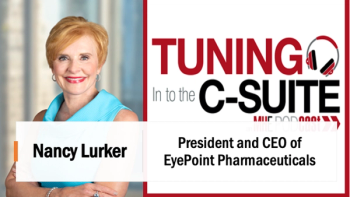
Briana Contreras, editor of Managed Healthcare Executive, spoke with Nancy Lurker, CEO and president of EyePoint Pharmaceuticals. Nancy shared a bit about EyePoint and how the organization’s innovative therapies are addressing patient needs through eye care, and most importantly, she addressed C-Suite positions like the CEO role. Nancy shared advice for those seeking to reach the CEO level, especially toward women in healthcare and other roles, and what it takes to run a biopharma company.

As industries across the board move towards a digital-only world, pharma companies must account for the different technologies that are transforming the R&D process.

Collaboration among stakeholders is needed to increase transparency of pharmacy payment programs and to better align the design of these models with good patient care.
Briana Contreras, associate editor of Managed Healthcare Executive, spoke with Josh Benner, founder and CEO of RxAnte, in this latest episode of Tuning In to the C-Suite podcast. In the conversation, Benner addressed the issue of medication misuse among patients based on access, demographics and more, as well as its solutions. The two also talked about the role technology has on the future of pharmacy and how solutions provided through RxAnte can assist plans to improve their CMS Start rating measures.

Clinical appropriateness, not the cost of a drug, is the first consideration in formulary decisions, said Katie Thompson and Katie Deckelbaum of Express Scripts.
Managed Healthcare Executive had a conversation with Kelly Chillingworth, RPh, director of business development at RxBenefits this week about the unique connection between pharmacy and telemedicine, what impact telemedicine & its pharmacy costs have on self-funded employers and how the right virtual care services a health provider offers to their members can be essential to building a competitive benefit.

In this part three video series, Civica Rx CEO Martin VanTrieste says Civica is launching an outpatient retail market with its first retail drug coming to the market next year.
In this final part of the MHE 2021 Pharmacy Survey, participants share their thoughts on which federal policies they favor as a way to curb drug prices and which policy is more likely to occur this year. MHE's annual pharmacy survey had over 225 respondents.
In this part five series, participants give their opinions on which drugs newer to the market in the last 12 months hold the most promise to reducing morbidity and mortality. Participants also shared which drug in the pipeline holds the most promise. MHE's annual pharmacy survey had over 225 respondents. We will be posting the results over the next few days.
In this part four series, participants give their opinions on the biggest driver of specialty drug expenditures this year and what the most significant change in contracts between plan sponsors and PBMs could be in the near future. MHE's annual pharmacy survey had over 225 respondents. We will be posting the results over the next few days.
In this part three series, participants give their opinions on the most effective ways to reduce traditional and specialty pharmaceutical costs. MHE's annual pharmacy survey had over 225 respondents. We will be posting the results over the next several days.
Respondents upbeat about COVID-19 vaccination. MHE's annual pharmacy survey had over 225 respondents. We will be posting the results over the next several days.

Ten years ago, specialty accounted for 15% to 20% of the money spent on drugs, according to Prem Shah, executive vice president of specialty pharmacy and product innovation at CVS Health.

Two of the biggest issues in healthcare, currently, are the lack of communication between prescribers and pharmacists, and the number of factors that prevent healthcare professionals from offering patient-centric services.

PBMs say exclusions are important for negotiating lower prices on behalf of health plans and members. Some payer and provider groups say they interfere with patient access to medicines.

Having specialty pharmacies fill prescriptions may lower costs, but critics of the practice see safety issues and other drawbacks.

Opinion piece by MHE's Editorial Advisory Board Member and CEO of The Pharmacy Group, Perry Cohen. Perry discusses the response differences and vague similarities between the countries and addresses the continuous question, "What is the new normal?"
In this week's episode, MHE's Senior Editor Peter Wehrwein spoke with Sumit Dutta, Optum Rx chief medical officer. The two spoke about COVID-19 vaccines and how the pharmacy benefit market responded to the pandemic.

The five states have moved to prohibit accumulators and maximizers as the federal government takes a hands-off approach, according to John “Jack” S. Linehan, a lawyer at Epstein Becker Green, who is featured in this second part of a two-part video series.
John “Jack” S. Linehan, a lawyer at Epstein Becker Green, is featured in the first part of a two-part video series on copay accumulators and maximizers.