

Chad Hatfield, Pharm.D., of UC Davis Health, says 340B savings fund free clinics and mental health care that could shrink as the program’s future shifts.
Chad Hatfield, Pharm.D., of UC Davis Health, says 340B savings fund free clinics and mental health care that could shrink as the program’s future shifts.

Fewer than 1 in 5 eligible adults get lung cancer screening. Experts told MHE over email that health plans can help by easing cost, coverage and approval barriers.

Healthcare spending for employer-insured Americans rose by nearly 19%between 2019 and 2023, driven by higher prices, surging drug costs, and spending on hospital care, says the president and CEO of the Health Care Cost Institute.

All 46 people with HIV who started long-acting lenacapavir and cabotegravir at a University of California, San Francisco, clinic reached or kept viral suppression over a median of 100 weeks.

Luis Garza, M.D., Ph.D., a Johns Hopkins professor, says hidradenitis suppurativa is neither an infection nor a classic autoimmune disease but an auto-inflammatory condition.

Vision impairment affected 17.6% of 1,484 adult burn survivors in a study presented at AAO 2026, with age the strongest predictor of difficulty seeing.

During the Health System Executive Summit, Candy Tsourounis, PharmD, and Elise Wozniak, PharmD got candid about the barriers and financial risk surrounding this innovative therapy.
Hidradenitis suppurativa is becoming more common, and a Johns Hopkins expert suspects an unidentified chemical in processed foods may be one reason.

A two-year study of 53 glaucoma patients logged nearly 4,800 home VR visual field tests, yet no insurance code currently covers home perimetry.

The pope's lung nodule was found during a routine exam. In the U.S., only 18.7% of adults eligible for lung cancer screening are up to date.
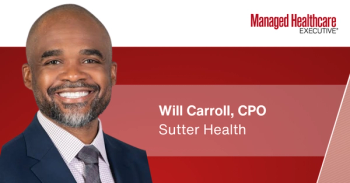
Ahead of the Health System Executive Summit, Will Carroll, chief pharmacy officer at Sutter Health, shares the system’s pharmacy strategy, its approach to building a leadership pipeline and advice for pharmacy leaders seeking a stronger executive voice.

Rex Hoffman, M.D., MBA, chief medical officer of Providence Holy Cross Medical Center, discusses his transition from radiation oncologist to hospital executive and the panel discussion that led to his new book, “Difficult Dilemmas for Chief Medical Officers: 30 Case Studies.”

Reimagine Care's CEO says one-off hospital approvals slow CAR-T access and urges buyers to ask vendors to prove outcomes such as avoided ED visits.

Foundational Pharmacy Strategies’ Christine Johnston on how rebate structures, pending legislation, and a stalled pipeline are reshaping — and threatening — the biosimilar market heading into 2027.
The financial pain from your healthcare cost is real, you are uniquely placed to negotiate prices down, and hospitals, at 46% of spending, are where to look, says the CEO and president of the Health Care Cost Institute, which issued its annual cost and utilization report today.
Spending on prescription drugs grew by 40%, faster than spending on inpatient care, outpatient care and professional services, according to a new report from the Health Care Cost Institute.

Meta-analysis links assisted reproduction tech (ART) to higher risks of major heart defects in pregnancies, urging targeted screening and long-term heart health follow-up.
A new Health Care Cost Instittue report finds prices, not utilization, drove spending growth in employer coverage from 2019 to 2023, echoing the group's very first report — and the title of Uwe Reinhardt's famous article.

Reading C-peptide alongside glucose could better predict which autoantibody-positive people will develop type 1 diabetes and detect treatment effects sooner.
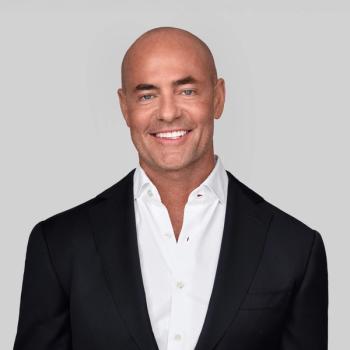
Electronic health record developers, health plans, manufacturers and discount programs could support early prescribing decisions by enabling providers and patients to view more pricing options at the point of prescribing, says Joseph Kleiman, president of Buzz Health.

Fariha Abbasi-Feinberg, MD, discusses underdiagnosed sleep disorders, what a recent insomnia-stroke study does and doesn't prove, and where health plan policy still lags behind the evidence.

The Health Care Cost Institute’s annual healthcare cost and utilization report on healthcare spending by those with employer-based health insurance shows that price increases, not utilization, account for soaring cost increases. HCCI CEO Katie Martin says employers should focus on bringing down hospital prices.

An ophthalmic imaging specialist outlined how lighting technique and serial documentation help clinicians tell normal iris pigment from disease.

Neuro-ophthalmologists reviewed migraine diagnosis, a stepwise treatment ladder and migraine mimics that often present first in eye clinics.

Topical steroids remain first-line for chronic hand eczema, but long-term use can thin the skin and leave patients with poorly controlled disease.

Laura Ferris urges risk-based melanoma screening and highlights earlier immunotherapy, selective imaging, vaccine limits and new post–PD-1 options.

Patients with HS should get three to four months on a biologic before a switch, says a dermatologist who sees promise in oral JAK inhibitors.
With three FDA-approved biologics for hidradenitis suppurativa, Jennifer Hsiao, M.D., said patient preference and access often decide which comes first.

A structured approach grounded in implementation science and supported by a culture that values continuous improvement can enable organizations to identify barriers, align stakeholders and sustain new practices over time.

New unattended sleep testing codes take effect Jan. 1, 2027 — but a dispute over how CMS values them could shape access to the cheaper alternative to in-lab sleep studies.